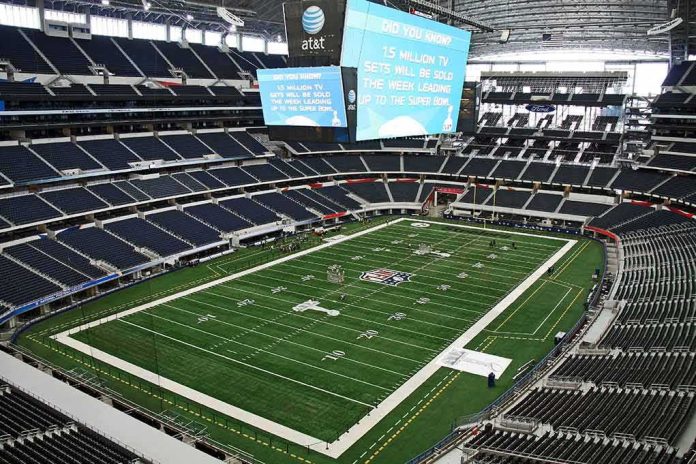
A U.S. Air Force service member died after falling during a pregame rappelling demonstration at San Antonio’s Alamodome, underscoring how public military displays can carry real risk even under strict safety rules.
Story Snapshot
- The Air Force confirmed the airman died after a fall before the UTSA-Navy game.
- Officials said he was assigned to the 6th Combat Training Squadron, Detachment 2.
- The service reported he died at a local hospital; the incident is under investigation.
- Air Force mishap probes protect safety findings from public release under long-standing rules.
What Happened at the Alamodome
Nellis Air Force Base Public Affairs said a service member fell while attempting to rappel from the rafters during a pregame demonstration before the University of Texas at San Antonio hosted Navy. Officials said he was injured at the stadium and later died at a local hospital. The statement identified his unit as the 6th Combat Training Squadron, Detachment 2, and said the incident remains under investigation. A follow-up report echoed the death and investigation status, citing Air Force confirmation.
Game operations were affected as on-site staff and first responders treated the airman and coordinated transport. Local coverage described the emotional impact on fans and campus leaders, who shared sympathy for the service member, his family, and military colleagues. The public-facing event was meant to honor the armed forces, which made the tragedy feel starker for many who came to celebrate service and sacrifice. Officials have not released the airman’s identity as of this writing.
What We Know About the Investigation
The Air Force classifies the event as a mishap, which triggers a formal safety investigation process. An Interim Safety Board forms quickly to preserve evidence and start interviews. A Safety Investigation Board then seeks causes and prevention steps. By policy, the Air Force protects safety board analyses and recommendations from outside release to encourage full candor and improve prevention across the force. That means detailed findings may not become public, even if basic facts are shared.
Some information can still be released through public affairs under command authority. Policies allow timely, factual updates while protecting privileged safety material and personal privacy during the process. This framework can frustrate the public who want answers right away. But it reflects a long-standing balance inside the military: learn quickly, fix hazards, and avoid chilling honest reporting by airmen who were on scene. Families and units often receive more context through official channels.
Why Public Demonstrations Carry Unique Risk
Military teams train for high-angle operations, fast roping, and rappelling. These skills support rescue, security, and combat missions. Stadium demonstrations aim to honor service and show the public what these teams can do. But a show in a crowded venue adds pressure and variables, including lighting, sound, height, rigging points, and tight timelines. Even with rehearsals and checklists, any mistake or equipment failure at height can be deadly. Saturday’s outcome is a clear reminder of that hard truth.
Comparing cases is hard because the services do not keep a single public database of such demonstrations, and safety reports are privileged. The Air Force conducts annual trend analysis to spot patterns and reduce risk, but those reviews focus on prevention inside the force, not public release. After high-profile events like this, commanders often reassess demonstration rules, training standards, and venue approvals. Those steps can lead to pauses or tighter controls until leaders are confident in the safeguards.
Shared Concerns Beyond Politics
Americans on the right and left value the military and expect leaders to protect service members. When a tribute turns tragic, many ask if approval chains, safety checks, or event demands pushed risk too far. The Air Force’s investigative system seeks root causes and fixes, but the privacy rules can leave the public with few details. That gap can fuel anger toward institutions that people already view as too closed or too focused on image over accountability.
🚨 AIRMAN DIES AFTER FALL DURING ALAMODOME PREGAME MILITARY DEMONSTRATION
SAN ANTONIO, UNITED STATES – A routine ceremonial display has become the central focus of scrutiny rather than the football game it was meant to precede. The investigation will likely concentrate on… pic.twitter.com/D2tfbb8bGG
— The Content Factory (@tcf_updates) October 18, 2026
Here, the known facts are clear and undisputed: an Air Force airman fell during a sanctioned display, was taken to a hospital, and died; the probe is active. The next test is whether the military translates lessons into stronger safeguards without hiding behind process. People can honor the fallen airman best by insisting on a culture where ceremony never outruns safety, and where leaders show their work when they make changes that keep others alive.
Sources:
thegatewaypundit.com, txgazette.com, usatoday.com, usnews.com, safety.af.mil, static.e-publishing.af.mil, themirror.com