
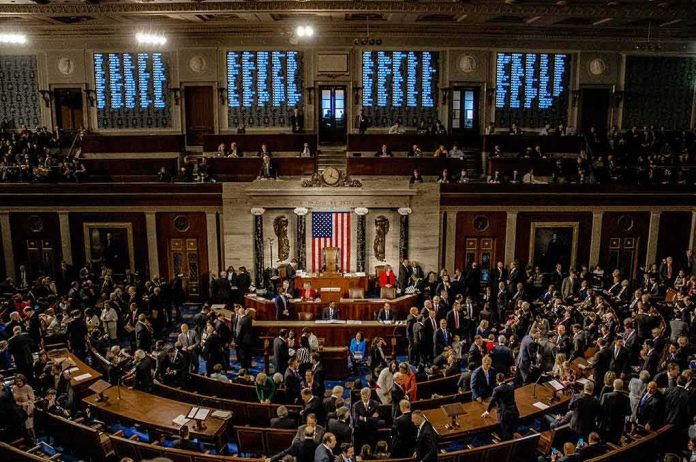
House Democrats handed Hakeem Jeffries a 251–11 nomination win for speaker, but dissent on policy and a closed vote highlight the trust gap many Americans feel with Washington.
Story Snapshot
- Jeffries won the Democratic caucus nomination 251–11 in a closed-door vote.
- He ran unopposed and has led House Democrats since 2023.
- He could become the first Black Speaker if he wins a full House vote.
- Eleven dissenters and activist pressure signal unresolved policy rifts.
What Democrats Decided Behind Closed Doors
House Democrats nominated Representative Hakeem Jeffries for Speaker in a closed-door vote, 251 to 11, while he ran unopposed. The tally shows strong party backing for Jeffries as the next Congress approaches. The process followed standard party practice, where a caucus selects its nominee before a floor vote. The vote’s secrecy means the public cannot see each member’s reasoning, which fuels concern that key deals happen off camera, not in open debate.
Jeffries has served as the party’s House leader since 2023, after succeeding Nancy Pelosi, giving him a clear leadership record before this vote. He formally announced his speaker bid in a written letter to colleagues on November 4, laying out his case for the gavel. The nomination comes after reports that Democrats are set to retake the House majority, positioning Jeffries for actual control of the chamber rather than symbolic opposition.
What Happens Next on the House Floor
Jeffries still needs a majority of votes from the full House to be elected Speaker. The caucus result does not equal the 218 votes typically required on the floor, and members can change course under public pressure or new demands. History shows that dissent at speaker time is not rare in the modern era, even when a party seems unified. That is one reason both parties work their vote counts hard before opening day.
Progressive pressure could shape that floor math. Reports say a group on the left pushed for commitments on government-funded health care and limits on arms sales to Israel during the run-up to the vote. Some newly elected members and activists voiced those demands at party events. This push and the 11 “no” votes show that unity on the floor is strong but not absolute. Such gaps can grow when real bills and budgets hit the calendar.
Why This Matters Beyond Party Politics
Jeffries’s nomination could make history if he becomes the first Black Speaker, a milestone noted across outlets. Many Americans welcome that representation. But others on the left and right judge leaders by outcomes, not symbolism. They want lower costs, a secure border, energy they can afford, and less insider dealmaking. A closed caucus vote with limited detail about policy promises will not calm that broader distrust on its own.
Hakeem Jeffries Wins House Democrats’ Speaker Nomination With 251 Votes https://t.co/hWZJDGmUon
— HeadlinesXtra US (@eheadlyn) November 18, 2026
Americans who feel shut out by both parties will watch what Jeffries does with power if he wins the gavel. His letter shows intent, but letters do not pass laws. Voters want open hearings, on-time budgets, and bills that tackle health costs and wages in plain sight. If Democrats now control the House, they also own results. That means fewer press events and more problem solving, done in public view, with clear votes that people can track.
Sources:
redstate.com, npr.org, abcnews.com, jeffries.house.gov, washingtonexaminer.com, nytimes.com