
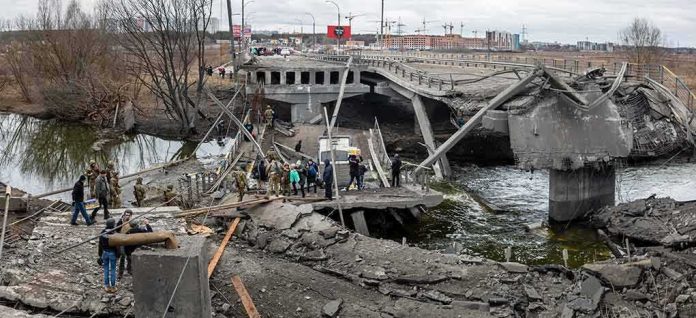
Hours after Ukraine struck the Crimean Bridge, Russia launched a sweeping missile and drone barrage across multiple Ukrainian cities, signaling a promised “painful” response from President Vladimir Putin.
Story Snapshot
- Ukraine hit the Crimean Bridge, disrupting a key Russian supply route, then Russia struck cities across Ukraine.
- Putin vowed retaliation and said there would be no negotiations following the bridge attack.
- Russian strikes targeted major urban areas, including Kyiv, Kharkiv, Dnipro, and Zaporizhzhia.
- The bridge’s military and symbolic value raised the stakes for both sides.
Bridge Strike Sets Off Rapid Escalation
Ukrainian forces struck the Crimean Bridge on November 16–17, damaging sections and disrupting traffic on a link Russia uses to supply its forces in occupied Crimea. Ukraine’s General Staff said it used Neptune missiles and hit railway tracks, while Russian officials acknowledged disruptions and inspections on the span. The bridge has high strategic and symbolic value for Moscow, making any strike on it a clear signal of intent and capability by Kyiv.
Russia framed the bridge attack as terrorism and opened a case, attributing it to Ukrainian armed formations. President Vladimir Putin publicly vowed to retaliate and said there would be no negotiations in response to such strikes. His warning came as officials in Moscow highlighted the bridge’s importance to logistics and control over Crimea. Russian agencies reported temporary train suspensions and close assessments of the structure after the attack.
Overnight Barrage Hits Major Cities
Following the bridge strike, Russia launched an overnight missile and drone attack across Ukraine, with Kyiv, Kharkiv, Dnipro, and Zaporizhzhia among the main targets. Local officials reported damage to infrastructure and renewed pressure on energy systems as winter approaches. The scale and breadth of the assault fit a familiar wartime pattern: action, attribution, public warning, and punitive escalation. The timing supports a retaliatory sequence, even as formal military orders linking the events have not been disclosed.
Ukrainian and Russian narratives stressed tit-for-tat logic. Kyiv cast its bridge operation as a response to repeated Russian strikes on Ukrainian infrastructure, while Moscow described its subsequent wave as payback for Crimea. This mirrors a broader dynamic in the war, where both sides present large-scale actions as justified responses to prior attacks. Analysts have noted how such cycles entrench risk and expand target sets, especially when energy and transport nodes are involved.
Why the Crimean Bridge Matters
The Crimean Bridge carries both road and rail traffic that support Russian military logistics into occupied Crimea and onward to southern fronts. Hitting it can slow troop movements, strain supply lines, and dent morale. The bridge also represents a signature project tied to Russian control of Crimea, making any damage a political embarrassment for the Kremlin. Ukraine, for its part, has sought to disrupt Russian logistics while signaling that occupied territory remains contested.
Rise and shine, patriots. Here's what broke while you were sleeping:
🇺🇦 UKRAINE: Russia launched a major overnight missile and drone attack that killed at least eight people and hit three bridges in Kyiv, per BBC. Zelensky called it "one of the most massive strikes" of the war… pic.twitter.com/BjGAq27ef4
— 🇺🇸 MAGARon 🇺🇸 🫡:) 👀 🍿 🇺🇸 (@RonXilla) November 20, 2026
Reports described visible structural damage and closures after recent strikes, though complete destruction remains difficult due to defenses and repairs. Russian authorities confirmed damage assessments and legal actions, and they emphasized that specialists were working to restore operations. Each new hit forces Russia to commit resources to protection and repair, while each Russian response seeks to degrade Ukrainian infrastructure and will, especially in the colder months.
What This Means Beyond the Battlefield
Escalation cycles like this bleed into broader worries many Americans share about global disorder, rising costs, and leaders who talk tough but struggle to end grinding conflicts. The strikes risk deeper damage to Ukraine’s energy grid, a problem that can ripple through Europe’s markets. The United States, under President Trump, faces pressure from both the right and the left to balance support, avoid endless commitments, and demand accountability for how aid and strategy serve American interests at home.
Conservatives see a warning about energy security and supply chains when missiles hit power plants. Liberals see the costs of war landing hardest on civilians and the poor. Both sides doubt that distant elites, in any capital, own the consequences of their decisions. The bridge strike and the swift Russian response show how quickly one high-profile target can widen the fight, draw in more money and matériel, and leave ordinary people paying the price in heat, light, and safety.
Key Open Facts and Limits
Available reporting shows a clear sequence: a Ukrainian strike on the Crimean Bridge; Putin’s vow to retaliate; and a broad Russian barrage on Ukrainian cities. The evidence supports a plausible retaliatory link through timing and statements. It does not include published Russian operational orders tying specific targets to the bridge incident. That line between political promise and military tasking often stays classified, even when the sequence is plain on the ground.
Sources:
insiderpaper.com, dw.com, bostonglobe.com, france24.com, abc7chicago.com, english.nv.ua, bbc.com, osw.waw.pl