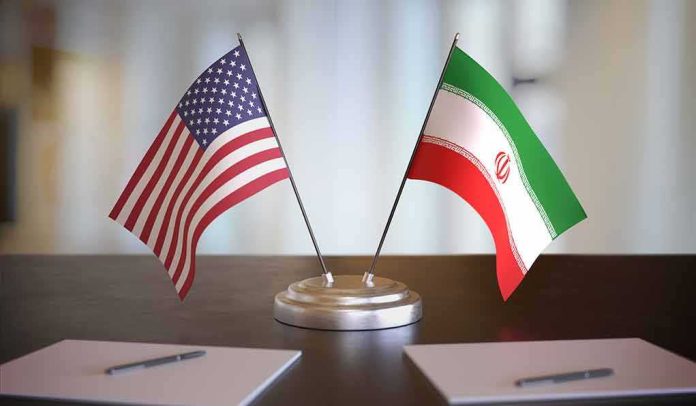
Washington and Tehran are set to resume talks on July 11 in Pakistan, with money, nukes, and shipping lanes all on the line.
Story Snapshot
- Talks target sanctions relief, frozen assets, and nuclear issues
- Meeting builds on a recent Islamabad memorandum framework
- April’s Pakistan talks failed, exposing deep gaps
- U.S. cites progress, but key disputes remain unresolved
What Is Confirmed About The Next Meeting
Al Arabiya, cited by two outlets, reported that the United States and Iran plan to meet in Pakistan on July 11. The agenda includes sanctions relief, frozen Iranian funds, and nuclear matters. A Chinese outlet separately echoed the July 11 date and location. Dawn, a Pakistani newspaper, said Islamabad is the leading venue, though not yet officially named. These reports align with a pattern of third-party talks that move in fits and starts, often under heavy regional pressure and media spin.
Diplomatic sources told Dawn the session aims to carry forward a framework set two weeks earlier in an Islamabad memorandum. That document’s full text has not been published, which limits clarity on the exact terms and timelines. Still, the focus on process is a sign that facilitators want momentum, not grandstanding. That matters for Americans who worry the foreign policy machine burns time and cash while dodging straight answers.
The Stakes: Sanctions, Assets, And Nuclear Limits
Sanctions relief and access to frozen assets are central for Iran’s battered economy and oil sales. Reports suggest talks will center on how, when, and under what checks those funds might move. That money question ties directly to nuclear steps the United States wants. Washington has pushed limits on enrichment and stockpiles before, and it links relief to compliance over time. Iran has resisted strict terms, especially on highly enriched uranium specifics. The clash is both technical and political at home for both sides.
U.S. Secretary of State Marco Rubio said in May there has been “some advancement,” yet warned that big gaps remain. He flagged enriched uranium and rules around the Strait of Hormuz as unresolved. Those are core flashpoints. Iran’s statements suggest nuclear topics are narrow or off the table if they reach into high enrichment specifics. This mismatch risks another stall. When leaders talk past each other’s red lines, the process becomes theater, not progress.
Why The April Breakdown Still Matters
In April, the two sides met in Pakistan for marathon talks and left with no deal. Reports describe clashing proposals and no bridge on limits to enrichment or on maritime control near Hormuz. That outcome taught two lessons. First, there is no quick fix to years of mistrust. Second, packaging relief as “phased for verified steps” pleases Washington but can look like a moving target to Tehran. Without a shared scoreboard, compliance turns into debate, not action.
Media tied to regional rivals shape the story line too. Saudi-linked outlets dominate some early reporting, which can frame Iran’s choices in harsher light. That does not erase facts, but it does bend the focus toward sanctions and nuclear demands over wider security trades. For readers worried about “deep state” games, this is the part where narratives get cooked while the public sees only slivers. The best fix would be publishing the memorandum text and concrete timelines.
Pakistan’s Role And The Road Ahead
Pakistan has leaned into a go-between role. Its army chief traveled to Tehran in May to keep channels open, a signal that Islamabad wants credit for a breakthrough and is willing to spend capital to get there. That said, even Pakistan cannot force agreement on nuclear red lines or maritime rules. Mediators can stage the room, but only the principals can trade sanctions relief for verified steps that stick.
Amid delicate US-Iran peace talks, Iranian Parliament Speaker Mohammad Bagher Ghalibaf traveled to Islamabad to meet the US Vice President. Fearing an Israeli assassination attempt, the Pakistan Air Force escorted the Iranian delegation's aircraft within Pakistani airspace. pic.twitter.com/4TtZPfwDkx
— sana_hon_yar (@sana_504) July 4, 2026
Here is what will show real movement on July 11. First, a written, public outline that matches the Islamabad framework. Second, specific steps and dates for unfreezing funds, matched to measurable nuclear actions. Third, a clear lane for handling Hormuz issues, even if that means a separate track. Without these, expect more headlines, more leaks, and more drift. That cycle costs regular people in higher energy risk and wider global tension, while officials keep their chairs warm.
Sources:
redstate.com, i24news.tv, dawn.com, globaltimes.cn, pbs.org