American forces just stopped an Iranian “surprise” missile attack on a U.S. base in Jordan — but the wider war and the lack of answers at home show how fragile our security really is.
Story Snapshot
- Iran fired multiple ballistic missiles at a U.S. base in Jordan that U.S. defenses fully intercepted.
- The United States answered with “heavy waves” of strikes on Iranian military targets across the country.
- Missile barrages now reach Kuwait, Bahrain, Qatar, and Jordan, threatening both civilians and ceasefire talks.
- Key records on Fauci’s testimony and COVID-19 origins remain missing, feeding distrust in U.S. institutions.
Missiles, Intercepts, And A Spreading War
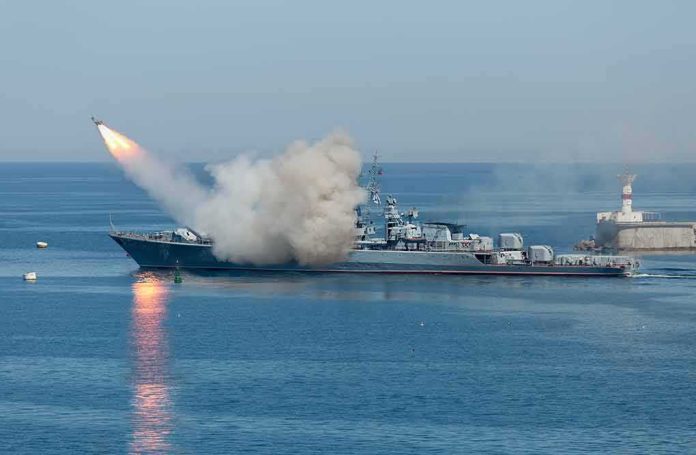
U.S. Central Command said Iranian forces launched multiple ballistic missiles at a U.S. base in Jordan in what it called an “attempted surprise attack.” All of those missiles were intercepted before they could hit the target, according to the command’s public statement. Jordan’s military reported its air defenses shot down five missiles launched from Iran early Wednesday and then again early Thursday, with no casualties in those specific incidents. These intercepts show the missile defense systems work in the moment, but they do not stop the war itself.
News outlets describe a back-and-forth pattern of strikes that now reaches deep into the region. The United States has carried out repeated “heavy waves” of attacks on sites tied to Iran’s Revolutionary Guard, hitting command centers, missile and drone facilities, coastal radar, and naval assets. Iran has answered with missile barrages on U.S. bases in Kuwait, Bahrain, Jordan, Saudi Arabia, and on key infrastructure like water and power plants. At least two U.S. service members were killed at a base in Jordan from an earlier Iranian strike. Civilians and workers in Kuwait and Iran have also been killed or wounded as debris falls and buildings are hit.
From “Self-Defense” To Open-Ended Campaign
President Trump and U.S. officials say these strikes are about **self-defense** and keeping trade routes open. They argue Iran’s missile and drone programs, and its past attacks on U.S. forces and shipping, forced a strong response to protect Americans and allies. U.S. Central Command has said recent strikes aim to “degrade Iran’s ability to threaten innocent mariners” in the Strait of Hormuz, a narrow waterway that carries a large share of the world’s oil. The State Department’s top lawyer has defended the wider military campaign as lawful collective self-defense under international rules.
Many legal and policy experts push back on that framing. More than 100 international law specialists have argued that U.S. actions, including joint operations with Israel, clearly breach the United Nations Charter’s limits on force. Arms-control analysts say there is no public evidence that Iran’s nuclear and missile programs posed an “imminent” threat that would justify such broad strikes. Independent reports show the campaign, now known as Operation Epic Fury, has hit hundreds of targets across Iran, damaging military infrastructure but also causing rising civilian deaths and injuries. This leaves ordinary Americans wondering whether “defense” has quietly turned into another open-ended war with no clear finish line.
Regional Allies Caught In The Crossfire
Neighboring countries are now paying the price for this clash. Kuwait has reported shooting down multiple Iranian ballistic missiles, a cruise missile, and drones, yet still saw a Chinese firm’s building badly damaged and a worker killed when one strike got through. Bahrain and Qatar say their air defenses have been activated to stop incoming fire, while Jordan has intercepted waves of missiles and drones over several days. These governments must calm frightened citizens, protect critical infrastructure like desalination plants, and try to keep basic services running as missiles arc overhead.
At the same time, governments are struggling to keep diplomacy alive. Reports from multiple outlets say this spike in attacks is tearing apart fragile ceasefire deals and stalling peace talks aimed at stopping the broader Middle East war. Oil prices have swung sharply with each pause and restart in fighting, reminding Americans that chaos abroad can mean higher costs at the pump and in the grocery store. People on both the right and the left see a pattern: global decisions made in closed rooms by political and military elites that leave regular workers and families to absorb the fallout.
Fauci Testimony, Missing Records, And Growing Distrust
While missiles fly overseas, many Americans are still focused on unanswered questions at home, including what top health officials told the public about COVID-19. The research set for this story includes claims that Anthony Fauci took the Fifth Amendment and misled the public in Senate testimony. But it does not include a hearing transcript, video, sworn deposition, or any primary document to verify those specific accusations or to clear him of them. That lack of evidence either way is itself part of the problem.
Citizens across the political spectrum are frustrated that critical records on pandemic decisions and virus origins remain sealed, redacted, or missing. Similar gaps appear around national-security choices: after-action reviews, intelligence assessments, and detailed missile-defense data are often classified, leaving people to choose between official talking points and partisan media narratives. When the government asks the public to “trust us” on war, health policy, or surveillance without offering full documentation, it feeds the sense that a protected elite — the so-called deep state — plays by different rules than everyone else.
What Happens Next — And What To Watch
The next phase of this crisis will turn on a few key questions. First, can U.S. and allied defenses keep intercepting Iranian missiles without a major mass-casualty event, either on bases or in nearby cities? Second, will President Trump’s team keep expanding targets inside Iran — from missiles and drones to power plants, ports, or leadership sites — or narrow the campaign to reduce civilian harm and economic shock? Third, will Iran keep striking U.S. positions and partners, or pause again if back-channel talks resume and oil markets stabilize?
For Americans, the deeper issue is whether any of this is being debated with honest facts and real accountability. That means pressing for declassified records on the Iran war, complete transcripts of high-profile testimony like Fauci’s, and clearer limits on when leaders can claim “self-defense” to launch major operations. People who feel shut out — conservatives angry about endless wars and liberals angry about unpunished misconduct — increasingly agree on one point: a federal system that hides the ball on life-and-death decisions is failing the promise that hard work, truth, and fair rules should still matter in the United States.
Sources:
youtube.com, npr.org, apnews.com, latimes.com, reuters.com, cnn.com, cbsnews.com, washingtonpost.com, understandingwar.org, cfr.org, armscontrol.org