President Trump declared the U.S.-Iran ceasefire “over” after Iran-linked attacks on ships, and U.S. forces struck more than 80 targets in response.
Story Highlights
- Trump said the ceasefire is “over” and blasted Iran’s leadership at a NATO summit.
- U.S. Central Command hit over 80 Iranian military targets after attacks on three ships.
- The ceasefire came from the Islamabad Memorandum signed June 17, with a 60-day window.
- Trump said talks may continue even as the military response escalates.
Trump Ends Truce After Ship Attacks and Announces Retaliation
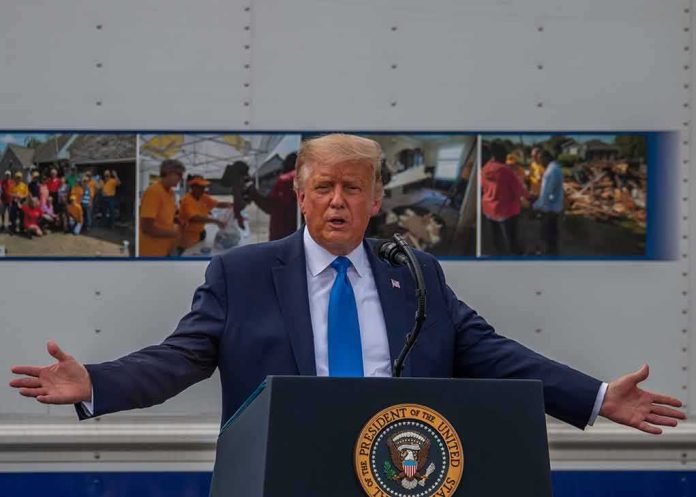
President Trump told reporters in Ankara on July 8 that the ceasefire with Iran is “over,” citing Iranian attacks on commercial shipping in the Strait of Hormuz. He used sharp words for Tehran’s rulers and said the United States would not ignore new threats. Soon after, U.S. Central Command announced strikes on more than 80 Iranian military targets. Commanders framed the action as direct retaliation for attacks on three ships in one of the world’s busiest oil lanes.
Trump also said Iran plays a double game in talks. He claimed Iranian officials agree privately, then deny it in front of cameras. He said that makes any deal pointless if their word means nothing. Despite the “over” line, he added that American negotiators could continue discussions. That creates a split-screen moment: pressure from the air and pushes at the table. The White House message signaled strength while keeping diplomatic options alive.
What the Islamabad Memorandum Did and Why It Now Faces Strain
The ceasefire rested on the Islamabad Memorandum signed June 17. The document set a 60-day period to hammer out final terms and stabilize shipping. It followed months of fighting and a short, earlier truce that faltered. Reports note both sides had clashed more than once since the agreement began. That record adds stress to the process and shows how fragile the arrangement became before this week’s blowup.
U.S. strikes focused on Iran’s tools of attack. The targets included air defenses, missile and drone storage, coastal surveillance, naval assets, and related infrastructure. Hitting these sites aimed to blunt Iran’s reach against ships and regional bases. The Pentagon logic is simple: reduce capability, reduce risk. These are the types of sites Iran uses to threaten sea lanes and harass traffic in the narrow Strait, where many of the world’s tankers pass.
Disputes Over Who Broke the Deal First and What Comes Next
Tehran’s forces accuse the United States of violating the ceasefire first. Iranian Revolutionary Guard Corps statements call the United States the aggressor and say Washington broke the Islamabad understanding with airstrikes. That claim conflicts with U.S. Central Command’s account that the strikes answered Iran-linked attacks on three civilian vessels. Independent public proof on the ship attacks has not been released, leaving a sharp dispute in the open.
Media coverage also highlights the lack of a formal legal order ending the memorandum. Trump’s words were clear, but they were not a signed termination document. That adds gray areas for diplomats and Congress. Analysts point out the truce had already seen multiple violations on both sides. That history cuts against Tehran’s clean-hands argument but also raises process questions for Washington. The administration says deterrence requires action even as talks continue.
Why This Matters to U.S. Security, Energy, and Rule of Law
The Strait of Hormuz is a vital artery for global oil and for American allies. When Iran threatens ships, energy prices jump and families feel it at the pump. Securing the sea lane protects our economy and sends a message that piracy and missile fire will not win. The new U.S. strikes match that mission. They target the very systems Iran uses to menace civilian traffic. Strong sea control defends American wallets and our friends abroad.
Americans also expect clarity and lawful process. The Islamabad Memorandum set rules, but it did not give Iran a free pass to attack ships. If Iran struck first, then U.S. force is justified and necessary. If the truce is functionally dead, the administration should publish the legal path forward. That could include a formal notice ending the memorandum. It could also include declassified evidence on the ship attacks to silence doubters and unite support at home.
Sources:
politico.com, instagram.com, youtube.com