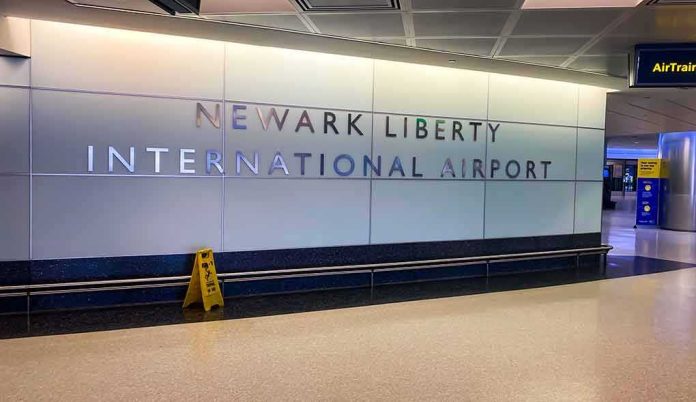
A Dutch social media star was taken into U.S. immigration custody at Newark Airport and moved to a private detention center, with no public reason given by authorities.
Story Snapshot
- Reports say Immigration and Customs Enforcement took Vera Dijkmans into custody at Newark Airport.
- Family says she remains held at Delaney Hall Detention Center in New Jersey.
- Officials have not publicly explained the legal basis for her detention.
- The facility is run by a private prison company under a long-term government contract.
What Happened at Newark Airport
Multiple outlets reported that Immigration and Customs Enforcement officers detained Dutch influencer Vera Dijkmans after she arrived at Newark Liberty International Airport in mid-November. Dutch and English-language reports placed the pickup at the airport and said she was moved to a local detention site the same day. Family statements carried by news sites repeated that she was taken into custody at Newark and did not leave the airport on her own.
Accounts in Dutch and Australian media aligned on the timing and travel route, saying she flew in from Miami and was moved to a Newark-area facility after arrival. A separate Dutch report likewise said she was arrested at Newark days earlier and transported into immigration custody. These reports relied on named relatives and friends to describe the transfer. Officials did not issue their own step-by-step timeline in these stories.
Where She Is Being Held
Family and friends said Dijkmans is being held at Delaney Hall Detention Center in New Jersey, which sits near the airport. Dutch reporting identified Delaney Hall as a facility managed by the GEO Group, a private prison operator that holds a government contract to detain immigrants there. That report described a 15-year agreement valued at about $1 billion for up to 1,000 beds at the site. Such contracts pay private firms to provide beds and services while the government controls custody decisions.
Relatives have also described conditions inside the center. A local report quoted her mother saying that officers did not allow her to bring basic items, like a toothbrush, when she was taken in, and complained about crowded rooms and limited daylight. These claims come from family accounts reported by media outlets. GEO Group and Immigration and Customs Enforcement did not provide detailed responses on conditions in the cited coverage.
What We Know—and Do Not—About the Legal Basis
Outlets in the Netherlands and the United States said authorities have not publicly explained the legal reason for the detention. Reports note that there is no arrest record or immigration court filing available in public databases cited by those outlets, and no agency notice with a case number appeared in the coverage. The NL Times also said the exact basis for the detention remained unclear, echoing the lack of a formal statement from the agency in these stories.
United States immigration law gives wide power to officers at ports of entry to inspect travelers and, in some cases, to hold them. Federal guidance explains that people at the airport inspection line can be treated as applicants for admission and may face detention during processing. Courts have held that, until a formal charging notice is filed, there is no duty to advise of a right to counsel during secondary inspection. A Congressional research report further notes that immigration judges cannot set rules for certain classes of custody, which remain under agency control.
Why This Case Strikes a Nerve
This story touches hot-button issues for many Americans. Conservatives point to border enforcement and visa compliance. Liberals worry about due process and humane treatment. Both sides see a system where private contracts and secretive rules can trump common sense. A private company runs Delaney Hall under a long-term deal, while the government decides who stays locked up. That setup feeds the belief that insiders gain, while the public and the detained get few clear answers.
‘World’s most wanted’ OnlyFans model with 6m followers is arrested by ICE & cries over ‘unsanitary’ lockup conditions.
Dutch influencer and OnlyFans model Vera Dijkmans, who was arrested five days ago by US ICE agents, remains in custody without any reason given for her… pic.twitter.com/yT71EqLROj
— 7happy (@Sevenhappy007) November 17, 2026
High-profile cases often get sensational coverage. Here, the focus on a celebrity career can drown out the core facts: a person was detained at a U.S. airport, moved into a private-run facility, and officials have not explained why in public reports. The law allows that silence, but the silence also breeds frustration. People across the spectrum want three basics from their government—clear rules, fair treatment, and transparent reasons. This case tests all three.
Sources:
linkedin.com, news.com.au, rawstory.com, nltimes.nl, dutchnews.nl, yahoo.com, dutchreview.com