
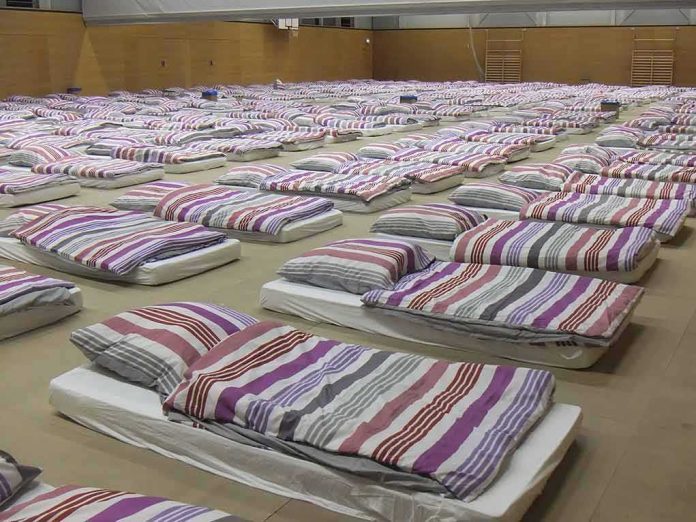
The Pentagon told commanders to move troops out of barracks with emergency hazards fast—underscoring how basic safety has become a readiness issue, not just a comfort issue.
Story Snapshot
- A federal watchdog found mold, failed fire systems, and other hazards in barracks across multiple bases.
- Leaders have ordered rapid relocations when conditions pose immediate risk, as seen after a Guam inspection.
- A $285 billion maintenance backlog shows why problems persist and fixes lag.
- Military officials say poor housing hurts morale and readiness, pressing for faster action.
What Triggered Urgent Moves
The Government Accountability Office reported widespread health and safety hazards in military barracks after visiting 10 installations in 2023. Inspectors found mold in all 10, heating and air failures in all 10, water problems at five, and broken or faulty fire protection at four. The report said some barracks failed to meet the Defense Department’s minimum standards and posed serious risks to residents. These findings helped drive faster action when buildings crossed an emergency line.
A concrete example came after senior Navy leaders walked through a troubled barracks on Guam. Following that visit, leaders ordered sailors and Marines moved out within days. A three-star admiral called the conditions “clearly unacceptable,” directed inspections, and told commands to place people in better housing when buildings were not safe. That on-the-spot response showed how leaders can shift from repair plans to immediate relocation when basic safety breaks down.
Why Conditions Became So Dire
Watchdogs and lawmakers point to chronic underfunding and backlogs that stretch over many years. The Government Accountability Office reported an estimated $285 billion installation maintenance backlog affecting buildings across the force, including barracks. That gap exists because the department has not fully funded facility sustainment and lacks reliable condition data. As a result, problems stack up faster than repairs, and some barracks slide from “worn” to “unsafe”.
Service members described sewage leaks, bedbugs, extreme heat, and trouble breathing tied to air quality. Reports also cited broken fire systems and doors that did not lock. Lawmakers pressed Pentagon officials on why so many buildings remained in poor shape and asked what it would take to make housing safe and steady again. Leaders said they would target life, health, and safety risks first, but warned that budgets and staffing limit speed.
Readiness, Rights, and Rapid Response
Military leaders now link safe housing to readiness. Troops who cannot sleep, stay healthy, or secure their rooms are less focused and less fit to train and deploy. The Navy issued a “bill of rights” for unaccompanied housing that promises a safe, secure place to live with working utilities and systems that meet health standards. That policy gives commands a clear yardstick for action when buildings fall below basic safety levels.
🔴 Pentagon orders temporary housing for troops in unsafe barracks within 24 hours
Secretary of Defense Pete Hegseth directed military services on November 10 to provide temporary lodging on or off base for troops living in barracks with "emergency conditions" posing health or… pic.twitter.com/FTjr4ExrGI
— NewsTongue (@NewsTongueX) November 16, 2026
Budget plans in recent years have raised the priority on barracks repairs and replacements. Construction officials said barracks and installation safety would be top items in the military construction budget. They highlighted targeted moves to fix life, health, and safety issues now, while larger replacement projects work through design and funding. That mix aims to reduce emergencies and limit costly short-notice relocations as new capacity comes online.
What Still Needs Proof and Follow-Through
Officials have shown they can order fast moves when hazards are clear, but execution varies by base. The watchdog said the department had adopted some fixes but had not solved oversight gaps across all services. That matters because commanders need accurate data to spot danger early and to plan safe, timely relocations. The number of troops affected at any one time can also strain lodging, transport, and budgets if many buildings fail at once.
Why This Matters Beyond the Barracks
Both conservatives and liberals see a familiar pattern: big promises at the top, slow fixes on the ground. Taxpayers fund the military to defend the nation, yet too many young service members face mold, sewage, and broken fire systems where they sleep. Quick relocation orders signal urgency, but they do not erase years of missed maintenance. Clear standards, steady funding, and public reporting are needed so safe housing is the norm, not a scramble after the fact.