
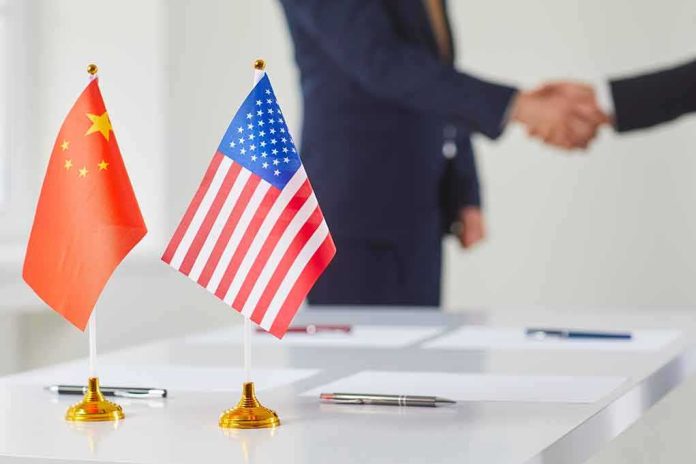
President Trump will meet Russia’s Vladimir Putin and China’s Xi Jinping in Shenzhen to press denuclearization, putting America’s security goals at the center of a rare three-leader summit.
Story Highlights
- Trump confirmed plans to meet Putin and Xi, with denuclearization on the agenda.
- U.S. officials said the first U.S.–China–Russia leader meeting is planned during APEC, focusing on nuclear risk.
- The summit is slated for Shenzhen during the November 18–19 APEC dates, with a leader session on November 19.
- Talks may also touch on Iran and Ukraine, though officials expect no immediate agreement.
Trump Sets Denuclearization Push With Putin and Xi
President Trump told reporters he expects a meeting with President Putin and President Xi, and said denuclearization is a key topic. He spoke before returning from Florida on November 8. His remarks marked the first public outline of a three-way discussion. Subsequent reports said the meeting would occur on the sidelines of the Asia-Pacific forum. The aim is to lower nuclear dangers and open a channel for future steps. Trump also flagged Iran and Ukraine as possible topics.
Senior United States officials confirmed the plan for the first leader-level session among the United States, China, and Russia. They said denuclearization would be the focus, not a side note. Officials did not forecast a signed deal this round. They described an opening conversation that could set terms for later talks. That framing matches past arms-control starts. Leaders meet first, then expert teams build options, timelines, and checks that can be tested for results.
Where and When the Summit Will Occur
Reports placed the summit in Shenzhen, China, during the November 18–19 Asia-Pacific meetings. A leader session on November 19 is the target. This gives the White House and foreign ministries a firm window to shape agendas and reduce surprises. The United Nations signaled support for any real denuclearization steps that may follow. Clear timing and venue help drive staff work and signal to markets and allies that serious talks are underway.
The United States and China held supporting talks at the cabinet level. The State Department said Secretary of State Marco Rubio and Foreign Minister Wang Yi agreed that leader talks should advance peace and denuclearization. That message showed both sides kept channels open as planning moved ahead. Such groundwork matters. It sets expectations and avoids mixed signals when the leaders sit down together in Shenzhen. It also helps define a narrow, workable first agenda.
What Will Be on the Table
Trump said denuclearization would lead, with Iran and Ukraine also in the mix. Media reports pointed to nuclear risks, the war in Ukraine, tension with Iran, and global flashpoints. One United States official suggested Ukraine might be handled outside the three-way format. That reflects a tight focus at the table. Keeping the scope clear can improve outcomes. Complex technical issues like nuclear limits demand time, discipline, and follow-up steps to move forward.
Iran will be discussed “a little bit” during his trip to Asia this week, US President Donald Trump told reporters at the White House on Monday before departing for the ASEAN summit in Manila, Philippines, saying the United States had Iran “in very good shape.” He will then head… pic.twitter.com/Em4cinlAwu
— Iran International English (@IranIntl_En) November 16, 2026
China’s stance remains a hurdle. Public reporting says Beijing resists talks on stockpile limits alongside Washington and Moscow. The reason often cited is the size gap in nuclear forces. That does not make talks pointless. It means American negotiators must design incentives and risk-reduction steps that meet each side’s core interests. Early wins could include crisis hotlines, test notifications, or guardrails on dangerous deployments, which build trust for harder steps later.
What It Means for American Interests
A leader-level start on denuclearization advances core United States goals: protect the homeland, keep peace through strength, and prevent nuclear blackmail. A clear agenda also helps our allies. It shows Washington is driving the process, not reacting to it. No one expects a treaty overnight, and officials have said as much. But opening a serious track now can reduce risk and set terms that reflect American power and values, not the wishes of hostile regimes.
Sources:
youtube.com, reuters.com, bloomberg.com, dw.com