
Russia’s Foreign Ministry says its ambassador to the United States, Alexander Darchiev, died “suddenly” at 66, leaving a key Washington post vacant at a tense moment between the two countries.
Story Snapshot
- Russia’s Foreign Ministry announced Ambassador Alexander Darchiev’s sudden death at age 66.
- Reports say no cause of death was disclosed, and details remain limited.
- Darchiev took charge of Russia’s Embassy in Washington in early 2025.
- The vacancy adds uncertainty to already strained United States–Russia ties.
What Moscow Announced About The Ambassador’s Death
Russia’s Foreign Ministry reported on November 11 that Alexander Darchiev, its ambassador extraordinary and plenipotentiary to the United States, “passed away suddenly” at age 66. Multiple outlets repeated the core facts and cited the ministry as the source. The brief statement did not include a cause of death or circumstances. State-linked media used similar wording and noted his rank and current post. This keeps the known facts narrow and firm: the death, the age, the role, and the date.
ABC News and Politico also cited the Russian Foreign Ministry in reporting Darchiev’s death and the lack of disclosed cause. Those reports matched state-linked coverage and confirmed his position as Russia’s top envoy in Washington. The consistency across major outlets points to one official account and no competing version in public view. The reports did not name a location of death or a treating physician. One simple caveat remains: authorities have not released a cause.
Who Darchiev Was And When He Took The Post
Alexander Darchiev led the Russian Embassy in Washington starting in 2025, following the end of Anatoly Antonov’s tenure. Coverage identified him as a veteran diplomat and a specialist on relations with the United States. His appointment came during a period of sharp strain, including disputes over sanctions, cyber issues, and military conflicts involving Russian forces and Western policy. His role placed him at the center of day-to-day contact with the United States government and the Washington diplomatic corps.
The Moscow Times reported that Darchiev replaced Antonov in early 2025, aligning with other accounts that tracked his arrival to the Washington post that spring. That timeline matters now because it shows the ambassador had served for more than a year before his death. In diplomatic terms, that is enough time to build working ties and set a style. Those ties now pause. The embassy shifts to a charge d’affaires until Moscow names a replacement.
Why The Timing Matters For United States–Russia Relations
United States–Russia relations remain cold and complex. Sanctions battles continue. Military support choices by the United States shape conflicts that involve Russian forces. Cybersecurity and energy disputes add layers of risk and cost. In that setting, an ambassador’s death is not just personal loss; it is a gap in a critical channel. Ambassadors help manage small fixes in tense times, like prisoner issues, consular access, and urgent messages that must move fast and clear.
Washington and Moscow still use embassies to avoid misread signals. When tempers run high, a call through a known envoy can stop a minor clash from growing. Without a Senate-confirmed United States ambassador in Moscow at times in recent years, and with frequent expulsions of diplomatic staff on both sides, every stable link matters. The absence of a named Russian ambassador in Washington can slow talks, even if day-to-day work continues under senior deputies.
Public Details Are Limited, But The Core Facts Are Firm
Newsrooms noted the ministry’s “suddenly” phrasing and the absence of a medical cause, then stayed within those known facts. Interfax, TASS, ABC News, Politico, and others reported the same baseline without adding claims they could not support. That discipline is typical in early hours of a high-profile death. Later updates may add medical or family details, but the central fact remains: Russia’s serving ambassador to the United States has died, and the post is vacant.
BREAKING: Russia's ambassador to the U.S., Alexander Darchiev, has died at age 66, the Russian Foreign Ministry announced. No cause of death has been given. pic.twitter.com/QTdEF9MyPT
— Monitoring the Situation (@monitoringmeme) November 11, 2026
Past reporting has recorded several unexpected deaths of Russian diplomats over the last decade. Some were attributed to natural causes. Others had unclear details. That record explains public interest when a senior envoy dies without a stated cause. Still, each case stands on its own. In Darchiev’s case, the official statement is brief, and no public source has offered a different account. For now, the story is about a confirmed death and a key vacancy, not a suspected plot.
What To Watch Next
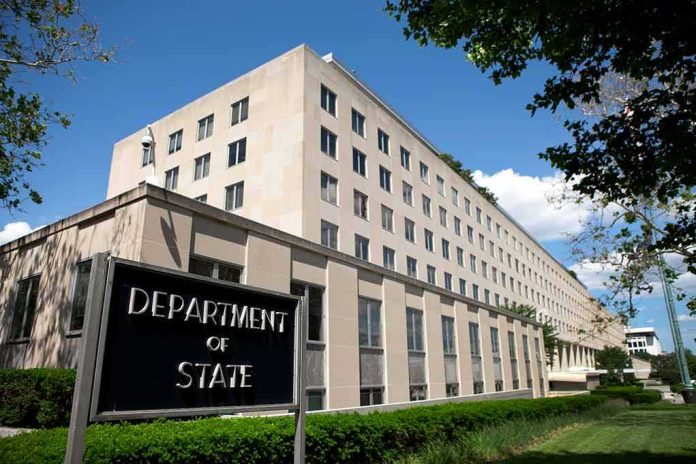
Watch for three signals. First, a formal obituary or medical detail from Russian authorities or the family, which could define cause and place of death. Second, the Russian government’s pick for a successor, which will show how Moscow wants to shape its Washington footprint. Third, any United States response through the Department of State, including condolences and notes on protocol. These steps keep vital lines open at a time when missteps can carry a high price.
Sources:
insiderpaper.com, interfax.com, abcnews.com, tass.com, themoscowtimes.com