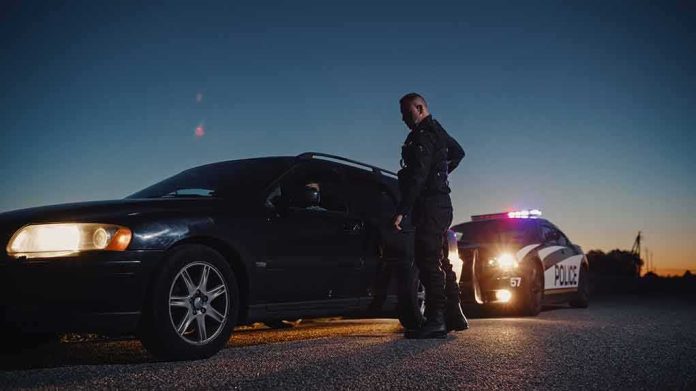
A deployed National Guard specialist was arrested in Washington for carrying a pistol without a District of Columbia license after a routine traffic stop, underscoring how confusing gun rules collide with federal deployments in the nation’s capital.
Story Highlights
- U.S. Park Police stopped a vehicle for an expired tag and found a handgun, leading to an arrest.
- Court records show the soldier lacked a District of Columbia concealed-carry permit, which the city requires.
- The arrest follows other firearm run-ins involving deployed troops amid strict District of Columbia gun laws.
- The case spotlights how mixed rules and missions fuel public concern about order, rights, and accountability.
What Happened During the Traffic Stop
U.S. Park Police pulled over a vehicle in Washington on Monday for an expired tag. Officers then discovered a handgun and arrested Specialist Jakob Noonan, 22, of the Oklahoma National Guard, on a charge of carrying a pistol without a license. Associated Press reporting ties the gun discovery to the stop and says court records show Noonan did not have a District of Columbia permit to carry. Police described the case as a licensing violation under District of Columbia law.
The District of Columbia requires a person who carries a loaded handgun, including in a vehicle, to hold a valid concealed-carry license issued by the city. The Metropolitan Police Department also lists steps license holders must follow if stopped, such as disclosing the weapon and showing the license and registration. A widely used legal summary notes that carrying a loaded firearm in a vehicle without a District of Columbia permit is not allowed. These rules differ from many states, including Oklahoma.
Why This Arrest Draws Wider Attention
The arrest happened while National Guard troops are deployed in Washington under a mission launched by President Trump. Those deployments have brought soldiers into daily contact with local rules that are tougher than what many troops know at home. Reporters have documented earlier cases where off-duty soldiers ran into District of Columbia gun laws, and prosecutors later dropped those charges in two incidents, highlighting ongoing friction between missions and local codes.
This latest case follows another recent Guard arrest in the city, where a soldier was accused of pulling a gun on a fellow service member during an argument. That case, which is separate, also unfolded during this extended deployment and added fuel to public debate over troop roles, training, and oversight on city streets. Together, these incidents show how fast routine moments can become legal trouble when rules are strict and expectations are unclear.
How District of Columbia Law Shapes Outcomes
District of Columbia law treats carry and transport very tightly, with specific offenses tied to unregistered guns and unlawful carry. Even licensed holders must follow set steps if stopped by police, including disclosing the weapon, showing the license, and identifying the gun’s location. That framework helps explain why a routine traffic stop, like an expired tag, can quickly lead to a serious charge if a driver lacks the city’s permit, even when the person lawfully owns the gun elsewhere.
A National Guard member deployed to Washington, D.C. has been arrested for carrying an unauthorized firearm after a traffic stop by U.S. Park Police. https://t.co/Adm5A9u7UE
— FOX 5 DC (@fox5dc) October 3, 2026
Authorities have not said more about the pistol beyond that it was found during the stop, and early reports describe a straightforward charge based on license rules. As with any arrest, the charge is an allegation and will move through the court process. The Oklahoma National Guard and District of Columbia officials have not announced discipline or policy changes tied to this incident in the reporting reviewed so far.
What This Means for Public Trust
People on the right and the left see a familiar pattern: complex rules, many agencies, and unclear lines of authority. Supporters of strict gun control will say the law worked as written. Defenders of the troops will argue that mixed standards set soldiers up to fail. Both sides ask why deployments continue without crystal-clear guidance on local laws. When basic tasks like a traffic stop can derail a mission, it feeds the view that government systems talk past each other instead of serving citizens.
Sources:
washingtontimes.com, kdhnews.com, bostonherald.com, pressdemocrat.com, fox5dc.com, wn.com