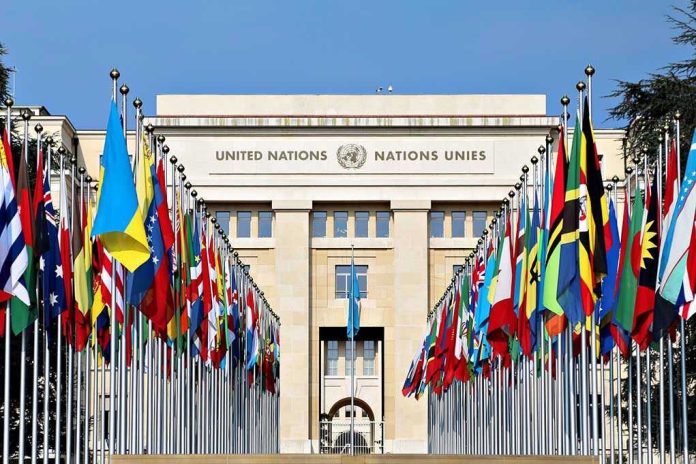
At the United Nations, President Trump declared American strength and sovereignty are back, tying U.S. power to freedom and security for the world.
Story Highlights
- President Trump addressed the 81st United Nations General Assembly, centering on American strength and sovereignty.
- Trump opened by marking America’s 250th year and highlighted domestic gains before turning to global threats.
- He linked U.S. power to defending freedom and rejecting outside control over American life and policy.
- Coverage noted firm lines on Iran, artificial intelligence governance, and global conflicts.
Trump Uses UN Stage To Center American Sovereignty
The White House stated that President Trump addressed the 81st session of the United Nations General Assembly and said American strength and resolve are back. Officials framed the message as action over talk, with a focus on national sovereignty and clear defense of U.S. interests. A live listing from Cable-Satellite Public Affairs Network (C-SPAN) confirmed the event and described Trump touting his administration’s results at home and abroad to a global audience in New York.
White House language presented the speech as a vow to confront enemies, protect American interests, forbid communism, and reject global control that weakens self-rule. That framing aligns with Trump’s long record at the United Nations of casting world affairs as a contest between national self-government and distant bureaucracies. The president said American power is a force for safety and ordered liberty, not a license for endless wars or foreign meddling in U.S. life.
Marking 250 Years, Then Turning To Security And Power
Live reporting described Trump opening by marking America’s 250th anniversary and highlighting domestic strength before pivoting to global issues. Coverage said he pointed to the economy, crime, and immigration enforcement as evidence that order at home supports strength abroad. The structure echoed a common pattern for presidents at this forum, using national history and achievements to argue that a confident America makes the world steadier and safer.
American Broadcast Corporation coverage captured Trump’s claim that reaffirming U.S. strength, including military power, helps foster a safer future for all. That line linked hard power to peace, a classic conservative argument that peace follows deterrence and resolve. It also fits the administration’s case that secure borders, reliable energy, and a strong defense deter bullies, stop chaos from spreading, and keep families and businesses safe from foreign shocks.
Iran, Conflicts, And The Line Against Global Control
Major outlets focused on Iran and conflict language, reflecting Trump’s warning posture and his defense of current policies. Reports noted firm talk about confronting Iran and managing global flashpoints with clear red lines. The tone underscored that appeasement invites danger. It was a message to allies and adversaries that the United States will not accept nuclear blackmail, terror finance, or proxy wars that threaten American lives and partners.
Trump also pushed back on efforts to centralize control of emerging technologies under global boards or schemes. Reports said he rejected a top-down international push on artificial intelligence that could restrain American innovation or hand power to unaccountable bodies. That stance matched his larger theme: free nations, accountable to their people, should set their own rules and protect civil liberties, rather than outsource authority to distant committees.
Why This Message Resonates With Conservatives
Conservatives have watched years of globalist agendas try to soften U.S. borders, police speech, and burden energy producers. Trump’s United Nations remarks answered those concerns with a direct pledge to defend self-rule. He tied secure borders and strong defense to safer communities, stable prices, and the right of parents and workers to live without diktats from foreign bodies. He framed American leadership as peace through strength, not surrender through process.
Cuba's UN delegation walked out during Donald Trump's speech on 22 September after he called the country an "absolutely failed State", predicted its communist regime "will fall" and declared that "freedom will be coming to #Cuba".#Havana #MarcoRubio #UNGA #Trump #Communism
— Nishit Doshi (@NishitDoshi144) September 22, 2026
For readers tired of lectures from elites, the signal was clear: America decides for America. The president highlighted results, not just rhetoric, and drew a sharp line against any system that dilutes the Constitution or the will of U.S. voters. Coverage varied in emphasis, with some outlets focusing more on Iran or sharp lines, but the core is consistent across reports: the United States will defend its people, its sovereignty, and the cause of freedom with resolve.
Sources:
livemint.com, abc.net.au, aljazeera.com, pbs.org, whitehouse.gov