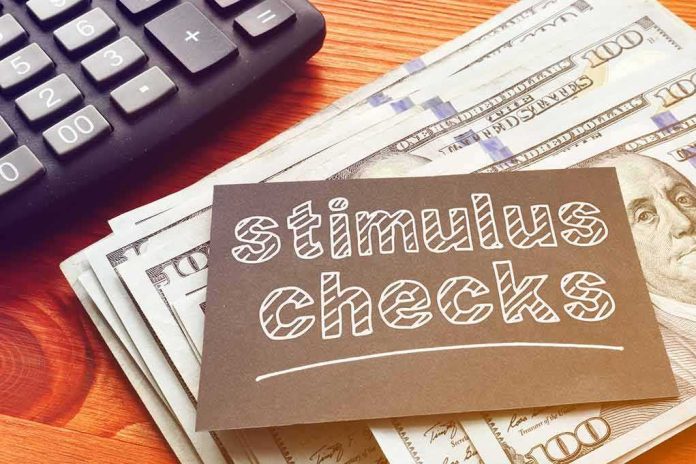
President Trump’s administration has begun sending $500 refund checks to nearly 1 million Americans, starting this October, as a direct giveback tied to Affordable Care Act marketplace fees.
Story Highlights
- About 950,000 Americans in 30 states are getting $500 refund checks this month.
- Eligibility centers on people who bought Affordable Care Act plans on HealthCare.gov without premium subsidies.
- The White House says the money comes from surplus “user fees,” not a new benefit.
- Letters signed by President Trump will accompany the Treasury checks.
What The White House Announced And When Checks Arrive
The White House said nearly 1 million Americans would receive $500 refunds, with checks beginning to go out in October 2026. Treasury has started mailing payments to roughly 950,000 people, according to multiple outlets that tracked the rollout across 30 states. The refunds are framed as direct relief to working families who bought coverage on the federal marketplace and paid costs tied to that system. The administration described the action as consumer restitution, not a new spending program.
Several reports said the checks would arrive with a letter from President Trump, linking the refund to his push to lower costs for families buying their own insurance. The move follows the September announcement and a rapid operational turn to get funds out before the end of the year. Outlets described a clear plan and timeline: identify eligible enrollees, confirm addresses, and mail $500 payments through standard Treasury channels.
Who Qualifies And Why Only 30 States
Eligibility focuses on people who bought Affordable Care Act plans on the federal exchange, HealthCare.gov, and who did not receive premium subsidies, especially those paying full price. The program applies only to the 30 states that use the federal marketplace, not the 20 that run their own exchanges. Reports said this federal-versus-state structure explains the map. The refunds are tied to federal marketplace finances, so only consumers in that system are included this round.
Coverage explained that many recipients earned above the subsidy limits, which often left them paying higher monthly premiums without help. By focusing on these consumers, the refunds target people who shoulder the full cost of plans sold on HealthCare.gov. That practical boundary keeps the program within the federal marketplace’s accounting and avoids crossing into state-run exchange funds. The White House’s description of “user fee” refunds aligns with that narrow scope.
What “User Fee” Refund Means And Total Size
Reports said the administration is drawing the money from a surplus of marketplace “user fees,” which insurers pay to sell plans on HealthCare.gov and often pass along in premiums. The refunds aim to return funds collected above what was needed to operate the federal marketplace, including the website, call center, and enrollment help. CNBC reported the total program size at about $500 million, based on the number of recipients and the $500 amount per person.
President Trump is sending $500 refund checks to nearly 1 million Americans after his administration says they were overcharged through the Affordable Care Act's federal insurance exchange.
"That money belongs to hard-working Americans, not the Government, and now I'm returning… pic.twitter.com/uiWLjfPql2
— Fox News (@FoxNews) October 3, 2026
This action comes weeks before the midterm elections, which several outlets noted while confirming the facts of who is paid and how much. Regardless of the political calendar, the key detail is the mechanism: a defined group on the federal exchange, a fixed $500 amount per person, and a stated source of funds described as surplus user fees. Some technical documents that detail the underlying accounting were not included in public materials, but the payment plan itself is documented across outlets and the White House release.
What It Means For Families And The Policy Debate
For many families buying their own coverage, $500 helps with bills, groceries, or a month of premiums. It also signals a push to rein in costs within federal systems, a long-standing conservative goal. The refunds highlight the link between federal fees and consumer prices, which encourages closer oversight of marketplace finances going forward. By spotlighting people who pay full price, the policy underscores fairness concerns that many working families have raised for years.
Sources:
washingtonpost.com, whitehouse.gov, reuters.com, foxnews.com, cnn.com, investopedia.com