
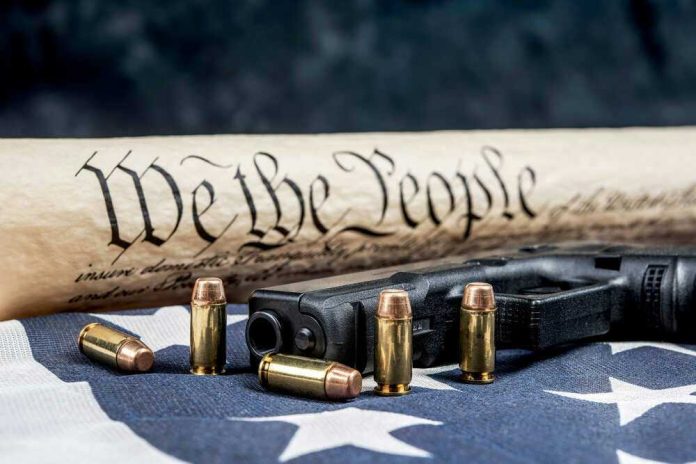
On the very day America celebrates liberty, activists asked lawmakers to tighten how Americans exercise it.
Story Snapshot
- Advocacy groups often use July 4 to push gun regulations as patriotic duty.
- The Supreme Court affirms an individual right to keep and bear arms, with limits.
- Recent rulings make sweeping gun laws harder to defend in court.
- Major civil liberties voices still back regulations tied to public safety.
Why July 4 Became a Stage for Gun Policy Fights
Advocacy groups plan July 4 events because the day commands attention and symbols. Moms Demand Action and others have used parades and handouts to promote universal background checks and limits on certain rifles for years. Supporters frame this as protecting families and honoring founders by preventing violence. Opponents see it as tone-deaf, using a freedom holiday to call for limits on a constitutional right. The clash repeats each year because both sides know the optics matter.
Public campaigns have a simple aim: make “common sense” rules feel mainstream. Brady United says strong laws save lives and highlights growth in safe storage rules across the country. Politicians echo that on July 4 with calls for bans on large magazines and certain semiautomatic rifles. The message is steady and emotional. It uses family, schools, and everyday safety as anchors. It avoids legal weeds and leans on the idea that regulation can be firm without crossing a constitutional line.
What The Supreme Court Actually Protects and What It Leaves Open
The Supreme Court drew a bright line in 2008. District of Columbia v. Heller said the Second Amendment protects an individual right to own a gun for lawful purposes like self-defense at home. Two years later, the Court applied that right to the states in McDonald v. Chicago. That did not end debate. The Court also said some regulations can stand. Longstanding bans on felons possessing guns or rules in sensitive places were described as presumptively lawful. That narrow lane has become the main battlefield.
The Court added a tougher test in 2022. Courts must now look to American history and tradition to judge modern gun laws. Lawmakers must point to historical analogues, not just cite public safety goals. Many courts now strike laws that lack a clear historical twin. This standard does not erase every rule. It does force precision. Broad bans that sweep in common firearms face an uphill climb. Targeted rules, like disarming dangerous people, have better footing when history supports them.
Advocates Say Regulation Fits the Founders; Critics Say It Guts Liberty
Gun control advocates argue the founders wanted order, not chaos. The Constitution Center’s overview notes the founding generation allowed regulations while rejecting mass disarmament. The American Civil Liberties Union supports firearm limits when tied to public safety and made by elected bodies, with deference to those judgments. Giffords points to a long run of lower court decisions that upheld safe storage, extreme risk orders, and limits on large magazines as consistent with the Second Amendment’s text and history. These claims aim to show regulation and rights can coexist.
Gun rights advocates answer that coexistence is now defined by the Court, not activists. They cite Heller’s clear defense of individual ownership and warn that “reasonable” often morphs into blanket bans. They view July 4 pushes as political pressure to normalize restrictions that fall hardest on the law-abiding while failing to stop criminals. That argument fits a conservative view: rights do not depend on shifting majorities or the latest poll. Laws must punish misuse, not gut lawful use. Under the current test, that stance often wins in court.
How Voters Should Read the Independence Day Messaging War
Voters should separate emotion from the legal map. July 4 statements grab headlines, but policy must pass the Court’s history-and-tradition test. That makes narrow, targeted measures more viable than sweeping bans. It also means evidence and craftsmanship matter. Legislatures that study history, define terms tightly, and focus on demonstrably dangerous conduct will fare better. Grand gestures on a holiday may build email lists. They do not change the Supreme Court’s direction or the Constitution’s guardrails.
Sources:
britannica.com, constitutioncenter.org, giffords.org, youtube.com, en.wikipedia.org, pmc.ncbi.nlm.nih.gov, shontelbrown.house.gov, instagram.com