
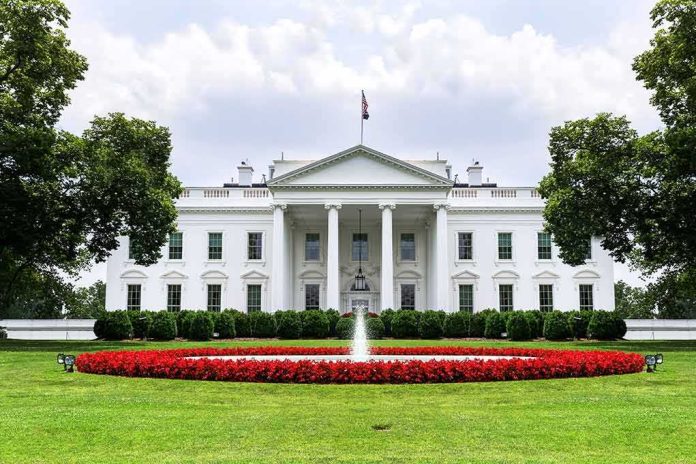
Israel’s own prime minister’s office says Benjamin Netanyahu will meet President Trump at the White House on Tuesday, in a visit loaded with war‑time stakes and big questions about Iran, Gaza, and America’s role in the Middle East.
Story Snapshot
- Netanyahu’s office confirms a Tuesday White House meeting with President Trump, tied to a high‑stakes Washington trip.
- The visit makes Netanyahu one of the first, and most frequent, foreign leaders to meet Trump in his second term.
- Talks are expected to focus on Hamas, hostages, and the Iranian threat, plus wider regional security and tariffs.
- Mixed past messages about “planned” meetings show how both governments use scheduling as political leverage.
Netanyahu’s Office Confirms Tuesday White House Meeting
Israeli Prime Minister Benjamin Netanyahu’s office has publicly stated that he will meet President Donald Trump at the White House on Tuesday as part of a short Washington visit. The office said Netanyahu will leave for Washington on Monday and hold the White House talks the next day, before attending the funeral service for Senator Lindsey Graham, described as a friend of Israel. A post from the Prime Minister’s office on social media likewise said he will travel Monday to meet Trump on Tuesday, reinforcing the formal Jerusalem line.
Earlier in Trump’s second term, Netanyahu’s office shared a letter and announcement noting that Trump invited him to the White House on Tuesday, 4 February 2025, making him the first foreign leader received in that term. News outlets across the spectrum, from the British Broadcasting Corporation (BBC) to Al Jazeera, reported that the Israeli government confirmed a February 4 White House meeting, based on the same prime minister’s office statement. This pattern has continued into later trips, with Jerusalem repeatedly using clear language that Trump “will meet” Netanyahu at the White House on a specific Tuesday.
Agenda: Hamas, Hostages, Tariffs, and the Iranian Threat
Netanyahu’s team has framed these visits as high‑stakes working sessions on issues central to Israel’s survival and American security. Statements from his office describe planned talks on Gaza, the fight against Hamas, and efforts to free Israeli hostages, along with the growing threat from Iran and its allied terror networks across the region. Reporting on past White House meetings says Netanyahu also came with concerns about Trump’s global tariffs, the role of Turkey, and wider Middle East power balances, showing how economic policy and security are tightly linked.
Before one recent Washington flight, Netanyahu told reporters the “primary focus” with Trump would be United States negotiations with Iran, and that he would push to expand talks to limit missiles and cut support for the “Iranian axis.” American press coverage has echoed that framing, noting that Trump and Netanyahu use these Oval Office meetings to coordinate on Iran’s nuclear program and to decide how hard to squeeze Tehran’s network of proxies. For conservative readers at home, that means this Tuesday session is not just a photo op; it is another round in a long struggle over whether America stands firm with Israel against radical regimes.
Trump’s Second Term: Israel First in Line at the White House
President Trump has made meetings with Netanyahu a regular feature of his second term, often signaling that Israel is at the front of the line among allies. One White House schedule described a bilateral meeting, lunch, and press conference with Netanyahu as part of the day’s official program, underscoring that these are full‑scale state visits, not quick handshakes. NBC News reported that a Tuesday White House meeting would mark Trump’s first engagement with a foreign leader in his second term, again highlighting how the administration treats Israel as a priority partner.
Trump will be meeting Zelensky AND Netanyahu next Tuesday at the White House.
Still don’t believe Ukraine and Israel are on the same team?
— Ethan Levins 🇺🇸 (@EthanLevins2) July 24, 2026
Coverage from Washington notes that Netanyahu has visited the White House and Blair House guest residence more than any other foreign leader in modern history, with staff there counting at least fourteen visits. Reuters and other outlets have said some trips were arranged on short notice, often when tariffs, Iran or Gaza required urgent talks, showing a relationship that is close but sometimes tense. For Americans frustrated by past globalist policies, the repeated choice to host Israel’s leader early and often looks like a clear break toward stronger, more open support for a key ally under fire.
Mixed Signals: Scheduled, “Not Yet Set,” and Postponed Meetings
Even as Netanyahu’s office speaks in firm terms about Tuesday meetings, other reporting shows how fast diplomatic calendars can shift, and how messaging can become a tool. Axios and follow‑on stories have quoted White House officials saying a Trump‑Netanyahu sit‑down was “under discussion” but that “no meeting has been set yet,” directly pushing back on Israeli press claims of a locked‑in date. One outlet went further, saying officials felt Netanyahu was “trying to will a meeting into existence,” a sharp phrase that hints at power games around access to the Oval Office.
There have also been reports of planned Washington visits being postponed or canceled after friction, including American anger over Netanyahu’s public criticism of United States plans to sell F‑35 jets to Turkey. Other stories describe a meeting “set for this week” being delayed at the American side’s request, with sources pointing to Iran or wider regional pressures as reasons. For readers who care about a strong but fair alliance, these mixed signals show how both governments sometimes use invitations, delays, and denials as leverage rather than simple calendar notes, and why an official Tuesday announcement from Jerusalem still deserves a careful second look toward what Washington is saying.
Why This Tuesday Meeting Matters for U.S. Conservatives
For many Americans, especially conservatives, a clear, publicly confirmed White House meeting between Trump and Netanyahu signals that the United States is standing by Israel in a dangerous time instead of bowing to global pressure. As Iran pushes its nuclear program and backs terror groups, and as Hamas and similar forces target civilians, these talks help shape whether America continues to back Israel’s right to defend itself or slides back into the mixed messages of past administrations. Netanyahu’s office stressing a set Tuesday date, and Trump’s record of hosting him early in the term, tell voters who favor strong borders and strong allies that this White House still sees Israel as a partner, not a problem.
At the same time, the history of “planned but not scheduled” meetings is a reminder that citizens should watch not just the headlines, but what the White House itself confirms or denies. That vigilance matters whenever unelected staff or foreign leaders try to shape the story around the president’s decisions. As this next Tuesday visit approaches, conservatives will be watching closely to see whether the agenda stays fixed on hostages, terror, and American strength, or whether old pressures for compromise with Iran creep back in through the door of diplomatic spin.
Sources:
insiderpaper.com, reuters.com, timesofisrael.com, bbc.com, aljazeera.com, ap.org, politico.com, timesofindia.indiatimes.com, pbs.org, english.news.cn, finance.yahoo.com, bbc.co.uk, msn.com, presidency.ucsb.edu, jns.org, axios.com, iranintl.com, english.aawsat.com, naharnet.com, clashreport.com, politicalwire.com, nytimes.com, washingtonpost.com