At sunrise on a quiet Costa Rican farm, a decade-long manhunt for a U.S.-wanted drug boss ended in a bloody shootout and a pair of handcuffs.
Story Snapshot
- Costa Rica’s most wanted man, **Alejandro “Diablo” Arias Monge**, was captured after an armed standoff.
- Officials say the raid left at least one person dead and several officers wounded, raising questions about the cost of the operation.
- The United States had posted a **$500,000 reward** and calls Arias the leader of a violent, transnational drug network.
- The case shows how cross-border crime grows while many citizens feel their own governments are failing at home.
Predawn Raid Brings Down Costa Rica’s Most Wanted
Before dawn on Friday, tactical officers from Costa Rica’s Judicial Investigation body moved on a farm in Río Frío de Sarapiquí, a rural area in the country’s northeast. They say they were hunting **Alejandro Arias Monge**, a 41‑year‑old fugitive better known as “Diablo,” long branded Costa Rica’s most wanted criminal. When officers entered the property, gunfire broke out, and what should have been a quiet morning turned into nearly an hour of exchange.
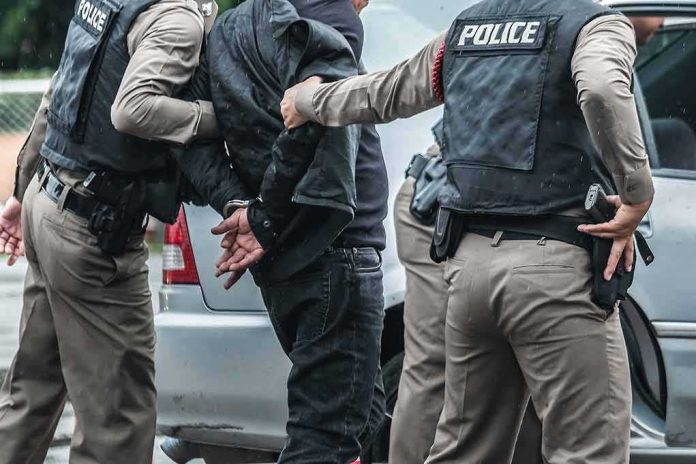
Costa Rican officials report that the operation ended with Arias in custody and several people hurt. Different outlets cite different numbers, but at least five officers were wounded, and some reports say one person was killed and eight injured. Video and press briefings show agents escorting Arias away in handcuffs, marking the end of a manhunt that local media say stretched back to about 2016.
Why “Diablo” Mattered To Washington And San José
The United States Department of State lists Alejandro Arias Monge as the alleged head of a violent, transnational criminal group that ships drugs north from Colombia, through Central America, toward Mexico and the United States. Washington posted a **reward of up to $500,000** for information leading to his arrest or conviction, a level usually reserved for major cartel figures. Costa Rican reports link his network to killings, money laundering, and narcotics crimes, with some estimates blaming him for scores of deaths over the past decade.
The United States embassy in Costa Rica publicly congratulated Costa Rican authorities after the raid, calling the operation a serious blow to organized crime in the region. For both governments, this capture is being held up as proof that tough policing and cross‑border cooperation can still work. It also highlights how deeply global drug money now reaches into small countries that once seemed far from the worst cartel wars. At the same time, the public still has not seen the underlying arrest warrants, evidence lists, or court records behind the headlines.
Blood, Secrecy, And A Familiar Enforcement Script
This story follows a familiar pattern in big law‑enforcement cases. Police and prosecutors announce the dramatic details first: the nickname “Diablo,” the shootout, the manhunt, the large reward, and the claim that a drug kingpin has finally fallen. Journalists repeat those points, often based on official briefings instead of complete court files. The full legal paperwork, like warrants, forensic reports, and chain‑of‑custody records, usually arrives much later, if it becomes public at all.
The U.S. State Department placed a $500,000 bounty on Alejandro Arias-Monge last year, identifying the alleged drug trafficker as the leader of a violent transnational criminal organization responsible for smuggling drugs into the United States. https://t.co/J4vObLT8S5
— CBS News (@CBSNews) July 25, 2026
For Americans on both the right and the left, this raises a tension they already feel at home. On one hand, people want dangerous traffickers off the street and are tired of seeing fentanyl and other drugs pour into their towns. On the other hand, many no longer trust that government agencies tell the whole truth or handle evidence fairly. Side reports here already disagree about how many officers were hurt and who was killed, and there is little open data so far to clear that up.
What The Capture Means For Ordinary Citizens
When a figure like “Diablo” is taken down, officials say it shows the system is working. Yet many citizens in the United States and Central America look at their own lives and see something very different. They face high prices, weak wages, unsafe neighborhoods, and elites who seem focused on elections and careers instead of fixing deep economic and social problems. The same leaders who cheer this raid often struggle to stop cartel cash from corrupting police, judges, and even politicians.
For conservatives, this case may underscore worries about open borders, global drug pipelines, and a justice system that rarely punishes kingpins inside the United States as hard as it polices everyday citizens. For liberals, it may highlight how huge criminal networks grow in the shadows while inequality rises and social programs shrink. Both sides can watch the “Diablo” story and see proof that transnational crime thrives when government is distant, divided, or captured by powerful interests.
Crime Across Borders And A Government Crisis At Home
Arias’s network is accused of moving narcotics across all seven provinces of Costa Rica, then onward through Honduras and Guatemala toward Mexico, with the United States as the final market. That pipeline fits the larger pattern Americans see with drugs, migrant smuggling, and money laundering. Criminal actors cross borders easily, chasing profit. Ordinary families, by contrast, face more rules, more fees, and more surveillance, even while their own leaders struggle to agree on basic security and economic policies.
The capture of “Diablo” matters beyond Costa Rica’s borders because it shows the stakes of letting global crime grow while governments bicker. When trust in public institutions is low, every dramatic arrest can look less like justice and more like theater. People want cartels broken and rule of law restored, but they also want honest proof, clean courts, and leaders who fight crime without turning their countries into surveillance states or ignoring corruption among elites. Whether this operation marks real change or just another headline will depend on what comes next: open trials, transparent evidence, and real efforts to cut the flow of drug money that fuels both gangs and government failure.
Sources:
pjmedia.com, cbsnews.com, state.gov, freemalaysiatoday.com, youtube.com, infobae.com, facebook.com