
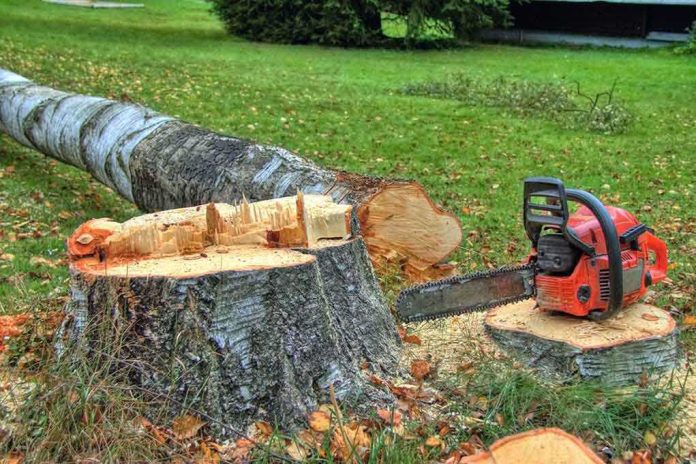
A federal judge let National Park crews keep cutting trees at a historic D.C. park while a larger court fight continues, sharpening fears that agencies can move fast on “maintenance” even as the public scrambles to catch up.
Story Snapshot
- National Park Service plans allow removal of up to 529 trees at East Potomac Park.
- About 150 trees were already cut as the judge declined to halt work.
- Preservation groups sued, arguing cutting advances a larger redesign plan.
- Officials say work targets invasive, dead, or non-historic trees, not cherry trees.
What the judge decided and why it matters
Judge Ana Reyes declined to issue a stop-work order after reviewing recent cutting at East Potomac Park, home to a historic public golf course. The court previously required notice before major or destructive steps. Government lawyers told the judge they followed those rules. The judge said she had not barred routine upkeep and allowed work to continue. About 150 trees had already been removed when she ruled, according to local reporting.
The decision matters because it shows how courts weigh speed and proof. To stop work, challengers must show likely legal harm and a clear rule breach. Here, the judge accepted the government’s account that the activity was routine tree management, not wholesale construction. That finding narrows the emergency case, even while the broader lawsuit over future redevelopment remains open.
How many trees, and which ones
National Park Service filings describe a plan to remove up to 529 trees that do not contribute to the site’s historic landscape. Crews began an initial phase to cut 169 trees. Officials say they are targeting invasive species and trees that are dead, dying, or hazardous. They also say no healthy, contributing historic trees, including the famous cherry trees, will be removed as part of this project.
Reporters at the scene and court records point to a multi-stage effort, not a single day of mass cutting. Government attorneys said the 150 trees already cut represent a small share of the park’s total inventory. Officials add the work will not change course holes, bunkers, or greens. They frame it as restoring sightlines and historic character rather than preparing the ground for a new layout.
Why people are upset across the spectrum
Preservation groups and local golfers sued to pause work tied to a proposed championship-level redesign. They worry that tree loss now could lock in changes before full review and public input. They argue that “maintenance” can mask steps toward a bigger plan. The Park Service rejects that link. The agency says this work would proceed even if a redesign never happens. That dispute between purpose and effect drives much of the tension.
For many readers, this taps a deeper frustration. Agencies speak in careful terms, while residents see chainsaws and fences. People on the left fear damage to public land and lost shade in a warming city. People on the right see a federal bureaucracy acting with little accountability. Both sides suspect insiders make decisions first and explain later. This case sits at that fault line, where process and trust break down in plain view.
What comes next and what to watch
The lawsuit over the larger golf-course plans remains active. The key questions are whether the tree work is truly separate, whether notice rules are met for each phase, and whether the cuts harm the historic landscape. Clear records could help: a tree-by-tree inventory, photos, health status, and exact locations. Independent reviews from certified arborists and cultural-landscape experts would also reduce guesswork and sharpen the facts for the court.
Breaking @WTOP: federal judge orders stop to all tree cutting at East Potomac Park until at least 7 o’clock tomorrow morning. Superintendent of National, Park service required to testify at 10 AM today
— Neal Augenstein (@AugensteinWTOP) October 12, 2026
For now, the court’s green light on “routine” cutting gives the government momentum. But the number—up to 529 trees—keeps public attention fixed on the site. If the Park Service sticks to its pledges—no healthy contributing trees, no changes to holes, selective removals—trust may stabilize. If evidence shows broader impacts, pressure for a pause will grow. Either way, this is a test of transparency, not just chainsaws.
Sources:
cnn.com, abcnews.com, ibtimes.co.uk, apnews.com, primetimer.com, nbcwashington.com