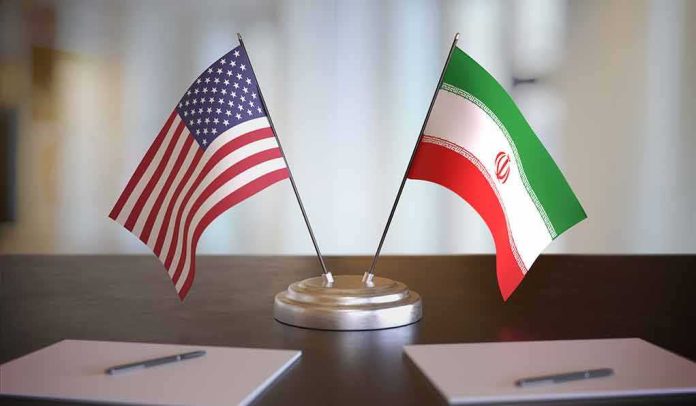
President Trump confirmed the United States agreed to continue talks after Iran asked to keep negotiating, while holding firm that Tehran will never get a nuclear weapon.
Story Highlights
- Trump said Iran requested more talks and the U.S. agreed, with red lines intact.
- A signed framework set a path to end fighting and reopen the Strait of Hormuz.
- Critics claim the interim terms lean toward Iran with early economic relief.
- The White House says any benefits hinge on Iran meeting its obligations.
Trump Signals Openness To Talks On Firm U.S. Terms
President Trump said Iran asked the United States to keep negotiating, and the administration agreed to continue talks. He again drew a clear line: no agreement will allow Iran to obtain a nuclear weapon. These statements match his repeated message since spring. Trump has said Iran “wants to make a deal,” but that U.S. security comes first. His stance mixes pressure with a possible off-ramp if Tehran complies with strict conditions.
June’s fighting pause faltered, but diplomacy did not end. Trump’s team has kept channels open to test if Iran will move toward a real deal that protects American interests and allies. The goal remains simple and tough: stop Iran’s path to a bomb, reduce regional attacks, and secure shipping. That means any paper promise from Tehran must be backed by steps the United States can verify, on a timetable Washington controls.
The Framework: Ceasefire Window And Strait Reopening
Trump and Iran’s president signed a memorandum of understanding that laid out 14 points to end the war, extend a ceasefire window, and reopen the Strait of Hormuz to global commerce. The document set a 60-day period for follow-on talks to tackle nuclear issues, oil flows, sanctions, and reconstruction terms. The White House framed it as an America First step that protects U.S. leverage and bars a nuclear Iran while restoring vital shipping lanes for the world economy.
Multiple outlets reported that the framework aimed to restore safe passage in the strait and create space to negotiate a fuller agreement. Ship traffic through Hormuz drives energy prices at home. Keeping it open matters to American families who feel pain at the pump. The administration argues strength made the deal possible and that further relief for Iran will depend on strict performance and inspections, not trust or wishful thinking.
Debate On Concessions: Relief Now Or Leverage Later?
Critics, including some Republicans, warned that the interim terms look too friendly to Tehran. They argue Iran could gain waivers for oil exports and access to frozen assets before it answers the hardest nuclear questions. They also say the text did not immediately dismantle centrifuges or remove enriched uranium stocks. Those concerns reflect a core fear: Iran could pocket early wins and stall on nuclear rollbacks.
The administration pushed back. Officials denied sweeping up-front concessions and said any economic benefits would flow only if Iran met its obligations under agreed timelines. Reporting described U.S. demands that unfreezing assets be tied to concrete nuclear steps, like handing over enriched uranium. That structure uses leverage, not blind trust, to force compliance. It seeks measurable gains without giving away the store at the start.
America First Test: Strength, Deterrence, And Real Verification
Trump’s approach mixes pressure with conditional engagement. He says Iran wants a deal, but the United States will keep its red lines and deterrence. This reflects a simple rule: peace through strength, backed by checks you can verify. For conservatives, that means no blank checks, no endless wars, and no path for Tehran to a bomb. It also means using U.S. economic power to protect American shippers, workers, and consumers at home.
The path ahead will hinge on enforcement. If Iran moves nuclear material out and accepts tight inspections, limited relief could follow under the framework’s terms. If Iran cheats, relief stops and pressure snaps back. That is how leverage works. It is also what many on the right demand: concrete results first, benefits later. Trump’s message remains firm and plain—engagement is open, but only on terms that keep America safe and Iran far from a nuclear weapon.
Sources:
insiderpaper.com, aljazeera.com, npr.org, fortune.com, reuters.com, whitehouse.gov