The House just handed President Trump the power to slap 100% tariffs on any country that keeps buying Russian oil and gas.
Story Snapshot
- The House passed the Lindsey O. Graham Sanctioning Russia and Iran Act of 2026 by a 262-159 vote.
- The bill lets the president impose tariffs up to 100% on major buyers of Russian energy.
- Support crossed party lines: 203 Republicans and 58 Democrats voted yes.
- The bill now heads to President Trump’s desk for his signature.
- The measure is named for the late Senator Lindsey Graham, who pushed the effort before his death.
House Sends Sanctions Bill To President’s Desk
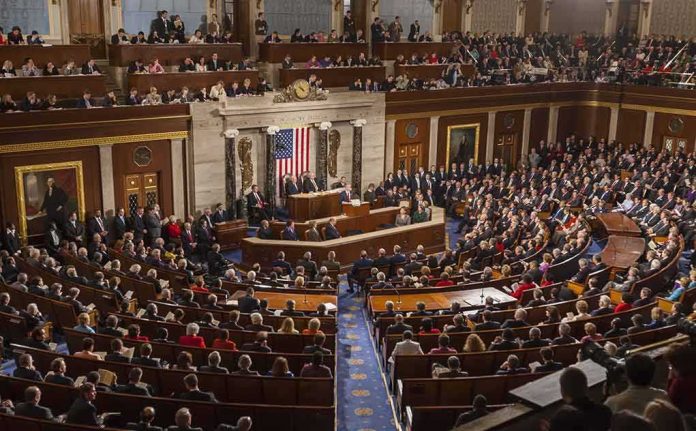
The House of Representatives passed the Lindsey O. Graham Sanctioning Russia and Iran Act of 2026, sending the bill to President Trump for his signature. Lawmakers approved the measure 262-159, with 203 Republicans, 58 Democrats, and one independent voting in favor. The vote shows rare bipartisan agreement on punishing Russia over its war in Ukraine.
Congress.gov’s official bill tracker confirms the House passed the measure and that the Senate had already cleared an identical companion bill. A House press release from Representative Michael McCaul’s office states the House text matches the Senate version word for word, meaning no further negotiation is needed before it reaches the president.
What The Bill Actually Does
The legislation gives the president broad new authority to punish Russia’s war economy. It imposes a mix of sanctions, tariffs, and trade restrictions tied to Russia, according to the official Congress.gov summary. The most striking piece lets the president slap tariffs as high as 100% on countries that keep buying large amounts of Russian oil and gas.
That tariff power is not limited to Russia itself. It reaches into the trade decisions of third countries, using the threat of economic pain to cut off buyers who help fund Moscow’s war machine. Sanctions experts describe this approach, called secondary sanctions, as a way to reach beyond Russia’s direct trading partners and squeeze anyone who helps Russia dodge existing penalties.
Named After A Senator Who Championed It For Years
The bill carries the name of Senator Lindsey Graham, who spent months building support for tougher Russia penalties before his death. Congress.gov lists the House version as the “Lindsey O. Graham Sanctioning Russia and Iran Act of 2026” and the Senate companion as the “Lindsey O. Graham Sanctioning Russia Act of 2026”. Lawmakers from both parties have framed the measure as completing work Graham started.
McCaul’s office, which introduced the House bill alongside Representative Steny Hoyer, said the legislation honors Graham’s push to hold Russia accountable. That kind of tribute branding often makes a bill harder to oppose publicly, even when parts of it, like the tariff authority, draw genuine concern from both parties.
Not Everyone Signed On Without Objection
Despite the wide bipartisan margin, the bill did not pass without pushback. Some Democrats and roughly a dozen Republicans raised concerns about handing the president what they called unchecked tariff power, according to reporting on the House debate. Their worry centers less on punishing Russia and more on how much economic authority any single president should hold without regular congressional check-ins.
Russia launched another massive attack on Ukraine with ballistic missiles, other missiles and drones – on the same night that the US House passed the Lindsey Graham sanctions bill.
Civilian infrastructure was hit across eight regions. Energy infrastructure was targeted in Sumy… pic.twitter.com/7lqmuW37ep
— UKR Consulate NY (@UKRinNewYork) September 17, 2026
That tension reflects a broader pattern in how Washington handles sanctions. Congress often expands presidential authority when it worries executive branch sanctions alone move too slowly or get dodged too easily. Critics on both sides then question whether that power should sit with one office instead of being spread across the government, a debate that predates this bill and will likely outlast it.
What Happens Next
With House passage complete and the Senate having already approved matching text, the bill now sits with President Trump. Reuters reported the measure was expected to move toward his signature once both chambers finished their work. Once signed, the tariff and sanctions powers become active tools the administration can use against Russia and any country still buying its energy exports on a large scale.
The real test comes after signing. How aggressively the administration uses the new tariff authority, and against which countries, will show whether this becomes a serious pressure campaign or stays mostly symbolic. Treasury and State Department guidance on enforcement has not yet been made public.
Sources:
youtube.com, ms.now, congress.gov, apnews.com