
Meta is giving every legally blind U.S. veteran a free pair of AI Ray-Ban glasses, promising help with daily life that many say restores real independence.
Story Highlights
- Meta committed free Ray-Ban AI glasses to about 130,000 legally blind veterans nationwide.
- The glasses read text aloud, identify objects, and describe surroundings to the wearer.
- Blinded Veterans Association and partners are organizing training so users get the most benefit.
- Early research shows strong gains for reading and object finding, with tougher results in crowded travel.
What Meta Announced and Who Benefits
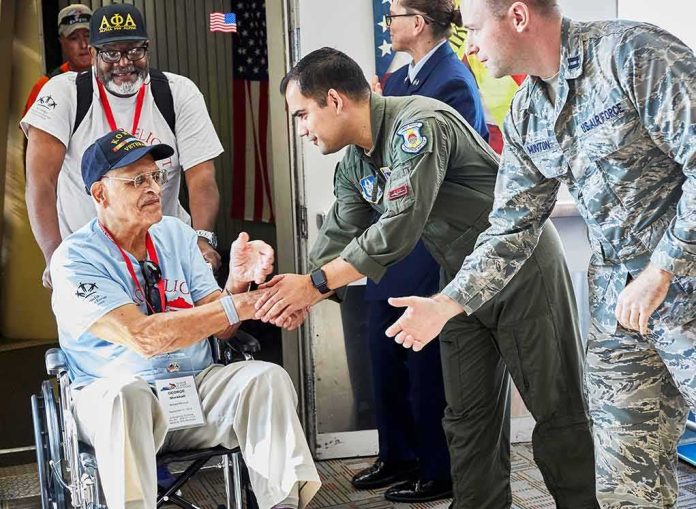
Meta said it will provide Ray-Ban Meta AI glasses at no cost to every legally blind American veteran, an estimated 130,000 people. Company representatives have appeared with veteran groups and state agencies as distributions begin in multiple states. Reports describe events where veterans tried the glasses and signed up for training. Meta framed the effort as part of a national accessibility push focused on people who are blind or have low vision.
The Blinded Veterans Association said it will coordinate distribution and create training so veterans can use the glasses well. Local events with the American Council of the Blind and regional partners aim to teach voice commands, set up devices, and practice real tasks. Organizers emphasize support beyond the handoff so users learn to read labels, check signs, and get guidance in stores and transit. The approach pairs new gear with coaching rather than leaving veterans on their own.
What the Glasses Do in Daily Life
The Ray-Ban Meta glasses use a built-in assistant to read printed text aloud and describe what the camera sees. The system can identify common objects, relay colors, and summarize scenes, such as a menu, a bus stop sign, or a hallway layout. Company updates highlight more hands-free features designed for blind and low-vision users, including faster responses and clearer audio descriptions. Meta marketing and user stories describe help with errands, travel, and navigating public spaces.
Veterans have already used the glasses in public events to push boundaries. Coverage of the Army Ten-Miler highlighted blind runners who finished the race during heavy rain, with support that included the AI glasses alongside trained guides. Local news reports show veterans trying the glasses to move around buildings, read mail, and sort items at home. These accounts stress personal gains in confidence and speed for basic tasks that often require sighted help.
How This Fits With Rehab and Research
Vision rehabilitation has long mixed canes, guide dogs, and training with new tech. The Department of Veterans Affairs describes giving adaptive devices to support independence, often backed by coaching at Blind Rehabilitation Centers and outpatient clinics. The new glasses sit within that toolbox, not apart from it. The model is simple: combine hardware and skills to meet real goals, like cooking, shopping, and moving through familiar routes safely.
Independent studies on smart vision glasses show clear wins for reading, object finding, and recognizing faces. One study reported high satisfaction while noting that walking in crowds and similar tasks remain challenging. Another evaluation found users could access all functions and rated reading and object identification well. These results match what veterans and trainers report: strong task help, with navigation still best when paired with cane skills or a guide.
Why This Matters Across Politics
Americans across the spectrum worry that powerful institutions often ignore everyday needs. This program cuts against that view by targeting a concrete problem with a simple offer: a useful tool, free to those who served. Veterans who are blind face barriers at home, at work, and in transit. If a device can read signs, sort mail, or help find a gate at the airport, that reduces the need to wait for help and returns time and pride to the user.
Meta to Provide Free AI Glasses to Blind Veterans at Columbia Event Friday https://t.co/w82MciA1gX
— Holy City Sinner (@HolyCitySinner) October 16, 2026
At the same time, assistive tech is not a magic fix for every mobility challenge. Research and rehab experts caution that crowded or complex travel still demands training and proven methods. That is why the training piece matters as much as the device itself. Success here will likely be measured not only by how many glasses ship, but by how many veterans keep using them every day, months after the first demo, to do the tasks that matter most.
Sources:
reason.com, prnewswire.com, yahoo.com, whosonthemove.com, bva.org, actionnews5.com, theadvertiser.com, about.fb.com, pmc.ncbi.nlm.nih.gov, department.va.gov, irjaeh.com, digital.va.gov, docs.house.gov