
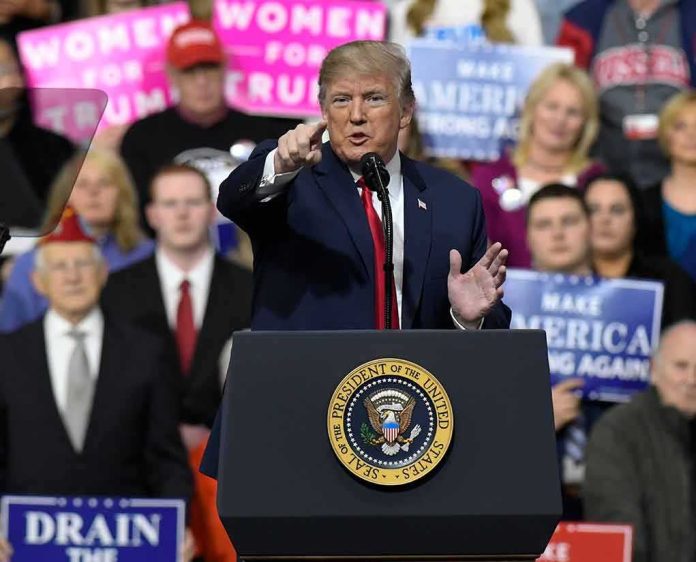
Audi’s chief executive stood next to President Trump at a Georgia campaign rally to announce the German automaker’s first-ever American factory, a $4 billion plant promising 4,500 jobs.
Story Snapshot
- Audi will build its first U.S. production site at the Middle Georgia Megasite, investing about $4 billion and creating roughly 4,500 jobs.
- CEO Gernot Döllner appeared on stage with President Trump in Perry, Georgia, to reveal the plant will build Audi’s “biggest and most premium SUVs.”
- The facility is planned for up to 200,000 vehicles a year, with construction starting in 2027 and full production targeted for the early 2030s.
- Audi’s appearance at a political rally drew criticism even as the company framed the move as a long-term business strategy, not a tariff deal.
- History shows similar announced factory deals often fall far short of their promised job numbers, raising questions worth watching over time.
Audi Picks Georgia For Its First American Plant
Audi announced plans to build its first production site in the United States, choosing the Middle Georgia Megasite near Macon. The company said it will invest about $4 billion and create approximately 4,500 jobs. The plant is designed to produce up to 200,000 vehicles a year. Georgia’s state economic development office confirmed the same figures in its own release issued one day earlier.
Audi Chairman Gernot Döllner joined President Trump on stage at the Perry, Georgia rally to make the announcement in person. Döllner told the crowd Audi would “bring our biggest and most premium SUVs, and produce them here in Macon, Georgia”. He also said the company has “much greater ambitions for Audi in America,” framing the plant as part of a bigger push to grow its U.S. business.
Timeline And Scale Of The Project
Audi’s release says construction is scheduled to begin in 2027, with production planned for the early 2030s. Georgia’s announcement breaks the schedule down further, listing site grading in 2027, construction starting in 2028, and full production by 2031. Both sources agree on the same headline numbers: $4 billion invested, 4,500 jobs, and 200,000 vehicles built each year once the plant reaches full capacity.
Multiple news organizations, including Reuters, CNBC, and the Associated Press, independently reported those same figures after the rally, confirming the core details of the deal. None of the available reporting disputes the basic facts of the announcement. What remains unclear is how the project’s finances, permits, and hiring will unfold as construction approaches.
Politics And Business Mix At The Rally
President Trump described the factory as proof that his tariff policies are drawing manufacturing back to America, framing it as a win ahead of the November midterms. Audi’s own statements, however, pointed to a longer-term growth strategy rather than a direct tariff response. That gap between the political message and the corporate explanation has become part of the story itself.
Döllner’s appearance alongside President Trump drew backlash from some critics, and Reuters reported Audi has had to defend the decision to stand by him publicly. CNBC similarly noted the CEO’s appearance “drew flak” even as the company stood firm, showing that the optics of the event have become as much a talking point as the factory’s planned investment and jobs.
A Familiar Pattern In Big Factory Announcements
Large auto investment announcements like this one are common in American economic development, often featuring big dollar figures and job promises long before construction begins. History offers reason for caution. Past state subsidy deals have sometimes delivered only a small fraction of the jobs promised, with one analysis finding success rates as low as nine percent in similar front-page announcements.
That does not mean Audi’s Georgia plant will suffer the same fate. But it does mean the $4 billion and 4,500 jobs cited today are projections, not guarantees. Readers on both sides of the political aisle share a common interest in watching whether promises tied to splashy rallies and big headlines actually translate into real construction, real hiring, and real production in the years ahead.
Sources:
youtube.com, cnbc.com, georgia.org, br.de, independent.co.uk