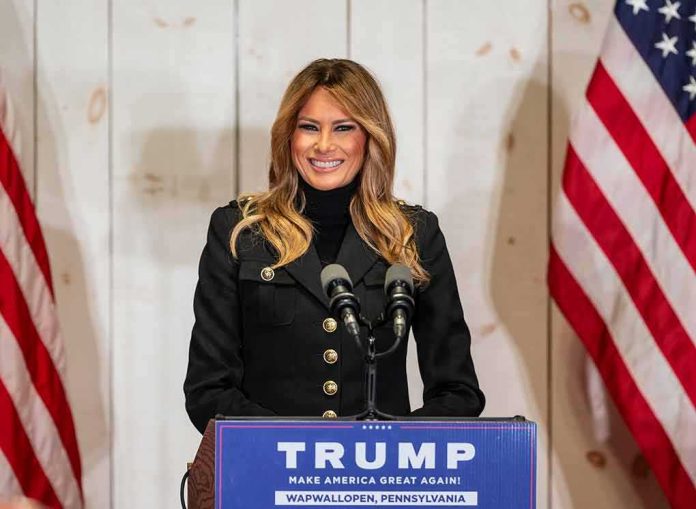
The White House says First Lady Melania Trump helped pause fighting in Oleshky so nearly 800 civilians could escape and get aid.
Story Snapshot
- The White House credits Melania Trump with initiating talks that led to a short Oleshky ceasefire.
- Russia and Ukraine paused combat to allow aid and evacuations along a set route.
- Representatives from both sides met at the White House after the pause.
- The ceasefire lasted about six days and focused on humanitarian relief.
What the White House Announced and When
The White House said First Lady Melania Trump independently engaged Russia and Ukraine and secured a localized ceasefire around Oleshky in the Kherson region. The announcement described a pause in military activity to allow humanitarian aid and to set a safe passage for civilians. Officials framed the effort as a humanitarian mission rather than a full peace deal. The claims focused on a defined place and short window, not the wider front lines. That narrow focus shaped expectations.
The ceasefire reportedly ran from October 27 through November 1, 2026, beginning at 3 a.m. local time on the first day. Coverage described the pause as limited in geography and time, with the goal of letting convoys move and families evacuate. The Hill reported an expanded area to support aid routes as the pause progressed. This kind of time-bound corridor is common in conflict zones. It aims to reduce harm without changing the broader war.
Who Came to Washington and Why It Mattered
After the pause, the White House said it would host representatives from both countries. CNN reported that Ukrainian ombudsman Dmytro Lubinets and Russian human-rights commissioner Yana Lantratova were expected to attend, citing authorities in both nations. Their portfolios focus on civilians and detainees, not battlefield command. That focus matched the stated goals of access, evacuation, and relief rather than military terms. It also signaled an emphasis on human needs over political theater.
The White House highlighted reported results, including almost 800 people evacuated and shipments of food and medicine into Oleshky. Local coverage echoed those numbers and described relief reaching residents short on basics. These claims present a clear metric for impact: lives moved to safer ground and aid delivered. The numbers are not large compared to the full conflict, but they matter to the families involved. They also show what narrow pauses can achieve in days, not months.
How This Fits a Larger Pattern Americans Care About
Short, local truces often work better than sweeping peace plans because they solve one urgent problem at a time. Researchers studying past ceasefires find that monitoring and clear channels help reduce confusion and violations. In Oleshky, the defined window and purpose matched that playbook. For Americans weary of gridlock and grand promises, a concrete outcome like safe passage can feel more real. It is less about speeches and more about what got done on the ground.
HAPPENING NOW
First Lady Melania Trump just walked out with officials from BOTH Russia and Ukraine at the White House following her historic Oleshky ceasefire deal to allow humanitarian aide:
"Together, we can create something MORE ENDURING than a temporary ceasefire!"… pic.twitter.com/zCwGJU2Vfj
— Conservative Brief (@ConservBrief) November 5, 2026
The event also highlights the soft power of a First Lady. Scholars describe how first spouses can open doors, shape tone, and keep focus on people rather than politics. That role does not replace formal diplomacy. It can, however, create space for practical steps, especially on humanitarian issues. Here, the White House credited Melania Trump’s outreach with helping both sides agree to pause fire for a week. That is a limited move, but it addresses immediate human needs without new spending or long debates.
Sources:
youtube.com, whitehouse.gov, cbc.ca, themoscowtimes.com, thehill.com