
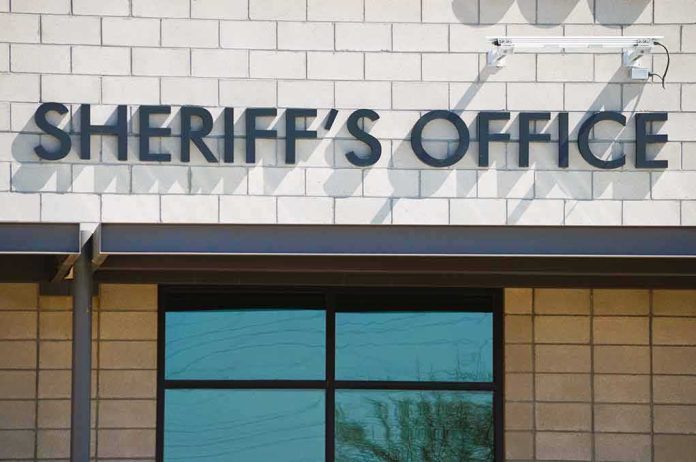
Deputies in Lee County, Florida arrested a 38-year-old suspect after a child reported a sexual assault during a house showing, and jail records note an immigration hold.
Story Snapshot
- Lee County deputies arrested a suspect after a boy reported sexual battery during a home tour.
- Investigators said the suspect isolated the child in a bathroom before the alleged assault.
- The suspect was booked into the Lee County Jail; an immigration detainer was noted in coverage.
- An arrest reflects probable cause; guilt or innocence will be decided in court.
Arrest After Reported Assault During North Fort Myers House Showing
Lee County Sheriff’s Office deputies arrested Uriel Santiago Perez, 38, after a minor reported sexual battery during a house tour in North Fort Myers. Deputies said Perez arranged the showing and then isolated the boy in a bathroom, where the assault allegedly occurred. The incident was reported as taking place on October 6. The account includes a clear location and sequence of events. Officials said they developed probable cause, and Perez was taken into custody on a sexual-battery charge.
Local reporting that cites the sheriff’s office describes the same sequence. Those reports say Perez set up the viewing, separated the child from others, and committed the alleged act in a bathroom. The reports also state that deputies later arrested Perez. These details align with how deputies summarized the case in public statements to outlets covering Lee County crime and public safety. The described timeline helps explain why investigators moved quickly to arrest Perez after the child’s disclosure.
Booking, Detainer, and What an Arrest Legally Means
Coverage says Perez was booked into the Lee County Jail and that an immigration detainer was placed, indicating a hold request from federal authorities. A detainer signals that immigration officials want custody after local proceedings. The sheriff’s office states on its arrest-search page that arrest information reflects circumstances known at the time and has no connection to findings of guilt or innocence. Courts, not arrest logs, decide outcomes after formal charges and hearings.
The sheriff’s arrest-search disclaimer matters for readers who often treat a booking record as a verdict. An arrest means deputies found probable cause, which is a lower standard than proof beyond a reasonable doubt. Prosecutors decide charges, judges rule on bond, and a trial or plea decides the result. That process can take months. The public record at this stage focuses on the alleged conduct, the arrest, and the jail status, not on evidence tested in court.
Why Child Disclosures Drive Cases Like This
Child sexual-abuse cases often begin with a child’s report to a trusted adult or to law enforcement. Research across multiple reviews shows many victims delay telling anyone, and some never disclose. That is one reason why deputies act on detailed reports that identify people, places, and timing. Reviews also find that deliberately false reports are uncommon, though they do occur. These findings frame why a single child’s disclosure can still lead to an arrest when details are specific.
NEW: An illegal immigrant from Mexico with a criminal history—described by sheriff’s investigators as a “biological male” who “lived and presented himself as a female”—is accused of sexually assaulting a minor inside a bathroom in North Fort Myers, Florida.
38y/o Uriel Santiago… pic.twitter.com/fA4brKgc1k
— Ali Bradley (@AliBradleyTV) October 14, 2026
Parents across the political spectrum worry about safety in familiar places, like home showings, schools, and churches. This case taps that concern because the report describes an everyday setting and a trusted activity. Conservatives often point to immigration enforcement and prior system failures. Liberals often point to protection gaps and support for victims. Both groups see a justice system that moves slowly and often fails families. Clear communication from officials can help rebuild trust while the courts do their work.
What Comes Next in the Legal Process
Prosecutors will review the arrest and decide on formal charges. A judge will handle first appearance, bond, and future hearings. Defense counsel may seek discovery that includes interviews, medical records, or digital evidence if it exists. Some records may be sealed to protect the child’s privacy. The court process, not early reports, will decide what evidence is reliable and whether the case proceeds to trial or ends in a plea or dismissal.
Sources:
thegatewaypundit.com, newsbreak.com, miamiherald.com