
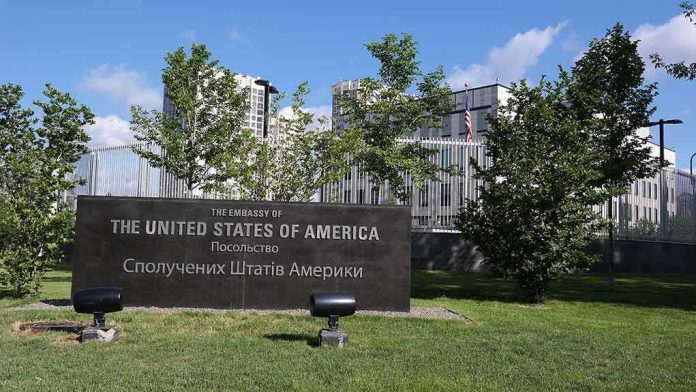
U.S. embassies across the Middle East issued near-identical security alerts warning Americans to expect sudden escalation and possible travel shutdowns.
Story Snapshot
- Multiple U.S. embassies warned of a complex security environment and unforeseen escalation.
- Alerts told Americans to be ready for flight cancellations, airspace closures, and travel delays.
- Posts appeared across Israel, Saudi Arabia, Qatar, Lebanon, Iraq, Jordan, Bahrain, the United Arab Emirates, Kuwait, and Oman.
- Standardized wording signaled a coordinated, region-wide posture by the State Department.
Coordinated Embassy Warnings Across the Region
U.S. diplomatic posts across the Middle East published matching security alerts that stressed rising tensions and the chance of sudden escalation. The language warned Americans to exercise heightened vigilance. It also told travelers to prepare for flight cancellations, airspace closures, and other disruptions. The U.S. Embassy in Abu Dhabi posted this guidance on its website on September 1, 2026, using the same core phrasing that appeared in other posts. Embassy social media echoed the alerts using identical wording.
Coverage summarizing the alerts said at least 11 embassies issued warnings in near unison. Reported locations included Israel, Saudi Arabia, Iraq, Kuwait, Lebanon, Jordan, Bahrain, the United Arab Emirates, and Qatar. The alerts framed the risk as regional, not confined to one country. This push aimed to reach Americans living, working, or traveling across multiple hubs. The messages also pointed to possible travel gridlock if airspace tightened without much notice.
What the Alerts Actually Said
The core alert language tied the warnings to tensions in the Middle East and a security environment that “remains complex” with “the potential for unforeseen escalation.” The notices told Americans to stay alert and plan around air travel risks, including canceled flights and closed airspace. The U.S. Embassy in Qatar amplified the same message on social media, repeating the key travel cautions and urging vigilance. The consistency suggested a central template approved for fast distribution across posts.
The standardized approach matched a common State Department practice. When risks rise across borders, the department often uses broad, non-specific wording to warn without exposing intelligence sources or tactics. That approach moves people to act while keeping sensitive details out of public view. It helps Americans make choices quickly, like delaying trips or mapping exit routes, before conditions change again. The recurring phrasing across posts underlined that method.
Travel Disruptions and Practical Steps for Americans
The alerts highlighted the most immediate risk many travelers face: air travel disruptions. Americans were urged to track airline messages, carry backup plans, and prepare for last-minute changes. People in the region were told to review their documents, assess routes to airports, and confirm their communications. The emphasis placed personal readiness at the center of safety. If airspace closed or flights dropped, families needed clear plans to move or shelter in place.
Americans abroad could also expect local security changes. Embassy posts often adjust hours, limit services, or shift to emergency operations during tense periods. That can slow routine help like passport renewals. The alerts steered citizens to stay informed through official channels and sign up for consular messages. Regions that serve as air or trade corridors can tighten controls fast. Prepared travelers are less likely to get stranded when carriers or airports alter schedules.
Why the Government Uses Broad, Uniform Alerts
The government issued the warnings as a region-wide notice because tensions can jump borders quickly. A strike or misread move in one country can cause safety problems in another. That creates risk for Americans who are passing through several capitals on one trip. Uniform language helps reduce confusion. People in different countries receive the same clear message. The U.S. Embassy in Abu Dhabi and the U.S. Embassy in Qatar posts showed that shared script in practice.
Reporters and embassy social posts captured how widespread the message became in a short window. At least 11 embassies in the region shared aligned alerts, covering key destinations and transit points. This scale signals that officials saw a broad risk, not a narrow threat. The alerts did not name a single attacker or timeline. Instead, they focused on what Americans could control: awareness, documents, routes, and readiness to adjust fast.
What This Means for Americans Watching From Home
For families stateside with loved ones abroad, these alerts point to a simple truth. When a region heats up, travel can break down fast. A uniform warning across many countries is also a message to plan early. Confirm itineraries, gather backup contacts, and agree on meeting points. Embassies will post updates, but options shrink when airspace tightens. Prepared travelers keep more choices. That is the value these region-wide alerts try to create in uncertain times.
Sources:
njsr.com.ng, yahoo.com, avapress.com, ground.news