
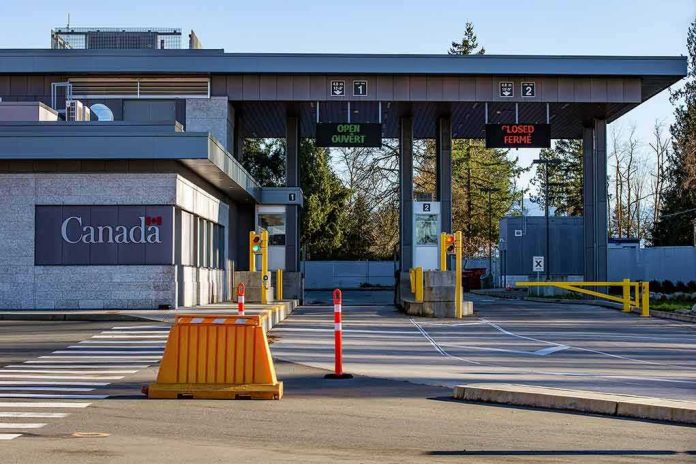
President Trump moved to double tariffs on Canadian-made vehicles, signaling a trade fight that could raise car prices for American buyers and strain supply chains on both sides of the border.
Story Snapshot
- Trump invoked a 1930 law to levy 50% tariffs on selected Canadian goods, citing discrimination against U.S. autos, dairy, and alcohol.
- The White House is now targeting Canadian vehicles, raising the stakes for North America’s auto industry.
- Canada vowed dollar-for-dollar retaliation, setting up higher costs for businesses and consumers.
- Experts say only a slice of trade is covered, but the pain concentrates in key sectors with tight cross-border links.
What The White House Did And Why It Matters
The White House said President Trump used Section 338 of the Tariff Act of 1930 to add 50 percent duties on certain Canadian imports, claiming Canada treats American cars, alcohol, and dairy unfairly. Officials framed the move as leverage to stop discrimination and protect U.S. workers. The authority allows fast action without Congress. That speed raises fears across industries that plan years ahead. Businesses now face sudden costs and must rework prices or supply lines to keep products moving.
Federal data and outside analysis show the list covers billions in annual trade, including machinery and consumer goods, not just farm and auto-adjacent items. Tariffs work like a tax at the border. Importers pay first, then try to pass costs to buyers. That can mean higher sticker prices, thinner profit margins, or both. The auto sector is exposed because parts and final assembly cross the border many times. Any added charge at each step amplifies the final price.
Escalation To Canadian Vehicles Raises The Stakes
U.S. officials said talks with Canada stalled, and implementation of new duties is moving ahead as the administration sharpens its focus on vehicles. Canadian-made cars and parts feed U.S. dealerships and factories. Higher U.S. tariffs on these products would hit a core supply chain that supports millions of jobs across North America. The impact would likely show up in dealer lots and repair shops first, with longer wait times, fewer choices, and higher prices for new cars and components.
Canada’s government promised to answer “dollar for dollar,” a signal that Ottawa will mirror U.S. actions with tariffs of its own. That response would spread costs across agriculture, manufacturing, and retail on both sides. Past U.S.-Canada tariff fights show this pattern: each side claims the other broke rules, then retaliates while the public pays through higher prices or fewer options. The risk is a cycle that is easy to launch and hard to unwind once industries adapt to new barriers.
Who Pays And How The Pain Spreads
Independent analysts estimate the 50 percent rate touches a small share of total Canadian exports to the United States, but those items sit in sensitive sectors with deep cross-border production ties. The auto supply chain depends on just-in-time delivery. Tariff shocks add costs and delays at every handoff. Dealers and parts suppliers have little room to absorb the hit, so households and small shops end up paying more. That fuels voter anger across the spectrum about a system that seems to punish workers and consumers.
🚨 JUST IN: President Trump threatens 50% tariffs on Canadian cars, trucks, auto parts, and steel starting Jan. 1, 2027.
Auto tariffs would double from 25% as Canada prepares retaliatory levies on U.S. products. pic.twitter.com/U01yKtQxmT
— BlockNews (@blocknewsdotcom) August 24, 2026
The legal footing under Section 338 is real and powerful, which is why the White House chose it over other tools that faced court challenges. But law and economics pull in different directions. The authority lets Washington act fast. The market punishes uncertainty just as fast. If both governments keep firing tariffs, the result is likely higher prices, factory slowdowns, and tense politics. That is the familiar arc of U.S.-Canada trade blowups, even when both sides say they want fair rules and growth.
Sources:
cnn.com, cbc.ca, theguardian.com, wsj.com