
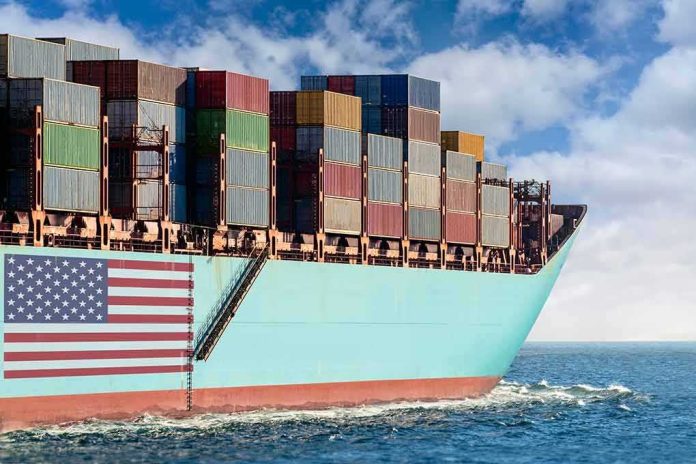
President Trump has drawn a clear red line in the Red Sea, warning Iran and its Houthi proxy that any new attacks on ships will trigger “major military punishment” from the United States.
Story Snapshot
- Trump says Iran will be held responsible for every future shot fired by the Houthis at commercial shipping.
- The president warns of “major military punishment” against both Iran and the Houthis if attacks continue.
- U.S. strikes have already hit Houthi leaders in Yemen as part of a wider campaign against Iran-backed forces.
- Rising attacks and oil price spikes show how hostile regimes threaten global trade and American wallets.
Trump Draws a Line: Iran Will Own Every Houthi Shot
President Trump has made it plain that the United States now links every Houthi attack at sea directly to Iran’s leaders. In repeated Truth Social posts, he said that “every shot fired by the Houthis” will be seen as coming from “the weapons and leadership of IRAN,” and that Iran will “suffer the consequences” if the strikes continue. This messaging tells Tehran there is no more room to hide behind proxy groups while claiming clean hands.
Reports from Washington and foreign outlets say Trump’s warning came after Houthi forces, armed and backed by Iran, claimed attacks on Saudi tankers and other ships in the Red Sea. The president described the Houthis as a “Surrogate and/or Proxy of Iran” and said the United States would hold Iran responsible for any new assaults on commercial vessels in the region. For many conservatives, this is long overdue clarity: if you arm the attackers, you own the attack.
‘Major Military Punishment’ Backed by Real Strikes
The threat is not just talk. U.S. airstrikes have already hit Houthi targets in Yemen as part of the largest American military campaign in the Middle East since Trump returned to the White House. Reuters reports that these strikes “took out” multiple Houthi leaders and are expected to continue. Trump has also warned Iran that any further Houthi aggression or direct Iranian attacks will be met with “great force” and “dire” consequences.
Coverage from regional outlets notes that Trump’s statement about “major military punishment” applies to both the Houthis and Iran if Houthi attacks on Red Sea shipping resume. Earlier, he pledged “overwhelming lethal force” until maritime attacks stop and safe passage is restored for global trade routes. This reflects a doctrine of peace through strength: use clear, credible threats and decisive action to stop terror at the source, rather than waiting for it to reach American shores.
Global Shipping, Oil Prices, and American Families
Houthi strikes on Saudi oil tankers and other vessels have already pushed oil prices higher, with some reports noting summer highs as shipping routes become more dangerous. When ships face missile and drone fire in the Red Sea and near the Bab el-Mandeb, insurance costs rise, cargo slows, and fuel prices at home can spike soon after. That hits American families in their gas tanks, grocery bills, and household budgets.
# 🚨 BREAKING: President Trump just sent a direct warning to the Houthis and Iran:
PEACE through STRENGTH# pic.twitter.com/Kw6Yqlq0Er
— The Q storm (@TheQstorm2) July 23, 2026
Analysts describe a growing pattern: Iran uses proxy militias like the Houthis to target ships, the United States answers with strikes, and the world watches to see if the pressure really deters future attacks. President Trump’s decision to publicly tie each Houthi attack to Iran raises the stakes for Tehran. It also tells allies who rely on open sea lanes that the U.S. is willing to act, not just issue press releases, when rogue regimes threaten trade and energy flows.
Congress, War Powers, and the Question of Limits
As Trump’s military campaign against Iran-backed groups expands, some lawmakers have again pushed war powers resolutions seeking to limit the president’s ability to escalate against Iran. These moves highlight a long-running tension in Washington: presidents argue they must act fast to defend American forces and vital trade routes, while Congress often tries to narrow or second-guess their authority once tough action begins.
For constitutional conservatives, there are two strong instincts here. One is to defend the separation of powers and insist that long wars need clear authorization from Congress. The other is to back a commander in chief who is finally treating Iran and its proxies as serious threats to American lives and economic security. Trump’s current policy tries to match both: pressing Iran hard while framing the strikes as necessary to protect U.S. ships, troops, and global commerce from ongoing attacks.
What It Means for America’s Security Posture
Trump’s vow of “major military punishment” if Houthi attacks resume sends a message beyond Yemen and Tehran. Other hostile actors—from terror groups to regimes like those in North Korea—are watching to see whether the United States under Trump will enforce red lines or let threats slide. Clear follow-through after public warnings can help deter copycat attacks on other vital chokepoints, such as the Strait of Hormuz.
For conservatives tired of weak responses, the stakes are simple. If Iran and its proxies can shut down sea lanes, they can choke the U.S. economy and fund more terror worldwide. A firm stance that holds the real masterminds to account is not “escalation for its own sake”; it is a defense of American sovereignty, free trade, and the ability of families to afford basic goods. Trump’s message to Tehran and the Houthis is that those costs will not be paid by American citizens without a fight.
Sources:
pjmedia.com, washingtontimes.com, indiatoday.in, iranintl.com, foxnews.com, reuters.com, straitstimes.com, abcnews.com, youtube.com