
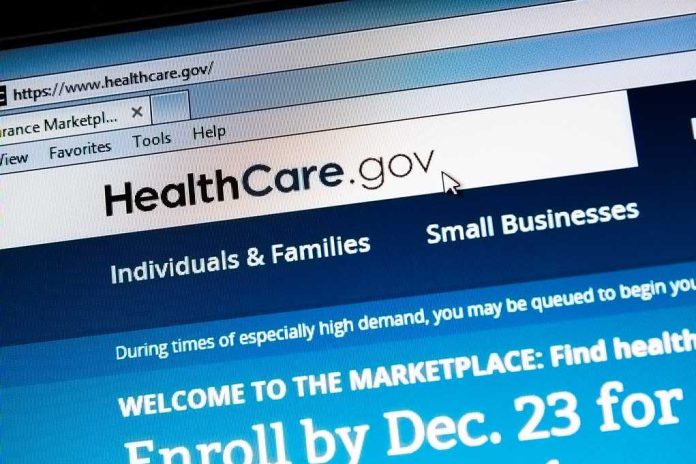
The expiration of enhanced Obamacare subsidies is set to hit millions of Americans with daunting health care premium hikes, stirring political turmoil and raising urgent questions about the future of affordable health care in the United States.
Story Highlights
- Enhanced ACA subsidies, crucial for affordable premiums, expire on December 31, 2025.
- Projected premium increases of over 100% are expected to impact 22 million enrollees.
- Political clashes, particularly involving Republicans, have blocked the subsidies’ extension.
- Democrats plan to push for a renewal in 2026, amid mounting public pressure.
The Expiration of Enhanced Subsidies
As the clock struck midnight on December 31, 2025, the enhanced subsidies under the Affordable Care Act (ACA) came to an end. These subsidies, vital for reducing monthly insurance premiums for millions, originated with the ACA in 2010 and were expanded during the pandemic. Despite their significant impact, partisan deadlock prevented their renewal, leaving enrollees facing a staggering increase in premiums, from an average of $888 annually in 2025 to $1,904 in 2026.
Republicans, citing fiscal concerns, blocked an extension during one of the longest government shutdowns in U.S. history. As a result, a bipartisan Senate deal ended the shutdown but excluded the ACA subsidies, leading to widespread criticism and a sense of betrayal among those who relied on these benefits.
Political and Economic Ramifications
The political fallout from the expiration is significant, with Republicans facing backlash for prioritizing spending cuts over health care affordability. Democrats, led by figures such as House Minority Whip Katherine Clark, are preparing to fight back with plans to propose a three-year renewal of the subsidies in January 2026. The lapse has become a focal point in the political arena, with both parties preparing for an intense showdown.
Economically, the impact is profound. The Congressional Budget Office (CBO) projects a 114% average increase in premiums, which will be a severe blow to many families. The expiration affects 85% of individual market buyers, with the potential for significant coverage losses, especially for those with chronic illnesses who depend on affordable care.
Stakeholders and Their Perspectives
The primary stakeholders in this scenario include Republicans, Democrats, ACA enrollees, insurers, and employers. Republicans have argued that the enhancements were excessive pandemic-era spending, while Democrats emphasize the importance of protecting affordable health care for families. Enrollees, like Doug Butchart from Illinois, face dire personal financial consequences, with premiums potentially exceeding $2,000 monthly for critical coverage.
Insurers and employers are also adjusting to the new landscape, with some exploring Individual Coverage Health Reimbursement Arrangements (ICHRAs) as a flexible option amidst rising costs. Meanwhile, the CMS Innovation Center, which had payment models linked to ACA stability, sees its plans affected by the subsidy expiration.
Future Prospects and Industry Impact
Looking ahead, the Democratic push for a subsidy renewal in 2026 will play a crucial role in shaping the future of health care affordability. Experts from institutions like the Kaiser Family Foundation (KFF) and Brookings anticipate ongoing debates about the ACA’s role and the potential for modified extensions. These discussions are critical not only for enrollees but also for the broader health insurance marketplace, which faces instability without the subsidies.
The expiration of these subsidies serves as a reminder of the complexities and political intricacies surrounding health care in America. As the debate continues, the focus will remain on finding solutions that balance fiscal responsibility with the need to provide accessible and affordable health care to millions of Americans.