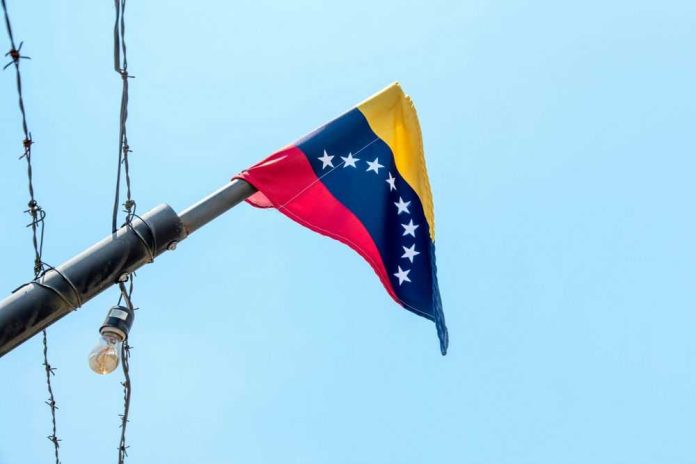
The dramatic capture of Venezuelan President Nicolás Maduro on January 3, 2026, took an unexpected turn when his interim replacement extended an olive branch to the very administration that orchestrated his downfall.
Story Highlights
- US military strikes captured Venezuelan President Maduro and his wife in January 2026
- Interim Venezuelan leader Delcy Rodriguez invited Trump to “collaborate” seeking “respectful relations”
- Trump had previously declared “we’re in charge” of Venezuela after the military operation
- The diplomatic overture represents a stark reversal from decades of US-Venezuela antagonism
From Military Strike to Diplomatic Outreach
The lightning-fast transition from combat operations to collaboration requests reveals the pragmatic calculations driving Venezuelan leadership after Maduro’s removal. When US forces struck military facilities across Caracas, Miranda, and Aragua states in the early morning hours, they effectively decapitated the regime that had defied American influence for over two decades. The operation, framed by Trump as targeting narcoterrorism and cartel networks, achieved what years of sanctions could not.
Rodriguez’s conciliatory message represented a calculated pivot by Venezuela’s remaining power structure. Rather than adopting the confrontational rhetoric that characterized Maduro’s relationship with Washington, the interim leadership chose engagement over resistance. This strategic shift acknowledges the new reality on the ground and Venezuela’s desperate need for economic rehabilitation.
Trump’s “We’re in Charge” Declaration
Trump’s immediate post-operation statements left little doubt about American intentions in Venezuela. His declaration that “we’re in charge” signaled a level of direct control unprecedented in modern US-Latin American relations. Yet this bold assertion was quickly walked back by Secretary of State Marco Rubio, who clarified that the US sought transition rather than permanent occupation.
The apparent contradiction between Trump’s triumphant announcements and subsequent diplomatic positioning reveals the complex dynamics at play. While the military operation succeeded tactically, the challenge of managing a failed state with 28 million citizens requires Venezuelan cooperation rather than pure coercion.
Venezuela’s Strategic Calculation
Rodriguez’s invitation for collaboration reflects Venezuela’s dire economic circumstances and the interim government’s recognition that confrontation offers no viable path forward. With the country’s infrastructure crumbling, millions of citizens having fled, and the Tren de Aragua criminal organization spreading chaos throughout the hemisphere, Venezuelan leaders understand that American partnership may be their only route to stability.
The request for “respectful relations” signals Venezuela’s desire to maintain some dignity in what amounts to a surrender. By framing cooperation as collaboration between equals rather than submission to occupation, Rodriguez attempts to preserve legitimacy with both domestic audiences and regional partners who view the US action skeptically.
Regional Implications and Conservative Priorities
This diplomatic opening aligns with core conservative principles of promoting democracy and combating the drug trade that has devastated American communities. Maduro’s regime had become a narco-state that exported both illegal substances and criminal organizations like Tren de Aragua to American soil. The military action and subsequent collaboration offer hope for dismantling these networks at their source.
The Venezuelan overture also provides an opportunity to demonstrate that American strength, properly applied, can create conditions for genuine partnership rather than perpetual antagonism. If Rodriguez’s interim government follows through on cooperation against drug cartels while moving toward legitimate elections, it would validate the strategy of decisive action followed by engagement. However, skepticism remains warranted given Venezuela’s history of broken promises and the institutional collapse that enabled criminal penetration throughout the government.
Sources:
2026 US regime change in Venezuela – Wikipedia
2026 Venezuela–United States conflict – Wikipedia
United States–Venezuela relations – Wikipedia