A sitting American president publicly dressing down an American pope isn’t just a headline—it’s a stress test of who sets the moral agenda when war, borders, and crime collide.
Story Snapshot
- President Donald Trump attacked Pope Leo XIV on Truth Social, calling him “WEAK on Crime” and “terrible for Foreign Policy.”
- Trump tied his criticism to Pope Leo’s opposition to the U.S.-Israeli war in Iran and to U.S. actions involving Venezuela and drug trafficking claims.
- Trump asserted, without independent proof, that Leo’s American background helped the Vatican counter Trump’s influence.
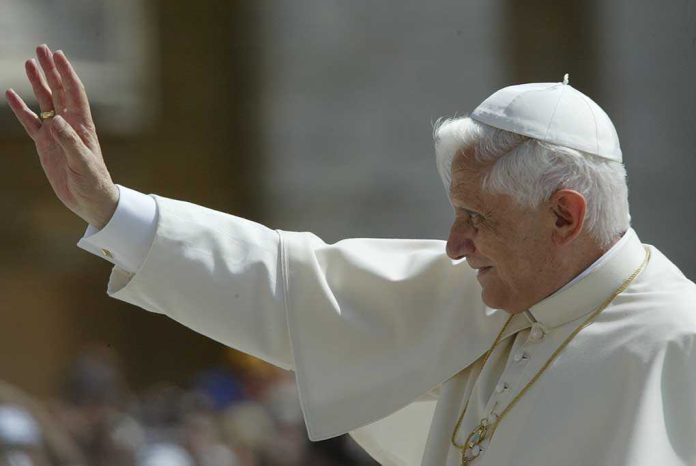
- Pope Leo responded that he has “no fear of the Trump administration” while beginning a major Africa visit centered on peace.
A Truth Social broadside turns doctrine into domestic politics
President Donald Trump’s April 12, 2026 Truth Social post didn’t read like a normal policy rebuttal; it read like a campaign brief aimed at Catholics and swing voters who think the country is unraveling. Trump framed Pope Leo XIV as soft on crime and misguided on foreign policy, then stitched that claim to the hottest buttons in American politics: Iran, the border, and public safety. That blend made the dispute instantly bigger than theology.
Trump repeated the message after returning to Washington, reinforcing that this wasn’t an offhand jab but a chosen fight. He argued that a pope who takes an anti-war posture toward Iran effectively signals tolerance for Iran’s nuclear ambitions. He also portrayed Vatican criticism of U.S. pressure on Venezuela as naïve about drug trafficking and cross-border disorder. The strategy is familiar: define the opponent as detached from consequences, then claim the mandate belongs to the elected leader, not the cleric.
Why Iran and Venezuela became the flashpoints
Pope Leo’s recent statements criticized the U.S.-Israeli war with Iran and pushed a pacifist moral frame. Trump pushed back with a security frame, implying that moralizing without deterrence invites catastrophe. That argument resonates with conservative common sense: intentions don’t stop missiles, and sermons don’t dismantle nuclear programs. The Venezuela thread sharpened it further—Trump described U.S. actions as a response to drug flows and prisoner releases into the United States, not as optional adventurism.
The clash also exposes a long-running mismatch in institutional incentives. The Vatican speaks in universal moral language, built to outlast administrations and elections. The White House speaks in trade-offs, deadlines, and leverage, built to show results before the next vote. When a pope condemns war in sweeping terms, he can sound indifferent to the immediate risks of deterrence failure. When a president answers in sweeping terms, he can sound indifferent to the human cost of force. Each side hears the other as irresponsible.
The “I made your papacy possible” claim and why it matters
Trump’s most unusual move wasn’t calling the pontiff “liberal.” It was suggesting that Leo’s election had an American logic designed to counter Trump’s influence—Trump even claimed, in essence, that without him in the White House, Leo wouldn’t be in the Vatican. No public evidence in the reporting verifies that assertion; it functions as political theater. Still, it lands because it invites readers to see the papacy not as a spiritual office but as a geopolitical actor with motives.
Trump also reportedly blended the critique with cultural cues—references to “Radical Left” politics, mention of figures tied to Democratic politics, and favorable comparisons to Leo’s “MAGA” brother Louis. That’s not diplomacy; it’s coalition warfare. The target isn’t only the pope. It’s American Catholic voters deciding whether their faith should guide them toward restraint abroad and generosity at the border, or toward order, enforcement, and hard deterrence. Trump’s message tries to make that choice feel immediate.
Pope Leo’s response: calm defiance, and a stage far from Washington
Pope Leo answered with a short but potent line: he has “no fear of the Trump administration.” Then he left for Africa, focusing his public posture on peace. That sequencing matters. A pope who trades insults with an American president risks looking like a partisan actor; a pope who responds briefly and turns to a global pastoral trip looks like he’s above the scrum. It’s a disciplined move, even if it frustrates those who want a point-by-point rebuttal.
At the same time, “no fear” is not neutral language. It signals he expects pressure, or at least intimidation-by-broadcast, and he’s preemptively rejecting it. For readers over 40 who remember U.S.-Vatican tensions in prior administrations, the rhyme is obvious: American presidents talk borders and security; popes talk human dignity and war’s moral cost. The difference now is the volume and personalization of the presidential critique—and the way social media rewards escalation.
What this means for American Catholics and the politics of authority
This dispute will likely widen a crack that already runs through many parishes: Catholics who prioritize life and peace language versus Catholics who prioritize sovereignty, law enforcement, and national cohesion. Conservative values don’t require hostility to the Church; they do require clarity about accountability. Popes don’t answer to voters, and presidents do. When a pope speaks on nuclear deterrence or border enforcement, Americans should listen respectfully—but also weigh whether the prescriptions match real-world constraints and responsibilities.
The open loop is whether either side chooses restraint next. A formal diplomatic thaw could arrive quietly, because both institutions benefit from stable relations. Or the conflict could harden into a new ritual: each fresh crisis in Iran, Venezuela, immigration, or domestic crime becoming another excuse for public condemnation. If that happens, the loudest winners will be the media and the most polarized factions. The losers will be ordinary Catholics forced to pick teams in a fight they didn’t start.
Trump and Pope Leo have now set the terms: security versus pacifism, electoral mandate versus moral authority, and a very American question hanging over a very old institution—who gets to tell a superpower what “good” looks like when the stakes turn deadly.
Sources:
Trump calls Pope Leo “WEAK on Crime, and terrible for Foreign Policy”
Trump accuses Pope Leo of being ‘terrible’ on foreign policy over pontiff’s anti-war comments