
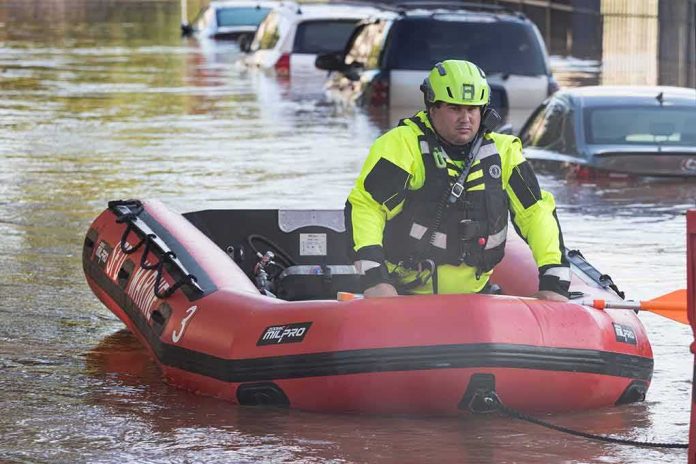
Federal help arrived as Indiana’s historic floods left at least five people dead and forced large-scale water rescues across multiple counties.
Story Snapshot
- State officials confirmed at least five storm-related deaths as flooding and winds hit multiple counties.
- Governor Mike Braun declared a statewide disaster emergency and activated the National Guard.
- President Trump approved an emergency declaration, opening federal disaster assistance.
- Indianapolis crews conducted dozens of water rescues and urgent evacuations in hard-hit areas.
Confirmed Deaths And Where The Storm Hit Hardest
Indiana emergency leaders said at least five people died as floods and severe winds swept the state this week. Officials linked the fatalities to both rising water in central Indiana and high winds in the northwest. Reuters reported deaths across several counties, including Lake, Porter, LaPorte, Jennings, and two in Delaware County, showing how wide the hazards spread. Authorities said some investigations were still underway, so the number could change as details are confirmed.
Local reporters and fire officials described swift-water rescues and tense searches. The Indianapolis Fire Department reported dozens of water rescues across neighborhoods near the White River and north-side creeks. Crews used boats to pull people from flooded homes and stalled cars, while police blocked unsafe roads to stop drivers from entering high water. These actions saved lives but strained responders who worked through washed-out areas and fast currents.
State Disaster Actions And The Federal Response
Governor Mike Braun declared a statewide disaster emergency and mobilized state and local resources to protect people and key infrastructure. Braun said the Indiana National Guard was activated to support evacuations, sheltering, and logistics. He also requested immediate federal assistance to backstop strained local systems. Public radio coverage in Indiana reported the declaration and Guard activation, which set the legal and operational frame for broader aid.
President Trump approved an emergency declaration for Indiana, which unlocked federal disaster assistance. Television coverage in Chicago said the declaration came on August 15, setting up support through the Federal Emergency Management Agency (FEMA) for lifesaving and protective measures. FEMA guidance explains that emergency declarations supplement state and local efforts to save lives and protect property during immediate threats, even as full damage counts are still developing.
Evacuations, Rescues, And Clear Public Warnings
Indianapolis officials urged people in vulnerable areas to leave quickly and to avoid flooded roads. City leaders said evacuations were underway in neighborhoods along the White River and smaller tributaries where water rose fast. Fire officials reported more than fifty water rescues over the day, including pets, as teams checked homes and assisted seniors and families with boats and high-water vehicles. Crews also monitored areas near Keystone Avenue and other low spots where drainage failed.
Reporters and local leaders stressed simple rules that save lives: turn around, do not drive into water, and follow road closures. National studies show that many flood deaths happen in vehicles, not buildings, when drivers try to cross moving water. The American Meteorological Society has reported that a majority of flash flood deaths involve vehicles, a pattern seen across many states and years. Those reminders matched what Indiana officials were seeing on the ground as roads vanished under muddy water.
Why The Numbers Shift During A Major Flood
Live updates from wire and broadcast outlets showed rescue and death counts changing over hours. That shift is common in fast floods because responders are busy saving people while reports move from crews to command posts and then to newsrooms. Indiana coverage recorded totals that rose as new rescues finished and as coroners reviewed causes of death. FEMA policy also fits this timeline, since federal aid aims to reduce immediate threats first, with full damage and casualty details reconciled later.
Rainfall totals and river stages set the severe conditions that drove the emergency. Local outlets reported ten to twelve inches of rain in parts of central Indiana, and gauges on the White River reached rare or record levels. Those heights flooded homes, closed key roads, and pushed utilities to shut down vulnerable assets to avoid further harm. Together, these steps showed a system-wide push to protect life first, then stabilize water, power, and transport as levels recede.
What Comes Next For Hoosiers
State and local teams will keep checking damaged roads, bridges, and water systems as rivers fall. The Guard and city crews will shift from rescues to cleanup, debris removal, and safety inspections. FEMA’s emergency declaration paves the way for cost-sharing support, shelter aid, and other protective steps as Indiana tallies losses and helps families return home. Residents should watch official alerts, use approved shelters, and document damage as agencies begin the longer recovery phase.
🚨 TWO MAJOR DISASTERS HITTING AMERICA RIGHT NOW
Indiana: Devastating floods have killed at least 5 people — including a 4-year-old boy — with several still missing. Nearly a foot of rain in places. Entire neighborhoods underwater along the White River. Rescue crews still… pic.twitter.com/JEcDa3v8ap
— Gunther Eagleman™ (@GuntherEagleman) August 16, 2026
Leaders across the state asked for patience and caution. First responders must keep roads clear for ambulances, utility trucks, and supply convoys. Families should avoid floodwater, which can hide sinkholes, live wires, and sewage. Simple choices reduce strain on crews and speed the return to normal life. As Indiana moves from rescue to repair, steady communication and clear rules can turn a hard week into a safer recovery for every community involved.
Sources:
aljazeera.com, reuters.com, ipm.org, wfyi.org, abcnews.com, x.com