Iran’s President Masoud Pezeshkian just delivered a carefully orchestrated television performance that reveals how modern authoritarian regimes navigate the treacherous waters between economic collapse and popular uprising.
Story Overview
- Two weeks of nationwide protests over soaring living costs forced Iran’s president into damage control mode
- Pezeshkian used state TV to promise subsidy reforms while labeling some protesters as foreign-backed “terrorists”
- The economic crisis stems from currency collapse, inflation, and the burden of extensive government subsidies
- Iran’s classic playbook emerges: acknowledge some grievances while blaming America and Israel for unrest
The Art of Political Survival Under Economic Pressure
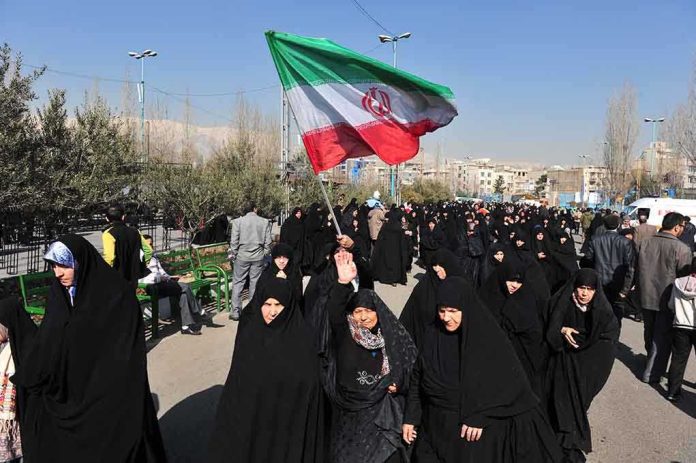
When your currency collapses and people can’t afford basic necessities, even authoritarian leaders must respond. Pezeshkian’s pre-recorded interview represents a masterclass in regime preservation tactics. He simultaneously acknowledged that “protesting is the people’s right” while warning against “rioters” who allegedly serve foreign masters. This dual messaging allows the government to appear responsive while justifying continued crackdowns.
#Iran’s President Masoud Pezeshkian claims that “terrorists” linked to foreign powers are killing innocent people and attacking public properties. https://t.co/YUD0ECBhyX pic.twitter.com/PGEEcdqYaH
— Al Arabiya English (@AlArabiya_Eng) January 11, 2026
The timing wasn’t coincidental. After two weeks of protests spreading across multiple cities, the regime needed to regain narrative control. State broadcaster IRIB provided the perfect platform for Pezeshkian to outline his “major economic plan to reform the subsidy system” without facing challenging questions from independent journalists.
Why Subsidy Reform Triggers Iranian Street Protests
Iran’s subsidy system functions as both economic policy and social contract. The government heavily subsidizes fuel, food, and basic goods to maintain public support, but this creates massive fiscal drain and market distortions. Previous attempts to reduce subsidies have consistently sparked nationwide unrest, from the 2019 fuel price protests to earlier episodes of economic reform.
Pezeshkian faces an impossible equation. Maintaining subsidies bleeds government coffers dry, especially under international sanctions that limit oil revenue. Cutting subsidies triggers immediate price increases that push struggling families over the edge. The president’s promise to address both “economic problems” and “people’s demands” reflects this fundamental tension between fiscal necessity and political survival.
The Foreign Scapegoat Strategy Reveals Regime Weakness
Pezeshkian’s accusations against the United States and Israel follow a predictable Iranian playbook, but they also expose the regime’s desperation. When leaders blame external forces for domestic economic grievances, they implicitly admit their inability to provide basic prosperity for their citizens. The claim that America and Israel orchestrated protests over grocery prices and rent costs stretches credibility beyond reasonable limits.
This narrative serves multiple purposes for Tehran’s leadership. It rallies nationalist sentiment among core supporters, justifies harsh security responses against protesters, and deflects responsibility for economic mismanagement. However, it also signals that the regime recognizes these protests pose a genuine threat to stability, requiring sophisticated propaganda responses rather than simple dismissal.
Economic Reality Collides With Political Theater
Behind Pezeshkian’s carefully crafted television appearance lies a stark economic reality that no amount of political messaging can solve. Iran’s currency has collapsed, inflation ravages household budgets, and international sanctions continue constraining the country’s economic options. The president’s promise to be “determined to solve economic problems” rings hollow without addressing these fundamental structural challenges.
The Iranian people protesting in the streets understand this reality better than government officials might assume. They’ve witnessed previous promises of economic reform followed by continued hardship. Pezeshkian’s interview may buy temporary political breathing room, but it won’t put food on tables or stop currency depreciation. The regime’s survival increasingly depends on whether it can deliver tangible economic improvements rather than elaborate explanations for continued failure.
Sources:
Khaleej Times – Iran president to address economic situation, interview protests
Anews – Iran’s president vows to solve economic problems amid protests
Arab News – Iran President Statement