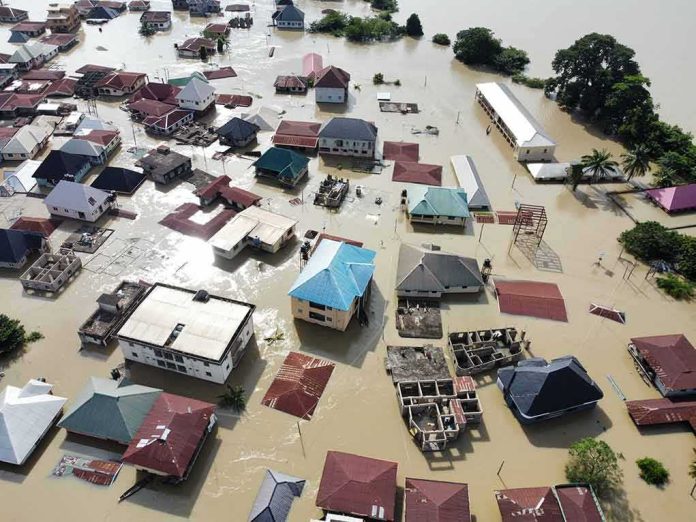
A glacier-and-landslide collapse on the Nepal–Tibet border sent a wall of mud and rock downriver, killing at least scores and leaving well over a thousand people missing across the region.
Story Highlights
- Police and tourism officials reported hundreds dead and more than 1,300 missing across Nepal and Tibet.
- Experts said a glacier section broke loose and sparked the deadly flood, not a separate earthquake.
- Villages, roads, bridges, and power sites along the Lhende River corridor were washed away or damaged.
- Unstable early counts varied by hour as rescue teams searched remote valleys.
Confirmed Toll And Search Effort
Reuters and the British Broadcasting Corporation reported a fast-climbing toll after Wednesday’s collapse sent debris and water rushing through high Himalayan valleys on the Nepal–Tibet border. Nepal police and tourism officials detailed body recoveries and missing-person lists, including hundreds of tourists, many of them foreign nationals. American Broadcasting Company later reported more than 1,300 people missing across the region as teams spread out along the river system. Officials warned numbers would change as crews reached isolated sites.
Local accounts described trucks, shops, and homes torn away in seconds as the flood cut through settlements and work sites. Reuters said police tallied scores of bodies by nightfall, while the Nepal Tourist Board listed over 400 missing, including more than 300 foreigners. These figures captured separate moments during a chaotic day, not a final total. The spread of victims across both Nepal and China’s Tibet complicated tracking and slowed confirmation of identities and nationalities.
Where And How The Collapse Happened
Reports placed the event near the Lhende River corridor, northeast of a major Nepal–China border crossing. The surge wrecked parts of villages, roads, bridges, and power projects along the channel. Nepal’s disaster authority described a “glacier-inclusive flood” that followed a landslide into the river system. Geologists reviewing satellite images said the lower part of a glacier broke off and slammed onto the valley floor, hurling ice and rock into the river and driving the sudden, powerful wave downstream.
Early talk of an earthquake trigger faded as scientists reviewed seismic data. Reuters reported the United States Geological Survey found the tremor recorded at the time matched the energy from the collapse itself, not a separate quake event. That assessment points to an ice-rock avalanche as the main cause. The finding matters for risk planning because glacier and slope failures can strike with little warning when gravity, heat, and water weaken natural walls high above towns.
Why The Numbers Shifted So Quickly
Journalists and officials updated counts many times over the first day as crews moved along rough roads and broken bridges. The British Broadcasting Corporation and Al Jazeera both flagged the wide range in deaths and missing persons that came in as radios connected and teams reached new sites. This happens often in the Himalayas, where steep land, cloud cover, and few instruments slow clear answers. The cross-border footprint added more delay as agencies worked in parallel systems.
NEW: Rescue teams are racing against the clock in Nepal as they search for survivors after a wall of water, mud and debris tears through communities near the Tibet border. At least 65 Americans are among those still missing, according to officials in Nepal.
"The floods came in… pic.twitter.com/hZKynscYUx
— Lady Q (@LadyQNews) August 27, 2026
The harsh terrain also shaped rescue priorities. Helicopters and road crews focused on pockets where survivors might be trapped by stranded trucks, toppled buildings, or river bends. Officials asked families to report loved ones to help reconcile lists. As with past mountain floods, the final toll will take days or weeks to settle. What is already clear is the scale: a multi-valley disaster that tested local defenses and left many families waiting for news.
Sources:
reuters.com, indianexpress.com