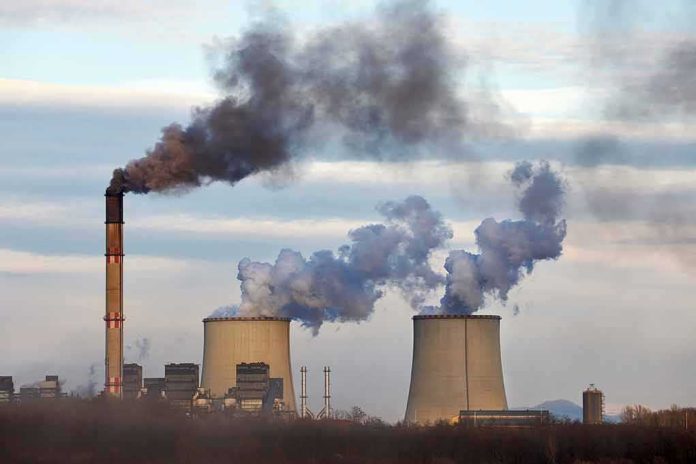
Washington moved to erase the federal climate leash on coal and gas plants, and that choice will test who really keeps America’s lights on.
Story Snapshot
- Environmental Protection Agency proposed repealing all federal greenhouse-gas limits for fossil power plants.
- The proposal covers rules for both new and existing power stations, a full unwind of the prior framework.
- The administration also revoked the 2009 endangerment finding, reshaping climate law across sectors.
- Health and environmental groups sued over related toxic-pollution rollbacks and vow more litigation.
EPA move targets the core carbon rulebook
The Environmental Protection Agency proposed to repeal every greenhouse-gas standard that applies to fossil-fueled power plants. The filing in the Federal Register states the agency would pull back both the new-source standards and the guidelines for existing units in full. This is not a tweak. It is a reset that removes the federal carbon limits that shaped utility planning. Critics call it a retreat. Supporters call it overdue relief from rules they say never fit the grid’s real needs.
The same docket makes clear the rollback reaches existing coal steam units, not just new plants. That matters because most emissions come from large, older stations that run often. Without a federal cap on those units, states and market forces will carry more weight. Some governors will keep pushing hard targets. Others will bet on gas, nuclear, and advanced controls when costs pencil out. The federal referee steps back; the field keeps playing.
Legal foundation pulled, fights multiply
The administration also revoked the 2009 “endangerment finding,” which for years served as the legal key for climate rules under the Clean Air Act, including those for vehicles and power plants. That move signals a wider shift away from federal climate regulation and invites fast, fierce court battles. Expect states, cities, and advocacy groups to ask judges for stays. Rulemaking timelines will tangle with litigation calendars. Utilities will watch the courts before betting billions.
Health and environmental groups already sued to stop a related rule that repealed amendments to the mercury and air toxics program for coal and oil units. They argue the rollback exposes communities to more toxic pollutants and harms children and vulnerable people. The Environmental Protection Agency published that repeal as a final action effective this spring. The courtroom will now decide how much of that stays in place, and for how long, as arguments over risk and statutory duty play out.
Grid reliability, consumer costs, and conservative common sense
Supporters of repeal say power markets need simple rules and steady fuel. They argue heavy federal mandates forced early coal closures and pushed costs onto ratepayers. The record here shows action, not a full cost-benefit math. The proposal and the mercury repeal set policy but do not prove price cuts or job gains on their own. Conservative common sense welcomes fewer mandates, but it also expects proof that families will pay less and get a more reliable grid.
Courts have already narrowed the Environmental Protection Agency’s reach on “generation shifting,” limiting how far the agency can push the grid to switch fuels through rulemaking. That ruling shaped the options on the table and raised the bar for aggressive carbon plans. Within those bounds, a modest, plant-level approach may fit the law best. Repeal shifts that debate to states and companies. If reliability improves and rates ease, the public will notice. If not, voters will ask hard questions.
What to watch next: dockets, dials, and deadlines
Watch the docket for a final repeal and any regulatory impact analysis that tries to quantify savings. Look for utility filings that cite deferred capital spending or changed retirement dates for coal and gas units. Track reserve margins and outage data through regional grid operators to see if reliability trends improve. The Harvard policy tracker shows continued movement at the Office of Management and Budget on related findings, so more steps appear likely. The pace of lawsuits will be just as important.
The Trump EPA is notably expected to assert in its new proposal that it does not have the legal authority to regulate power plant greenhouse gas emissions based on climate change theories and that those types of emissions "have no material impact on global climate change."
— Thomas Catenacci (@ThomasCatenacci) September 14, 2026
Opponents will argue public health risks and climate harms outweigh any short-term savings. The Natural Resources Defense Council claims prior standards would have cut about 1.4 billion tons of carbon over 23 years, a large number that will anchor their case. Expect state coalitions to press that the Environmental Protection Agency still must act where the law requires it. The administration will counter that Congress writes the big checks and sets the big targets, not agency lawyers.
Sources:
washingtonpost.com, nypost.com, cnbc.com, nrdc.org, theguardian.com, phelps.com, nbcnews.com, federalregister.gov