
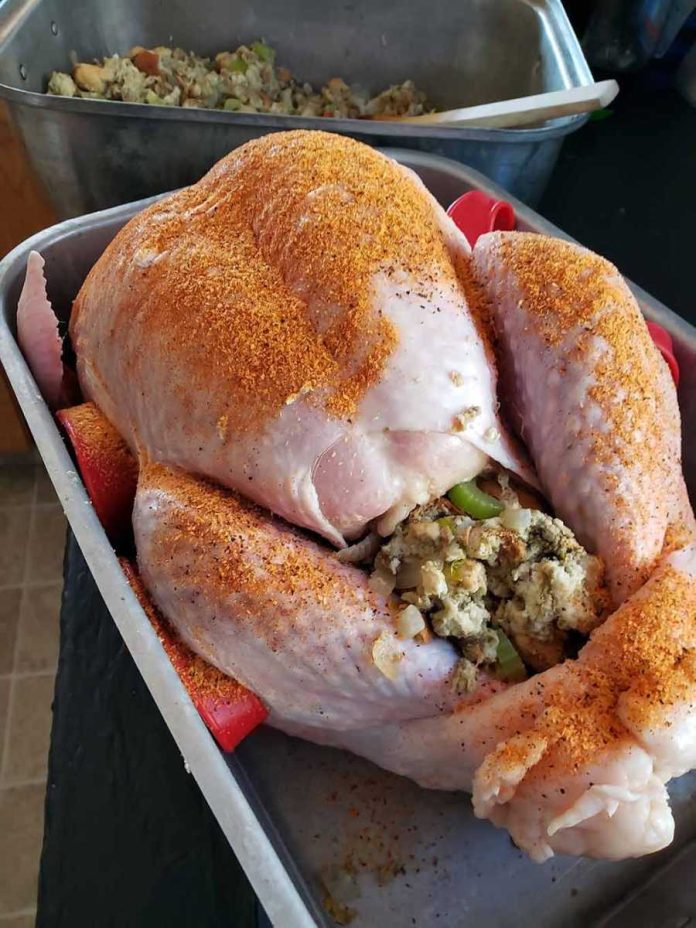
USDA says rinsing raw turkey can spray harmful bacteria around your kitchen, but cooking to 165°F keeps families safe.
Story Highlights
- USDA warns against washing raw turkey because it spreads bacteria by splashing.
- Cooking turkey to 165°F in the thigh, wing, and breast makes it safe to eat.
- Cross-contamination from raw turkey juices is a main cause of kitchen illness.
- Most people still rinse poultry, showing the message has not fully landed.
USDA’s Core Guidance: Do Not Wash Raw Turkey
United States Department of Agriculture officials state that washing raw turkey does not make it cleaner. Water cannot remove bacteria stuck to the skin. Rinsing can blast tiny droplets onto counters, sinks, tools, and nearby food. That spread is called cross-contamination and can make guests sick. The agency’s plain advice is simple: skip the sink and move straight to safe prep and cooking. This guidance is direct and long-standing from the United States Department of Agriculture.
United States Department of Agriculture food safety pages explain why this matters in home kitchens. Bacteria move from raw meat or poultry juices to cutting boards, hands, and ready-to-eat food. That jump often happens before anyone notices a mess. Keeping raw turkey and its juices away from salads, fruit, desserts, and breads reduces the chance of illness. Cleaning and sanitizing any surface that touches raw turkey helps stop the chain of spread.
Cook It Right: 165°F Is the Non‑Negotiable Number
Food safety officials say heat is what kills germs. A food thermometer is the only way to know if a turkey is safe. The bird must reach 165 degrees Fahrenheit in three spots: the innermost part of the thigh, the innermost part of the wing, and the thickest part of the breast. If all three hit 165 degrees Fahrenheit, the turkey is safe to eat. This rule applies no matter how you cook it—roast, smoke, or fry.
United States Department of Agriculture holiday guidance repeats the same standard. Checking only the juices or color is not reliable. Different parts of a large bird heat at different speeds. A thermometer reading of 165 degrees Fahrenheit in each checked area confirms doneness and safety. Taking a few extra seconds for these readings protects children, older adults, and anyone with weaker immune systems at the table.
Old Habits Are Hard to Break—and Risky
Many home cooks still rinse poultry out of habit or for looks. A federal survey found that about two-thirds of people said they always washed whole chickens or turkeys. Most used water to rinse them in the sink. That practice feels clean but often does the opposite. It can seed bacteria across surfaces where snacks, sides, and desserts later sit. This gap between what people do and what keeps them safe remains wide in many homes.
🦃Don’t forget to thaw your turkey safely!
Our dietetic intern is here to walk you through how to properly defrost a turkey so you can get ahead of the holiday cooking and keep food safety in mind.
A little planning now makes for a smoother Thanksgiving later!🍂#ThanksgivingMeal pic.twitter.com/LVqio78eMf— People's Resource Center (@peoplesrc) November 22, 2026
Research backs the mechanism behind the warning. Lab and kitchen studies show that washing raw poultry can spread bacteria through splashes and droplets. Messaging campaigns can reduce washing, but even good cleaners sometimes still move germs by touching other foods and tools. That is why experts focus on both steps: stop the rinse and cook to 165 degrees Fahrenheit. Together, those steps cut the main paths that make families sick on holidays.
Practical Steps for a Safer Thanksgiving
United States Department of Agriculture instructions stress four basics. Clean hands with soap and warm water for 20 seconds before and after handling raw turkey. Separate raw turkey and its juices from foods that will not be cooked. Use a food thermometer to confirm 165 degrees Fahrenheit in the thigh, wing, and breast. Chill leftovers within two hours in shallow containers. These steps work in small kitchens and busy homes and lower the chance of foodborne illness.
Sources:
washingtontimes.com, fsis.usda.gov, usda.gov, pmc.ncbi.nlm.nih.gov, pubmed.ncbi.nlm.nih.gov