
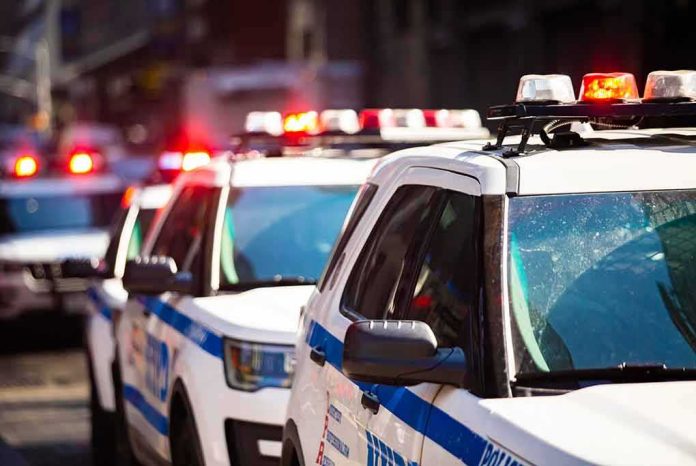
Two 911 calls about a person screaming in a white van set off a Belt Parkway chase that ended when New York police shot the driver dead, raising hard questions about danger, duty, and split‑second force decisions.
Story Highlights
- Two separate 911 callers reported a person screaming “Let me go” inside a white van.
- Police stopped the van on the Belt Parkway; the adult woman from the van was later found unharmed.
- NYPD says the driver rammed police and civilian cars; officers fired after pepper spray and a Taser failed.
- The legal lens: courts allow deadly force if a fleeing driver poses an immediate deadly threat.
What Sparked the Police Response
New York Police Department officials said the chain of events began around 7:19 p.m. after two 911 calls reported a person in distress inside a white van near West 22nd Street and Surf Avenue in Brooklyn. One caller said a “girl” was kicking and screaming; another reported hearing “Let me go.” Officers broadcast the van’s description and soon spotted it on the eastbound Belt Parkway. Traffic officers moved to stop the vehicle as it approached exits near Coney Island Avenue.
Assistant Chief Charles Minch said officers issued commands and tried to contain the scene on the highway shoulder. Police described a tense standoff at the van’s front passenger side. Officers broke the passenger window, then used pepper spray and a Taser. The department said those steps did not stop the driver. Moments later, the van struck police and civilian vehicles, according to the preliminary account. Officers then fired, removed the driver, began CPR, and transported him to NYU Langone Hospital—Brooklyn, where he died.
Who Was in the Van and What Police Found
Investigators later located an adult woman who had been inside the van and found her unharmed, according to police. Early reports and the 911 audio descriptions used the word “girl,” but police accounts identified the person as an adult woman. Several outlets reported that detectives assessed the incident as a domestic dispute rather than a child abduction. Police also said the driver had past matters involving the same woman, including alleged abuse, which form part of the investigative context.
Officers at the scene were not reported injured by gunfire. Officials did not immediately release the number of shots fired, the names of the officers involved, or whether the driver had a weapon. Media reports described small differences in the exact location on the Belt Parkway and in the tactical sequence. Those details are common in fast-moving scenes and are usually clarified by body-worn camera reviews and formal findings after the initial briefing.
Why a Moving Vehicle Raises the Stakes
Highway stops can turn deadly fast because a moving vehicle can become a weapon. Courts have held that police may use deadly force when a suspect poses an immediate threat of serious harm, including during dangerous pursuits. In Plumhoff v. Rickard, the Supreme Court said officers did not violate the Fourth Amendment when they fired to end a chase that threatened bystanders, placing public safety at the center of the analysis. That legal frame often guides reviews after vehicle ramming claims.
🚨SHOCK FOOTAGE: NYPD officers fatally shot a 26-year-old kidnapping suspect on Saturday night in Brooklyn on the Belt Parkway near Coney Island Avenue after he rammed police cruisers and civilian vehicles while fleeing.
Police first used pepper spray and a Taser before opening… pic.twitter.com/DHi0C78XuD
— Moshe Schwartz (@YWNReporter) November 15, 2026
New Yorkers across the political spectrum share two core expectations: protect people in danger and prevent needless deaths. This case sits on that line. The 911 calls suggested a person in distress. The highway scene risked crashes with families driving home. The department’s account says officers tried commands and less-lethal tools before firing, which would fit a step-by-step use-of-force model if confirmed by video and reports. Investigators will compare those records to the timeline to judge necessity and reasonableness.
What Comes Next and Why It Matters
The New York Police Department’s Force Investigation Division typically reviews shootings, pulling body-worn camera footage, 911 audio, radio runs, and crash documentation. Those records can verify if the van actually struck police and civilian cars, how close bystanders were, and when officers fired. Investigators have already identified the woman from the van. Her statement, along with collision reports and medical findings, will be central to the official conclusions and any discipline or charges.
For many readers, the deeper concern is systemic. People see headlines swing from “kidnapping” to “domestic dispute” and wonder if anyone is in control. They worry that, in crises, government systems react late and explain later. Clear timelines, unedited videos, and plain-language reports help restore trust. That transparency is not a favor to the public; it is a duty in a free country where police power must be accountable and where safety and liberty both matter.
Sources:
thegatewaypundit.com, nytimes.com, fox5ny.com, nbcnewyork.com, pix11.com, brooklyn.news12.com