
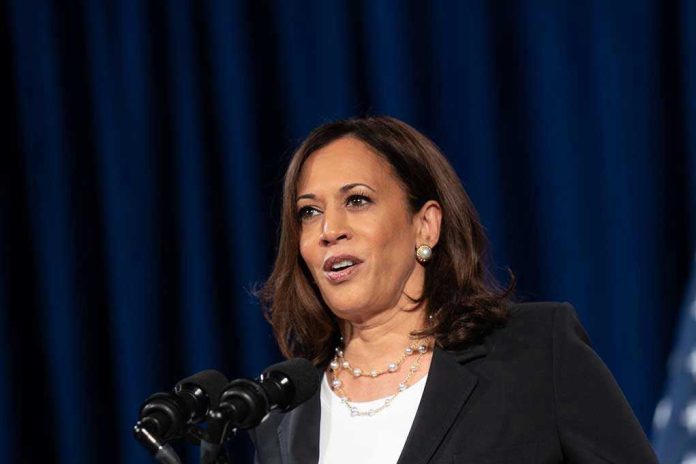
At a New Hampshire event, Kamala Harris urged Democrats to expand the Supreme Court to 13 justices and to be “ruthless” in pursuing structural reforms, setting clear stakes for the next election cycle.
Story Snapshot
- Harris called for expanding the Supreme Court to 13 justices and tied it to broader “structural” reforms.
- She said Democrats should be “ruthless,” defining it as firm accountability, not cruelty.
- Her agenda also included rethinking the Electoral College and elevating the popular vote.
- Congress has changed the Court’s size before, though often amid political conflict.
Harris’s New Hampshire Message: Expand the Court and Press Structural Change
Kamala Harris told a New Hampshire audience that Democrats should expand the Supreme Court to 13 justices. She linked the idea to a wider push for “structural work” if Democrats win power. She argued that 13 matches the number of federal circuit courts, and she framed the change as part of resetting core institutions. She also urged Democrats to be “ruthless,” which she defined as being uncompromising on accountability, not cruel or harsh toward opponents.
Harris paired the Court proposal with other political system changes. She said Democrats should take a hard look at the Electoral College and ensure the popular vote “has to matter,” echoing earlier remarks this month. She also cited priorities like statehood for Puerto Rico and Washington, D.C., and reversing the Citizens United ruling, portraying them as parts of one project to make national institutions reflect voter choices more directly.
What Expanding the Supreme Court Would Involve
The United States Constitution does not set the number of Supreme Court justices. Congress has changed the size several times in the nation’s history. Lawmakers expanded and shrank the Court in the nineteenth century, often alongside changes to the federal circuits and major political fights. That history shows Congress can act by statute, though past changes sometimes carried partisan aims that sparked backlash.
Harris justified 13 justices by pointing to 13 circuit courts, but she did not offer a bill or timeline in New Hampshire. Her remarks did not include a nomination sequence, transition rules, or plans for recusals. The event centered on priorities, not legislation. That keeps the focus on political will rather than on technical steps that Congress and the White House would need to draft and defend if they try to pass such a law.
Electoral College Talk Signals a Renewed Fight Over How America Counts Votes
Harris said Democrats should reassess the Electoral College and make the popular vote matter more. She did not say whether she backs a constitutional amendment, changes in state elector rules, or an interstate compact. The call signals where debate may head if Democrats gain ground. It also highlights a core tension: many voters want fairer outcomes, but they split on whether that means reforming the Electoral College or keeping it as a buffer against national majorities.
Scholars note that changing or bypassing the Electoral College through law faces both legal and political hurdles. Some proposals aim to reduce the chance that a candidate wins the presidency without winning the most votes nationwide. Each approach involves trade-offs in state power, campaign strategies, and voter trust. Harris’s framing puts pressure on party leaders to clarify the method, not just the goal, before any serious push in Congress or state capitals.
Why This Resonates With Frustrated Voters Across the Spectrum
Voters on the right and left share a sense that national institutions are not serving them well. Harris’s message taps that energy by promising change at the top of the system. Supporters may see a larger Court and new election rules as fixes to a gridlocked order. Critics may see “court packing” and Electoral College changes as raw power plays. The stakes are high because these moves would shape how laws are judged and how presidents are chosen.
The bottom line is simple. Harris drew a clear line: change the rules to match voter power, and do it with resolve. History shows Congress can change the Court’s size, but each attempt has stirred fierce pushback. Any real effort would test whether leaders can channel public anger into durable law without deepening the nation’s split over how we govern ourselves.
Sources:
thegatewaypundit.com, patch.com, newhampshirepoliticalreporter.com, youtube.com