
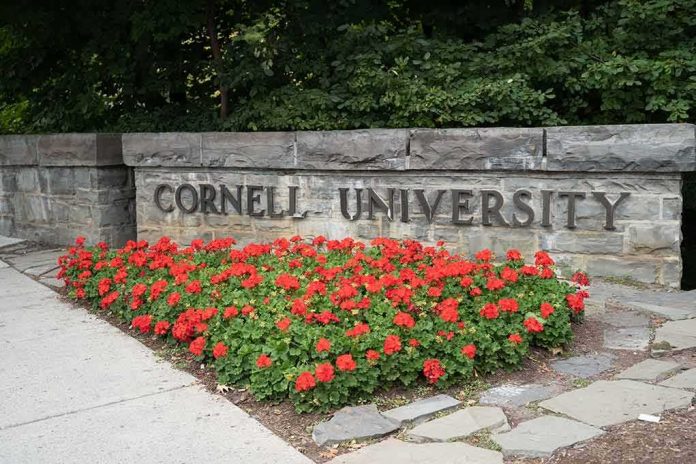
Prosecutors will take a Cornell fraternity rape case to a grand jury after a civil lawsuit exposed new details and pressure for action.
Story Snapshot
- Tompkins County prosecutors say they intend to present the 2024 Cornell case to a grand jury.
- A civil lawsuit alleges drugging and sexual assault at the Chi Phi fraternity; Cornell says the chapter remains banned.
- Defense lawyers deny the claims and say records and scientific evidence support their position.
- The case spotlights the gap between campus discipline and criminal proof standards.
What Prosecutors Are Doing Now
Tompkins County District Attorney Matthew Van Houten said his office intends to present the case to a grand jury with the accuser’s cooperation. He said prosecutors want to reexamine whether new or overlooked evidence could change the earlier assessment from 2024, when no charges were filed. The renewed review follows a civil lawsuit that drew wide attention and public concern. The announcement signals a possible shift from initial conclusions to a formal grand jury test of the evidence.
A grand jury review does not mean charges will follow. It is a private process where jurors hear evidence and decide if there is enough to indict. Prosecutors use grand juries to test witness accounts and documents under oath. If jurors find probable cause, an indictment can issue. If not, the criminal case likely ends. The district attorney’s step here gives the accuser a structured venue to tell her story under criminal rules.
What The Lawsuit and Cornell Say
The civil complaint alleges that several Chi Phi members drugged and sexually assaulted a visiting student in 2024. Cornell University said its Office of Civil Rights and its conduct office investigated under campus policy. The university reported that the Xi chapter of Chi Phi remains barred from campus. Cornell also said it supports the district attorney’s decision to bring the accuser’s account before a criminal grand jury, which is separate from campus discipline.
Campus and courtroom standards differ. A university can act on a lower burden of proof to protect students and set sanctions, while a criminal court demands proof beyond a reasonable doubt. That split often creates tension and confusion for the public. Here, the campus process led to lasting sanctions against the fraternity, while the criminal case is only now moving toward a grand jury review after the lawsuit surfaced and renewed attention grew.
How The Defense Responds
Attorneys for at least one named defendant flatly deny the claims. One lawyer told reporters the incident “did not happen.” Another said his client made an immature group chat comment but did nothing more. Defense counsel Jeremy Saland said they possess documents, the plaintiff’s words, other statements, and scientific evidence that they believe contradict the allegations. Those claims will face testing if prosecutors present them to the grand jury.
SHOULD DA Van Houten/TCDAO RECUSE itself, given PUBLIC COMMENTS about VICTIM, AFTER Tompkins County District Attorney REOPENED the 2024 Chi Phi Fraternity SEXUAL ASSAULT Case after arguable intense backlash over how the DA/ @Cornell handled it or the arguably INADEQUATE… pic.twitter.com/mBwE3rdiGs
— L Ortiz (@l_ortiz81888) September 29, 2026
The defense denial matters because the grand jury will weigh credibility and records under oath. If phone messages, timelines, and any lab reports exist, jurors can examine them in context. If the state lacks corroboration, an indictment could fail. If the state shows strong, consistent evidence, the case could advance. For readers, that is the key: this stage checks whether the claims clear the legal bar for criminal charges, not whether guilt is proven.
Why This Resonates Beyond Cornell
Parents and students see a system that often moves too slow or not at all, while reputations and safety hang in the balance. Advocates on the left want serious cases charged and survivors heard. Voters on the right want due process and facts, not punishment by headline. Both sides worry that powerful institutions protect themselves first. This case shows that gap: quick campus action, delayed criminal review, and a lawsuit forcing a second look by authorities.
What To Watch Next
Watch whether the district attorney actually convenes the grand jury and calls key witnesses. Look for any new records entered into the process, such as chat logs, medical reports, or expert findings. Track whether the defense seeks to share its claimed scientific evidence with prosecutors ahead of time. If an indictment issues, charges and counts will show what facts jurors found credible. If not, the criminal path likely ends, while the civil suit continues on a lower proof standard.
Sources:
abcnews.com, cornellsun.com, newser.com, abcnews4.com, statements.cornell.edu, people.com