When a high-stakes use of force occurs without body-camera documentation, the public argument stops being about whether the shooting was justified and becomes a referendum on institutional credibility, policy compliance, and who controls the timeline of facts.
The Short Version
- DHS and Austin officials agree the shooting happened during a federal immigration stop; the man survived and remained in federal custody pending removal.
- No official, detailed use-of-force narrative has been released; whether the ICE officer wore a body camera has not been confirmed publicly.
- A lawyer for the wounded man says bystander video undercuts a claimed foot pursuit, sharpening a direct factual dispute.
- Homeland Security Investigations, with FBI assistance, is leading the inquiry; city police were not involved in the operation itself.
- The episode fits a broader pattern: disputes intensify when body-camera policy, practice, or release lags behind public expectations.
What is firmly established — and what is not
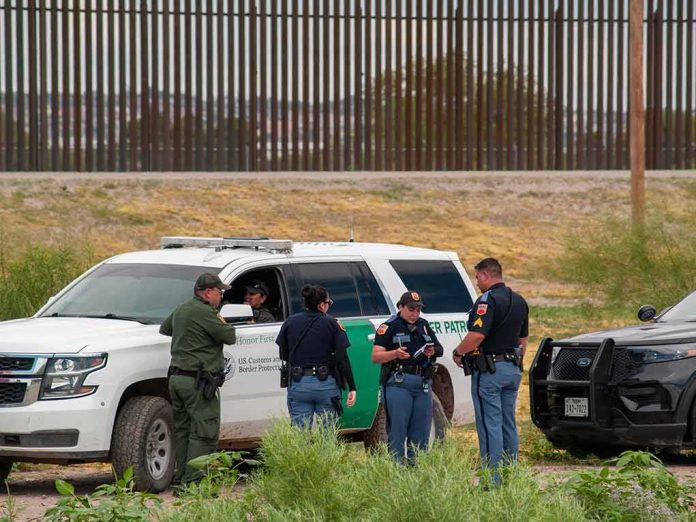
The federal account places the incident squarely within an immigration enforcement operation involving a Venezuelan man subject to a final order of removal; DHS said the individual was in federal custody pending removal and in stable condition after the shooting. Austin’s police chief confirmed the episode followed a traffic stop and emphasized that city officers were not part of the operation or the shooting. Federal agencies said the investigation is being run by Homeland Security Investigations with FBI assistance, a standard posture for an internal federal review of an officer-involved shooting. Dispatch audio and local reporting identify a concrete location and sequence — a pursuit and stop of a blue Toyota Corolla near Research Boulevard and the Highway 183 underpass — consistent with an active enforcement stop rather than an incidental encounter.
What remains opaque is the decisive span of seconds that would explain the trigger pull: DHS has not publicly described the perceived threat, the officer’s position relative to the vehicle and driver, or a timeline linking commands, movement, and muzzle flashes. The department also has not confirmed whether the ICE officer wore a body camera. That vacuum matters because it blocks independent assessment of necessity and proportionality — the two anchors of any deadly-force analysis — and it invites rival narratives to harden while memories are still fresh.
The immediate dispute: competing video claims and the body-camera gap
The sharpest factual conflict concerns whether there was a foot pursuit before the shooting. A lawyer for the man says available video does not show one, directly contradicting an early characterization reported by officials. If corroborated, that gap would undercut a key element often used to explain split-second judgments — namely, rapid, close-quarters movement outside the car — and would elevate the importance of other evidence such as trajectory analysis, casing locations, and radio traffic. Separately, multiple outlets report that DHS has not said whether the officer wore a body camera; if the officer was assigned a camera but did not wear it, the policy-compliance issue becomes an accountability problem in its own right, distinct from the legal question of whether the shooting met constitutional standards.
Calls for transparency have been robust and bipartisan in tone if not in politics. Austin officials and Rep. Greg Casar pressed for an independent investigation and immediate release of any body-camera video; his formal letter requested complete, unedited footage and preservation of all evidence for oversight entities. Those demands do not by themselves resolve facts, but they shape expectations around timeliness and completeness of disclosure — expectations agencies increasingly face after high-visibility uses of force.
How these investigations actually get resolved
In a credible use-of-force review, three evidence classes typically carry the outcome. First is the physical record: bullet impacts, glass fractures, residue, and trajectories that can reconstruct shooter position and movement. Second is synchronized communications: dispatch audio, unit-to-unit radio, and any 911 calls that establish timing and perceived threats in real time. Third is visual documentation: body-worn cameras if used, vehicle dash systems, fixed cameras nearby, and bystander recordings, ideally time-synced. Absent body-camera footage, the other two classes bear more weight; they are slower to assemble, but they are also harder to spin once a full reconstruction is complete. The stated HSI-FBI posture suggests forensic processing and agent interviews are underway, but until a timeline, diagrams, and legal analysis are released, conclusions will remain provisional.
Independent expert work can and should parallel the official process. A competent reconstruction uses scene photographs, casing maps, and measured vehicle damage to test or falsify hypothesized movements; it compares claimed command phrases and timing to the cadence on the radio. If a foot chase occurred, the physical record usually shows it: shoe scuffs, displaced gravel, relative casing distribution. If shots were fired into a moving car from a fixed point, impact angles and glass spall patterns will show consistency or contradiction.
Why body cameras sit at the center — and why they cannot carry the whole load
Body-worn cameras have become the de facto public test of seriousness after a shooting; when present and promptly released, they can stabilize the discourse, even if they do not settle every ambiguity. The research, however, is mixed on their effects. Some rigorous trials found material reductions in use of force and complaints when cameras were deployed, while other meta-analyses report no consistent effect across agencies and even a rise in assaults on camera-wearing officers in certain contexts. In short, cameras are powerful documentation tools, but they are neither a cure-all for disputed facts nor a guaranteed behavior modifier.
For immigration enforcement specifically, policy has lagged expectations. Reporting in 2026 chronicled that ICE agents implicated in a fatal Houston shooting were not wearing cameras despite federal funding, and that ICE’s release policies left significant discretion with leadership about what, when, and whether to publish footage. Even as senior officials have pushed back on characterizations of “withhold by default,” the practical reality is that communities often experience lengthy delays or partial disclosures — gaps that compound mistrust in the aftermath of force.
Where the legitimate questions lie — and how to answer them
Given the established facts and the unresolved gaps, the durable questions are clear and answerable with existing methods:
– Camera status and compliance: Was the officer issued a body-worn camera under current ICE policy for enforcement operations, and if so, was it active? The answer sits in issuance logs, shift rosters, and metadata. Non-use, if policy required it, is a material compliance failure irrespective of ultimate shooting legality.
– Target identification and pre-stop intelligence: Was the wounded man the subject of the operation, and what risk indicators, if any, were briefed to the team? That context shapes the reasonableness of tactics used during the stop.
– Movement and muzzle mapping: A synchronized map of officer position, subject position, and vehicle orientation tied to casing and impact evidence can validate or refute claims of a foot pursuit, a threat by vehicle, or a stationary discharge.
– Communications cadence: Do radio transmissions reflect a rapidly escalating threat consistent with policy thresholds for deadly force, or a breakdown in coordination and command?
NEW: More than 100 members of Congress are demanding ICE release Wilber Rafael Garces Perez — the 28-year-old Venezuelan man shot by an ICE officer in Austin Sunday — so he can receive medical treatment, while also calling on the agency to halt efforts to deport him.
Texas… pic.twitter.com/iFx9xKscPB
— Ali Bradley (@AliBradleyTV) September 22, 2026
What accountability looks like going forward
Transparency here is not a press release; it is a package. A credible resolution includes a full investigative timeline; diagrams of the scene; stills or video when policy permits; a legal analysis keyed to use-of-force doctrine; and explicit findings on policy compliance, including body-camera use. Agencies that move quickly on at least the timeline and physical reconstruction often prevent the narrative vacuum from hardening into permanent distrust. Conversely, if the officer was supposed to be wearing a body camera and was not, the institution needs to say so plainly, explain why, and enforce consequences — because documentation duties are an accountability floor, not a ceiling.
Sources:
yahoo.com, nbcnews.com, npr.org, apnews.com, news4sanantonio.com, time.com, pbs.org, cbsnews.com, independent.co.uk, policeforum.org