
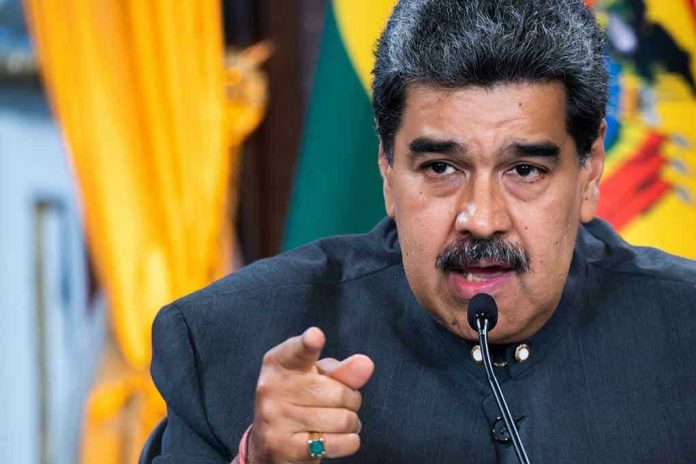
Nicolás Maduro asked a U.S. judge to throw out drug charges by claiming head-of-state immunity, setting up a rare test of who gets to decide who counts as a leader.
Story Snapshot
- Maduro and his wife asked a Manhattan court to dismiss U.S. drug charges on immunity grounds.
- U.S. law recognizes status-based immunity for current heads of state, but only while in office.
- The U.S. has argued Maduro is not Venezuela’s recognized president, cutting off that shield.
- The judge must weigh immunity rules against U.S. recognition policy and the nature of the crimes.
What Maduro Filed And Why It Matters
Maduro’s lawyer told a federal judge in New York that U.S. courts lack power to try him because sitting foreign leaders are immune from criminal cases. The filing asks the court to dismiss drug trafficking charges against Maduro and his wife, Cilia Flores, on the grounds that heads of state cannot be prosecuted in foreign courts while in office. The request forces the court to apply long-standing immunity rules to a live dispute over who the United States recognizes as Venezuela’s leader.
Under customary international law, current heads of state enjoy status-based immunity from foreign criminal jurisdiction. A nonpartisan Congressional Research Service brief explains that this immunity bars criminal and civil actions in U.S. courts, but only while the leader remains in office. That narrow window is key. If a court accepts that Maduro was a current president at the time of the alleged conduct or capture, his defense gains a powerful, though not automatic, shield.
The U.S. Recognition Challenge To Immunity
U.S. policy has undercut Maduro’s claim by disputing that he is Venezuela’s legitimate president. Reporting on the U.S. position notes that the government has argued Maduro does not qualify for head-of-state immunity because the United States does not recognize him as Venezuela’s leader. That stance puts recognition at the center of the case. If the court follows U.S. recognition policy, the status-based immunity that protects sitting leaders may not apply to Maduro.
Reuters framed the legal clash around whether immunity covers Maduro at all, given the U.S. view of his status and the drug conspiracy allegations. Venezuela’s attorney general, by contrast, has said the United States lacks authority to prosecute and that Maduro still retains immunity as the nation’s leader. This split highlights the core tension: immunity depends on office status and recognition, while prosecution turns on alleged crimes the United States treats as ordinary, not sovereign, acts.
How The Court Could Parse The Claims
The judge must sort three questions: who the United States recognizes as Venezuela’s leader, whether status-based immunity applies only to current, recognized leaders, and whether the charged conduct could ever be treated as official. Legal commentary stresses that drug trafficking is not an official act for conduct-based immunity, which protects lawful state functions after a leader leaves office. Status-based immunity is broader, but it still hinges on the person being a sitting, recognized head of state.
JUST IN — MADURO SEEKS DISMISSAL
Nicolás Maduro and his wife are seeking dismissal of the U.S. drug-trafficking indictment, arguing they have immunity as Venezuela’s “first family.” Prosecutors oppose the claim as the case moves forward.#WashingtonEye pic.twitter.com/6xfGBP50vp
— Washington Eye (@washington_EY) September 3, 2026
Past U.S. cases offer limited guidance. Analysts point to how courts look to the executive branch on recognition questions and then apply immunity rules to that settled status. If the court treats Maduro as not recognized, the claim of head-of-state immunity faces long odds. If the court credits his claim to current office, immunity becomes stronger. Either way, the ruling will signal how far U.S. courts will go when foreign power and domestic policy collide over who counts as a sovereign leader.
Sources:
insiderpaper.com, aljazeera.com, congress.gov, reuters.com, dplf.org, auilr.org, voanews.com