Prosecutors charged a Pennsylvania police corporal with voluntary manslaughter after finding the unarmed student he shot was not a threat.
Story Snapshot
- Montgomery County prosecutors say the shooting was not a legal use of deadly force.
- The 22-year-old student appears to have gone to the wrong house, according to family accounts.
- Charges against on-duty officers remain rare, adding pressure to each case.
- The case highlights nationwide debates over training, force standards, and public trust.
Prosecutors File Voluntary Manslaughter Charge
Montgomery County District Attorney Kevin Steele charged Upper Pottsgrove police Corporal Sean Farrell, 58, with voluntary manslaughter in the August 23 death of 22-year-old Glenwood “Bubba” Pysher. Steele said investigators concluded the use of deadly force was not lawful. He cited evidence that the student was unarmed, had his hands up, and was at a safe distance behind a car when the shots were fired. Steele said, “Mr. Pysher was not a threat”.
Associated Press reports and local coverage state the student ended up at the wrong house before the shooting. Family members told reporters their son was at the back porch area when police arrived. They said friends relayed those details to them. The district attorney’s office announced the charge publicly soon after the investigation’s initial findings were shared. The arrest sets the stage for court hearings where evidence will be tested and defenses presented.
Key Facts About The Encounter And The Charge
Investigators said the officer had less-than-lethal tools he did not use before firing, a factor prosecutors weighed in deciding the charge. The official description also stresses the lack of a weapon on the student and his posture at the time. Voluntary manslaughter under state law involves an unlawful killing without the elements of murder. Prosecutors chose that charge to reflect their view of the force decision in that moment. A court will decide whether the evidence meets that standard.
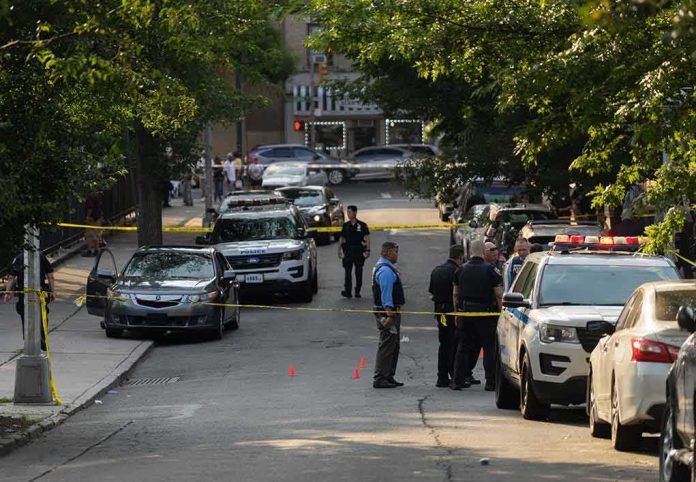
Local reporting places the shooting just after midnight in Upper Pottsgrove Township. The Montgomery County Detective Bureau led the probe. Police leadership initially withheld officer names pending the investigation, which is standard in many departments. The district attorney’s office then moved forward with the charging decision. That formal step triggers the criminal process, including arraignment, discovery, and likely pretrial motions that will shape what a jury may hear if the case goes to trial.
Why This Case Draws National Attention
Research from Bowling Green State University shows arrests of on-duty officers for murder or manslaughter in shootings were uncommon from 2005 to 2018, with 97 arrests and far fewer convictions. That base rate means every charged case carries extra weight and scrutiny from both sides. Communities see these cases as tests of police accountability. Officers and unions argue that split-second choices should be judged by training and law, not public anger.
Pennsylvania police officer charged with voluntary manslaughter in killing of college student https://t.co/uCr882wJVE
— O.C. Register (@ocregister) September 1, 2026
Past outcomes in other jurisdictions show mixed results, from convictions to dismissals or new trials, which adds to public confusion about the rules for force. In this Pennsylvania case, prosecutors anchor their decision on specific facts: no weapon, hands visible, distance, and unused options short of lethal force. Those are the details a jury can assess. A single ruling will not fix trust problems, but a clear, fact-driven process can help set fair standards going forward.
Sources:
washingtontimes.com, post-gazette.com, 6abc.com, abcnews.com, nytimes.com, cbsnews.com, pacourts.us