
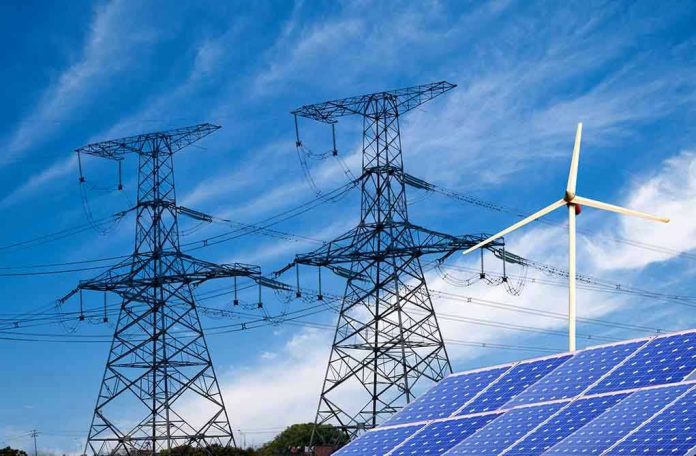
Across red and blue America, massive AI data centers are driving up power and water use in secretive deals that leave neighbors footing the bill while Big Tech cashes in.
Story Snapshot
- Local backlash has already blocked or delayed tens of billions of dollars in AI data center projects, with bipartisan anger over soaring utility costs and weak transparency.
- Data centers devour huge amounts of electricity and water, often in already stressed regions, pushing utilities to raise rates and extend the life of fossil-fuel plants.[2][3]
- Experts say many facilities bring few permanent jobs, heavy tax breaks, and serious quality-of-life hits from noise, pollution, and industrial blight.[3][6]
- Industry and some commentators insist AI infrastructure is essential for growth, but conservative communities are demanding constitutional transparency, local control, and real safeguards.[3]
How AI Data Centers Became America’s New Flashpoint
From small towns to suburbs, residents are waking up to the reality that AI data centers are not harmless “cloud” warehouses but industrial power hogs reshaping local grids, landscapes, and budgets.[3][4] Reporting compiled by Trellis and Datacenterwatch finds community opposition has already blocked roughly eighteen billion dollars and delayed another forty-six billion dollars in United States data center projects since mid‑2024, showing this fight is far bigger than a few noisy activists.[1][5] A Gallup-style poll cited in recent coverage found about seventy percent of Americans oppose an AI data center in their own community, with opposition running strongly across party lines.[1][4] For many conservatives, this looks less like “progress” and more like another elite-driven buildout where the profits flow to Silicon Valley and Wall Street while everyday ratepayers absorb the costs.[4][6]
Analysts describe a pattern familiar to anyone who lived through past “too big to fail” schemes: massive capital projects justified with vague promises of innovation, local jobs, and tax revenue, but structured through opaque incentive deals and nondisclosure agreements that hide the real numbers from taxpayers.[3][6] A Harvard tech and data policy expert notes that many contracts between governments, utilities, and data center developers are heavily redacted and shielded by nondisclosure agreements, limiting public oversight even though residents are on the hook for infrastructure upgrades and long-term power commitments.[3] This secrecy offends basic constitutional instincts about accountable government and fuels suspicion that local officials are being pressured into lopsided agreements that prioritize corporate demands over community consent.[3][6]
Energy Bills, Water Strain, and Pollution: The Local Burdens
Energy demand is the first pain point families feel, and it shows up right on the monthly bill.[3][4] Harvard’s expert cites research and local experience indicating that where data centers cluster, electricity bills for nearby households can double as utilities scramble to add capacity and pass costs to ratepayers instead of to the corporations driving the surge.[3] The World Resources Institute and other analysts estimate that United States AI-related data centers could require up to thirty-two billion gallons of water annually for cooling by 2028, with roughly two-thirds of new facilities since 2022 sited in water-stressed regions.[4] Separate engineering and land-use studies report that even a mid-sized facility can consume as much water as a small town, while the largest operations may use millions of gallons every day, putting farms, families, and future growth at risk.
Electricity and water use also bring hidden pollution costs that rarely appear in glossy economic-development presentations.[2] Many data centers rely primarily on fossil-fuel power, and watchdog reporting describes a tight alliance where Big Tech’s demand gives gas and coal plants new life just when communities thought they were finally shutting down.[2] Backup diesel generators and dedicated gas turbines installed to keep servers online create concentrated plumes of nitrogen oxides and fine particulates closely tied to asthma, heart disease, and premature death, with new research projecting up to 1,300 early deaths per year by 2030 nationally if the buildout continues on its current path.[1] Residents interviewed near major sites describe constant noise, industrial lighting, and truck traffic that erode property values and basic peace and quiet, helping explain why polls show only about six percent of Americans think nearby AI infrastructure improves local quality of life.[2][6]
Jobs, Promises, and the Fight for Local Control
Supporters of AI infrastructure argue that data centers are vital to economic growth, innovation, and American competitiveness, pointing to construction jobs, some permanent positions, and additional property-tax revenue.[3][4] The Economist’s coverage emphasizes that industry and many political leaders frame data centers as necessary infrastructure similar to highways or power lines, warning that blocking projects could leave the United States behind China and other rivals in the race for artificial intelligence leadership.[3] Business outlets repeat that narrative and stress that investors see data centers as a long-term engine of profits and productivity, reinforcing elite pressure on local communities to accept the tradeoffs in exchange for supposed macroeconomic gain.[4] Yet even some center-left commentators skeptical of the backlash concede that local grievances are real, conceding that residents often face disruption without a clear, direct benefit to their own towns.[6]
When the dust settles, however, many conservative-leaning communities conclude they are getting the worst of both worlds: national elites reap the benefits while locals absorb the externalities.[3][6] Harvard’s expert bluntly concludes that on the local level, data centers are often “a bad deal,” providing modest tax revenue and very few permanent jobs while locking towns into decades of higher energy and water demand.[3] Datacenterwatch documents at least 142 activist groups across twenty-four states organizing against new facilities, with concerns focused on rising utility bills, noise, water use, property values, and loss of green space—not abstract climate debates.[5][2] For constitutional conservatives, the lesson is clear: AI itself may have benefits, but any data center project must be subjected to strict transparency, genuine local consent, tough environmental limits, and fair cost-sharing, rather than rubber-stamped under pressure from corporate lobbyists and globalist narratives about “inevitable” progress.[2][3]
Balancing Innovation With Community Rights in the Trump Era
Under President Trump’s second term, many conservative voters expect Washington to backstop communities against heavy-handed corporate demands, not to serve as an automatic stamp of approval for every tech mega-project.[4][6] The growing revolt against AI data centers creates an opportunity for a genuinely America First approach: encourage innovation and strong domestic computing capacity, but refuse deals that socialize the costs and privatize the gains.[3][4] Think tanks and researchers outline straightforward steps that respect private property and the Constitution, including mandatory disclosure of incentive agreements, open public hearings, independent reviews of water and pollution impacts, and clawback provisions when promised jobs or investments fail to materialize.[3][1] As more information comes to light, conservatives are likely to demand that any future AI infrastructure expansion proceed on terms set by citizens and local governments—not by secretive contracts between utilities, bureaucrats, and global tech giants.[3][6]
Oh no, Americans aren’t welcoming the AI data centers that will increase the cost of energy while eliminating millions of middle management jobs! It must just be the CCP!
— kyykefinder (@Kyykefinder) May 29, 2026
At the same time, responsible voices on the right caution against letting national-security and competitiveness rhetoric drown out core neighborhood concerns about health, affordability, and local self-government.[3][4] Cornell researchers warn that, at current growth rates, AI could add tens of millions of metric tons of carbon dioxide and enormous water demand by 2030, underscoring that these choices will shape the country’s energy system for decades. For conservative readers who care about strong families, affordable living, and limited government, the message is not to reject technology but to insist that AI data centers serve the public interest transparently—without backroom subsidies, without runaway utility bills, and without treating ordinary Americans as collateral damage in someone else’s digital gold rush.[2][3]
Sources:
[1] Web – Why Everyone Hates AI Data Centers
[2] Web – AI backlash is focused on data centers. Here’s what must change
[3] Web – The AI Data Center Backlash Is Now Impossible to Ignore – CMS Wire
[4] YouTube – Why are AI data centres facing a backlash? | The Economist
[5] Web – Data center executives fret over the industry’s increasingly toxic …
[6] Web – $64 billion of data center projects have been blocked or delayed …