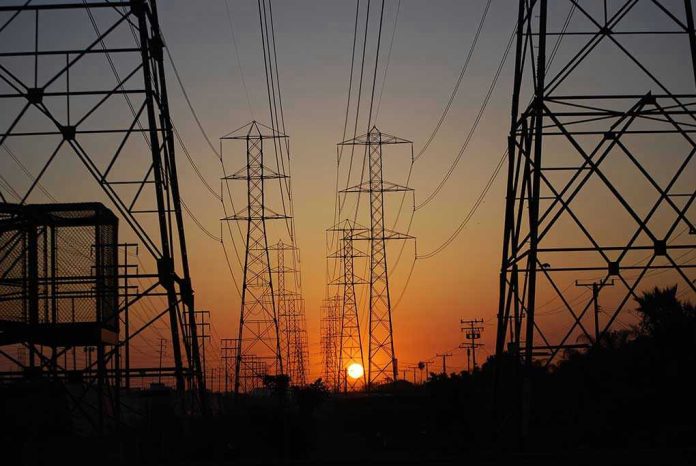
A record-shattering power merger pitched as “AI-ready” could hand unprecedented control over your electric bill to one mega-utility stretching from Florida to Virginia.
Story Snapshot
- NextEra Energy and Dominion Energy plan to merge into the world’s largest regulated electric utility, serving about 10 million customers.
- The companies justify the megadeal as “scale” needed to power artificial-intelligence data centers and grid expansion.
- They promise $2.25 billion in temporary bill credits, but details on long-term rates and cost-sharing with Big Tech are thin.
- Multiple state and federal regulators must still decide whether this consolidation truly benefits consumers.
Utility Megamerger Aims To Dominate AI-Era Power Demand
NextEra Energy and Dominion Energy have announced plans to combine into what they call “the world’s largest regulated electric utility business,” a power giant serving roughly 10 million customer accounts in Florida, Virginia, North Carolina and South Carolina.[1][2] The proposed all-stock transaction, valued around sixty-seven billion dollars, would also create an energy infrastructure colossus with enterprise value estimated above four hundred billion dollars, including debt.[2][3] The companies say this scale is necessary to meet surging electricity demand from artificial-intelligence data centers and other large users.[1][3]
According to Dominion’s press release, the combined company would control about one hundred ten gigawatts of generation capacity across a “broad mix” of energy sources and would be more than eighty percent regulated utility business.[1] That regulated footprint, spread across four fast-growing states, is advertised as the stable platform needed to finance massive grid, transmission and generation buildouts.[1][2] Bloomberg reporting echoes that argument, noting that utilities nationwide are pledging “trillions of dollars” in infrastructure investment over the next five years as artificial-intelligence demand explodes.[3][4]
“Scale” Pitch: Bill Credits Now, Big Questions Later
Dominion and NextEra repeatedly emphasize “scale” and customer affordability, promising that bigger is better for ratepayers.[1] Their headline consumer pledge is two and a quarter billion dollars in electric bill credits for Dominion customers in Virginia, North Carolina and South Carolina, to be spread over two years after the merger closes.[1] That sounds attractive to families squeezed by years of higher energy prices, yet the available materials do not spell out how those credits would be funded, allocated, or guaranteed over time through binding regulatory orders.[1]
The merger narrative leans heavily on the idea that a larger balance sheet automatically means cheaper power, but the record so far is mostly corporate claims and friendly analyst summaries.[1][2][3] There are no public financing term sheets, debt-spread comparisons or credit-rating letters in the materials showing that this merged giant can borrow meaningfully cheaper than the companies could separately.[4] Bloomberg commentary even notes that credit-rating agencies have been pressuring NextEra to bulk up its regulated utility side, suggesting part of the motivation is portfolio polishing and ratings management, not just lowering bills for everyday consumers.[4]
AI Data Centers, Grid Strain, And Who Really Pays
Bloomberg’s coverage links this transaction directly to Virginia’s booming “data center alley,” where power demand for hyperscale artificial-intelligence facilities has “skyrocketed.”[3][4] These server farms, largely built for companies like Alphabet, Microsoft, Amazon and Meta, require enormous amounts of around-the-clock electricity.[2][3] The merger would give NextEra deeper access to that high-growth region, positioning the combined company as a preferred supplier of carbon-free or low-carbon power to Big Tech clients racing to keep their artificial-intelligence engines running.[2][3]
What remains murky is how much of the multibillion-dollar grid expansion tab will be picked up by those data-center giants versus regular households and small businesses. The provided record does not include integrated resource plans, load forecasts or cost-allocation filings showing that data-center operators will carry their fair share of transmission and generation costs.[4] Meanwhile, Bloomberg notes that electricity price inflation has recently outpaced broader inflation, making any further increases politically sensitive and painful for working families.[4] Without clear protections, conservative ratepayers could wind up subsidizing Silicon Valley’s appetite for power.
Regulatory Gauntlet And Conservative Concerns About Concentrated Power
The merger must clear a long list of regulators, including the Federal Energy Regulatory Commission, the Nuclear Regulatory Commission, and utility commissions in Virginia, North Carolina and South Carolina.[1] Those bodies will evaluate whether the deal serves the public interest, preserves reliability, and keeps rates “just and reasonable.” Skepticism already exists in the media, where economists have reminded viewers that utility mergers “typically do not lower costs” and can reduce accountability if one giant company dominates a region.[4] That is especially relevant here, since the companies openly market the deal as the “largest power acquisition ever.”[2][3]
Where are the anti-trust regulators today? How could a utility merger between Dominion and NextEra even be thought of? Only a captured bureaucracy would allow this… $D $NEE
— Andy Heilman, CFA (@imapedestrian) May 19, 2026
The governance details show how deeply Dominion will be woven into a larger NextEra-led structure. Dominion’s chief executive officer, Bob Blue, is slated to become president and chief executive officer of NextEra’s regulated utilities segment, while NextEra’s John Ketchum would chair and lead the combined company’s board.[2] Corporate headquarters would be split between Juno Beach, Florida, and Richmond, Virginia.[2] That setup preserves some regional presence, but it also cements decision-making in the hands of a small group shaping power policy for four states and millions of captive customers.
What Conservative Consumers Should Watch As The Deal Advances
This megamerger lands at a time when conservatives are already wary of concentrated corporate power, politicized “green” mandates, and global tech firms lobbying for special treatment. The evidence on the table shows a massive, mostly regulated utility platform justified by scale, not a detailed proof that the merger is truly necessary to keep the lights on in an artificial-intelligence age.[1][3][4] Regulators will need to demand hard data on cost of capital, rate impacts, and whether data-center users—not families—cover the incremental grid costs.[4]
For now, the promised two and a quarter billion dollars in bill credits is real on paper but light on enforceable details, while long-term rate effects are unknown.[1] Conservatives should track state commission hearings, insist on transparent cost-allocation to Big Tech, and push for conditions that block this new giant from quietly hiking rates years after the headlines fade. As with any large consolidation blessed by government regulators, vigilance is the only way to ensure “scale” does not become another word for less choice and higher bills.
$NEE / $D the biggest utility deal in history!
NextEra Energy confirmed an all-stock deal to acquire Dominion Energy worth ~$400B in equity, the biggest utility merger ever.
One company to power America's AI grid. Bold or overreach?
— John (@SwissInvestr) May 19, 2026
Sources:
[1] Web – Press Releases – Dominion Energy Newsroom
[2] Web – NextEra to combine with Dominion Energy in $420B deal – Stock Titan
[3] YouTube – NextEra to Acquire Dominion Energy in $67 Billion Deal
[4] YouTube – Proposed merger between Dominion Energy, NextEra …