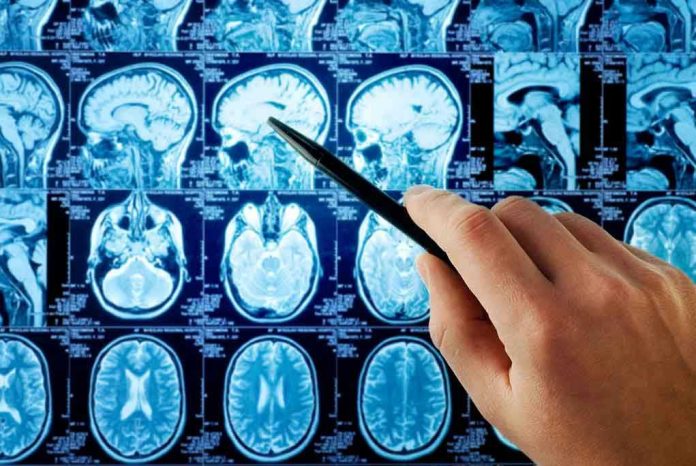
Doctors are quietly flagging a rare, hidden brain condition that seems to wake up after COVID—and in a few patients, the warning shot was a sudden brain bleed or rapid dementia.
Story Snapshot
- A little-known vessel disease called cerebral amyloid angiopathy can suddenly flare into dangerous brain inflammation.
- Case reports now describe these flares occurring shortly after COVID-19 infection or vaccination, with steroids often reversing symptoms.[1][2][3]
- The evidence does not prove causation, but it does outline a plausible immune-triggered mechanism that deserves honest scrutiny.[1][2]
- Older adults can take concrete steps to spot red-flag symptoms early and lower their overall brain-risk exposure.
The Brain’s “Dry Rot” That No One Talks About
Cerebral amyloid angiopathy is essentially dry rot of the brain’s tiny blood vessels. Abnormal amyloid protein slowly piles up in vessel walls, making them brittle and prone to leak or burst, especially in older adults and in people with Alzheimer’s disease.[4][6] In most, it smolders quietly for years. In a minority, the immune system suddenly turns on those amyloid-laced vessels, causing swelling, seizures, or dramatic cognitive decline. That aggressive phase is called cerebral amyloid angiopathy–related inflammation.[5]
Doctors used to think of this inflammatory version as rare and mostly spontaneous. Then COVID-19 arrived. A 77-year-old man with known amyloid vessel disease and a recent brain bleed received his first Pfizer-BioNTech dose. Within two weeks, he developed seizures and brain swelling; his spinal fluid showed high protein, lymphocytes, and antibodies to the spike protein of the virus. High-dose steroids calmed the inflammation, his spinal fluid normalized, and imaging improved.[1] The authors cautiously suggested vaccine-triggered immune activation as a possible spark.
When The Immune System Overshoots The Mark
A second report described amyloid beta–related angiitis, a cousin of this condition where inflammation actually chews through the vessel wall. A previously healthy patient developed confusion and neurological deficits about two weeks after a COVID-19 vaccination.[2] Brain biopsy showed classic amyloid-laden vessels with destructive inflammation; steroid pulse therapy led to clinical and imaging improvement. The team emphasized that there is no proof that the vaccine “triggers” this disease, but they also admitted no other likely trigger emerged in the workup and suspected an abnormal immune response.[2]
A third paper pulled together existing cases and highlighted another report of post-vaccination cerebral amyloid angiopathy–related inflammation presenting with relentless seizures that finally yielded to corticosteroids.[3] The authors walked a careful line: they acknowledged the tight timing and immune fingerprints, yet stressed that distinguishing coincidence from causation is extremely hard with any rare vaccine adverse event.[3] For readers who value both medical progress and transparency, that tension should sound familiar—and a little unsatisfying.
COVID, Infection, And The Amyloid Question
COVID-19 infection itself is no bystander in the brain. Up to half of patients report neurological symptoms during acute illness, from confusion to stroke.[4] Separate research in humans and animals suggests that the virus, or the inflammatory storm it provokes, can increase amyloid and related proteins in the brain and even the eye, potentially feeding the same pathways implicated in Alzheimer’s disease and cerebral amyloid angiopathy.[6] That does not prove you will get dementia after COVID, but it raises fair questions about long-term consequences of repeated infections.
About 15% of strokes are hemorrhagic. Hypertension is the leading cause, period.
In older patients, cerebral amyloid angiopathy is likely the second most common. It’s closely related to Alzheimer’s disease. Here, amyloid plaque deposits in the vessel wall weaken it, leading to… pic.twitter.com/Hr1XTuytER
— Whitfield Lewis, MD 🇦🇬🇺🇸 (@whitfieldlewis6) May 19, 2026
The uncomfortable reality is this: we now have several well-documented cases where amyloid vessel inflammation flared soon after either infection or vaccination, sometimes in patients with pre-existing silent disease.[1][2][3] These cases show three patterns that matter for a common-sense, conservative reading. First, the timing is tight. Second, the immune system is clearly activated—spinal fluid cells, spike antibodies, swollen white matter. Third, steroids, which tamp down immune overreaction, often reverse the problem. That is at least biologically coherent.
How Worried Should You Be, Really?
Perspective matters. These conditions remain extremely rare against the enormous background of COVID infections and vaccinations worldwide. Case reports, by their nature, cannot tell us how often this happens or who is truly at risk; they can only wave a flag and say, “Something odd occurred here.”[1][2][3] Alarmism that treats a handful of cases as universal truth is irresponsible. So is messaging that pretends those cases do not exist because they are inconvenient to broad-brush safety narratives.
From an American conservative values standpoint, the middle road looks like this: respect the reality of rare harms, insist on better data, and preserve individual choice. That means pushing for large registry studies that compare brain-vessel complications after infection versus vaccination, and for lab work testing whether spike-related antibodies really cross-react with amyloid-laced vessels.[1][2][3] It also means rejecting censorship and allowing doctors who see unusual patterns to publish and debate them openly without being labeled heretics.
Practical Steps You Can Take Starting Now
Most readers will never experience cerebral amyloid angiopathy–related inflammation, but many already carry some combination of age, high blood pressure, or amyloid risk in their brains. You cannot change your birth date, but you can slash the baseline strain on those vessels. Keep blood pressure aggressively controlled, avoid smoking, maintain a healthy weight, and be cautious with blood thinners unless clearly indicated. Those basics dramatically cut the odds of catastrophic brain bleeds from any cause.
Second, treat your brain like a limited-edition item, not a disposable gadget. Do what you can to avoid repeated COVID infections—sensible hygiene, timely vaccination or boosting if you and your doctor judge that your personal benefit outweighs risk, and skipping crowded indoor free-for-alls when community spread is roaring. If you are older or know you have amyloid disease or prior brain bleeds, ask your neurologist directly about cerebral amyloid angiopathy and what warning signs—sudden severe headache, abrupt confusion, new seizures—should trigger an emergency evaluation.[4][5]
Finally, expect nuance from your doctors and health agencies and reward the ones who give it to you. When they admit what is known, what is suspected, and what is simply not yet measured, they treat you like an adult. This emerging story about COVID, vaccines, and hidden amyloid vessel disease is not a thriller with a tidy Hollywood ending. It is a slow, technical mystery. But your role is straightforward: keep your risk factors low, your antennae up for red-flag symptoms, and your demand for honest data very, very high.
Sources:
[1] Web – Cerebral amyloid angiopathy – Related inflammation after COVID …
[2] Web – Amyloid β-related angiitis of the central nervous system occurring …
[3] Web – A case of cerebral amyloid angiopathy related inflammation after …
[4] YouTube – Factors affecting the efficacy of COVID-19 vaccination in patients …
[5] Web – AMYLOID POST COVID-19 VACCINE – ANY RELATION?
[6] Web – Study Finds COVID-19 Can Cause Build-up of Alzheimer’s-Related …