UK Prime Minister Keir Starmer has condemned Iran’s military aggression as “utterly abhorrent” while British forces deploy to defend Gulf allies against escalating attacks that threaten global energy supplies and commercial shipping routes.
Story Snapshot
- Starmer joins six-nation coalition condemning Iranian blockade of Strait of Hormuz and attacks on civilian energy infrastructure
- British RAF jets and air defense systems now protecting Saudi Arabia as UK steps up military support to Gulf states
- Iran accused of backing over 20 potentially lethal attacks on UK soil while murdering thousands of its own citizens
- Global energy markets and international trade face severe disruption as conflict enters third week with no diplomatic resolution
International Coalition Condemns Iranian Blockade
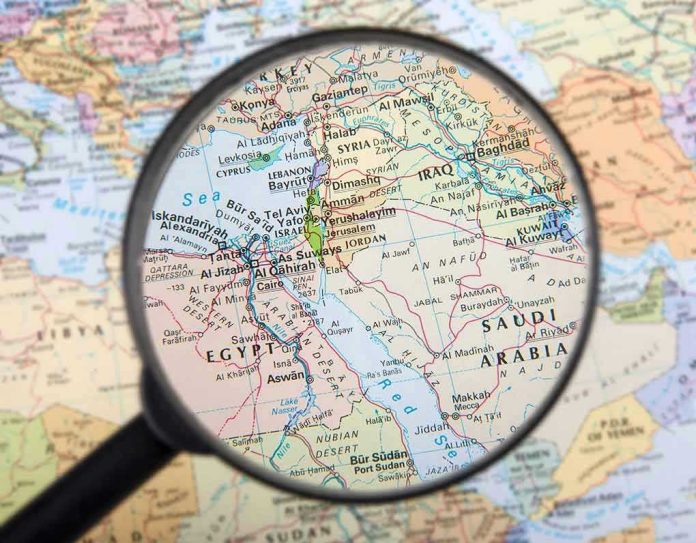
Prime Minister Starmer issued a joint statement with leaders from France, Germany, Italy, the Netherlands, and Japan condemning Iranian attacks on unarmed commercial vessels and the effective closure of the Strait of Hormuz. The six-nation declaration demanded Iran “cease immediately its threats, laying of mines, drone and missile attacks” targeting commercial shipping. This coordinated response underscores growing international alarm over Iran’s willingness to weaponize critical trade routes. The statement warned that Iranian actions will be felt worldwide, particularly harming the most vulnerable populations dependent on stable energy prices and global commerce.
MOMENTS AGO: United Kingdom Prime Minister Keir Starmer unleashes against Iran for causing "untold economic damage" in the Strait of Hormuz, as the United States begins its naval blockade on Iranian ports in the waterway.
"The freedom of navigation is vital and must be restored.… pic.twitter.com/cCH9SjmLXg
— Fox News (@FoxNews) April 13, 2026
British Military Mobilizes Defensive Operations
UK Defence Secretary John Healey pledged to “step up” defensive support for Gulf states following what he characterized as a “serious escalation” by Iran. British forces are actively deployed across the Middle East, with RAF jets flying defensive sorties against Iranian drones while British air defense systems protect critical infrastructure in Saudi Arabia. UK military planners have joined US Central Command to develop proposals for reopening the Strait of Hormuz. Iranian strikes have targeted multiple energy facilities including a Saudi oil refinery, Qatari gas installations, and two Kuwaiti oil refineries, threatening global energy security and raising costs for consumers worldwide.
Regime’s Pattern of Aggression Exposed
Starmer’s condemnation extends beyond recent military actions to Iran’s broader pattern of destabilization and terror. The Iranian regime has been accused of backing more than 20 potentially lethal attacks on UK soil over the past year, targeting British dissidents and the Jewish community. The regime has murdered thousands of its own people and brutally crushed dissent while pursuing nuclear weapons development that threatens regional and global security. This documented history of aggression validates concerns that diplomatic engagement alone cannot restrain a regime committed to exporting violence. The UK government maintains that preventing Iranian nuclear weapons remains a primary national security objective.
Economic and Strategic Consequences Mount
Starmer acknowledged the conflict worsens the UK’s cost of living situation as disrupted energy supplies drive prices higher for ordinary citizens already struggling with inflation. The blockade of the Strait of Hormuz represents a direct assault on international trade, with effects rippling through global supply chains and commercial shipping networks. Despite these pressures, Starmer articulated three core objectives: protecting UK citizens in the region, defending allies without entering a wider war, and working toward diplomatic resolution. The challenge reflects a familiar frustration where government officials must balance competing priorities while citizens bear the economic consequences of foreign conflicts driven by hostile regimes.
Sources:
Iran war: Starmer joins with allies to condemn ‘serious escalation’ in Middle East
PM statement on Iran: 28 February 2026