
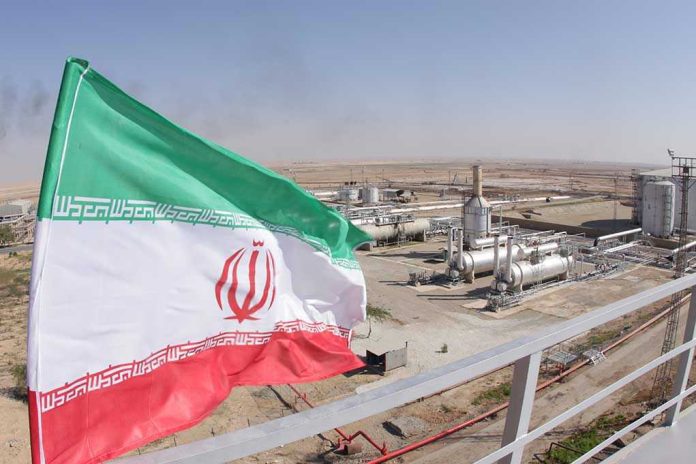
Trump’s threat to hit Iran’s power plants—then sudden decision to pause—has turned the Strait of Hormuz into the world’s most dangerous bargaining chip.
Story Snapshot
- President Donald Trump postponed a Monday ultimatum that warned Iran to reopen the Strait of Hormuz or face U.S. strikes on Iran’s power plants.
- The White House described “good and productive” discussions carried through mediators, while Iran denied direct talks and framed the pause as U.S. backtracking.
- U.S. intelligence reported Iranian mines in the Strait, a threat that could disrupt a major share of global oil flows and spike prices.
- U.S. Central Command reported a large-scale campaign—thousands of strikes and extensive naval damage—showing major military pressure alongside diplomacy.
Ultimatum Paused as Mediators Carry Messages
President Trump set a deadline for Iran to reopen the Strait of Hormuz, warning that failure would bring U.S. strikes on Iranian power plants. Later the same day, Trump said the ultimatum was being postponed after “good and productive” discussions carried through third-party mediators. U.S. points were delivered for Iranian review, according to reporting that emphasized indirect channels rather than a confirmed face-to-face meeting.
Iran’s response highlighted the core fog of this standoff: Tehran denied direct negotiations and suggested Trump’s shift reflected fear of retaliation. That contradiction matters because public claims of “direct talks” can be political leverage at home, while indirect channels provide both sides room to de-escalate without admitting concessions. For Americans watching energy prices, the key issue is less the messaging war and more whether the Strait remains safe for shipping.
Mines in the Strait Raise the Economic Stakes Overnight
U.S. intelligence assessed that Iran had placed mines in the Strait of Hormuz, with reporting citing more than a dozen mines detected. That kind of threat is designed for asymmetric disruption: it does not require Iran to defeat the U.S. Navy, only to create enough risk that insurers, shippers, and markets panic. With the Strait carrying a significant portion of global oil, even a short disruption can push prices higher and feed inflation.
The precedent is not theoretical. The 1980s “Tanker War” saw widespread mining that required a massive minesweeping effort and still produced long-running shipping hazards. The current situation is complicated by simultaneous military operations and political signaling, meaning any misread intent could escalate quickly. Mines also create a moral hazard: when shipping lanes become a battlefield tool, civilian commerce gets pulled into state conflict, punishing ordinary families at the gas pump.
Maximum Pressure Meets a Diplomatic Off-Ramp
The broader context traces back to Trump’s long-standing “maximum pressure” posture toward Iran, including his first-term withdrawal from the 2015 nuclear deal and renewed emphasis on sanctions and terrorist designations. In this cycle, the U.S. has paired that pressure with direct military operations described as targeting Iranian infrastructure and leadership nodes. The administration has also framed the campaign as preventing Iran from gaining nuclear weapons capability, a central U.S. demand.
From a limited-government perspective, voters often want a clear definition of national interest and measurable endpoints before conflicts widen. The current approach appears to blend deterrence and negotiation: heavy military pressure to constrain Iran’s options, plus mediator-delivered proposals to test whether Tehran will step back from maritime threats. The unresolved question is whether Tehran views talks as a path to stability or merely time to regroup while maintaining leverage in the Gulf.
Conflicting Narratives Leave Key Facts Unresolved
Trump said Iran was “not threatening” the U.S. after recent operations, while Iranian officials warned of “decisive retaliation” and continued to dispute the claim of direct talks. Reports also raised uncertainty about whether a top Iranian official would meet U.S. counterparts, with no confirmed outcome. Those gaps matter because markets and allies react to credibility: if talks are real and structured, risk can fall; if they’re performative, risk can rise.
For conservatives frustrated by years of elite mismanagement, this episode reinforces how quickly foreign policy can collide with everyday costs at home—fuel prices, shipping, and inflation. For liberals worried about escalation, the mine threat underscores the danger of letting adversaries control chokepoints that the global economy depends on. The near-term test is straightforward: whether Iran stops threatening the Strait and whether the U.S. can keep deterrence credible without drifting into an open-ended conflict.
Sources:
https://www.cbsnews.com/live-updates/iran-war-us-israel-trump-ultimatum-strait-of-hormuz/