New York City declares a state of emergency as the biggest snowstorm in five years paralyzes the nation’s largest metropolis just after Christmas, exposing urban vulnerabilities under past mismanaged policies.
Story Snapshot
- Snowfall begins lightly in Manhattan on December 26 evening, escalating to 2 inches per hour overnight, accumulating up to 8-11 inches citywide by December 27.
- State of emergency declared amid hundreds of flight cancellations at JFK and LGA, stranding post-holiday travelers.
- Powdery snow at -6°C complicates plowing and heightens risks of travel chaos and power outages in five boroughs.
- National Weather Service forecasts 2-5 inches for NYC core, up to 6+ inches northward, confirming winter storm status without blizzard designation.
Storm Onset in Manhattan
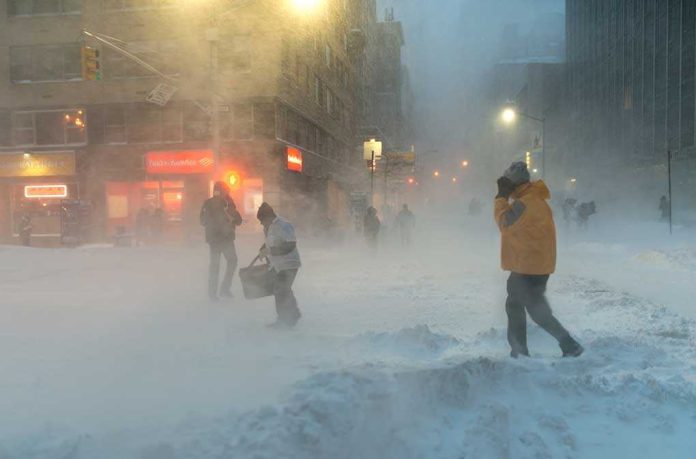
Live streams captured light snow falling on Third Avenue and East 53rd Street in Manhattan around evening on December 26, 2025, with temperatures at -6°C. Conditions appeared deceptively mild initially, but flakes intensified after 10 PM. Peak rates hit 2 inches per hour from 10 PM December 26 to 1 AM December 27. This post-Christmas event marks the biggest snowstorm in NYC over the last five years, threatening rapid urban buildup despite falling short of blizzard criteria.
Forecasts and Escalation
The National Weather Service predicted 2-5 inches for the NYC area, escalating to 6+ inches in northern zones as the storm system advanced from the Midwest. By December 27 morning, nearly 3 inches accumulated in the city core, with early estimates reaching 8-10 inches citywide. Powdery snow texture enabled quick accumulation but hindered effective plowing efforts. Live reporters emphasized the storm’s deceptive start, aligning with official warnings of heavy overnight rates.
Emergency Declaration and Disruptions
NYC officials declared a state of emergency due to widespread flight chaos, with hundreds of cancellations at major airports like JFK and LGA. The storm disrupted post-holiday travel, mirroring 2022 and 2023-2024 precedents that strained infrastructure. Airlines scrambled to maintain operations amid the Northeast-wide system. City government coordinated snow removal and traffic management, drawing on National Weather Service authority for response decisions.
Outer boroughs like Queens faced forecasts exceeding 11 inches, hitting commuters and residents hardest. Economic losses mounted from canceled flights costing millions, delayed logistics, and heightened retail cleanup expenses.
Impacts on Residents and Economy
Short-term effects paralyzed travel, risked power outages, and delayed holiday cleanup across densely populated boroughs. Social isolation loomed for high-rise dwellers, with school and transport halts anticipated. Long-term, the event tests infrastructure resilience and boosts winter preparation budgets. Aviation faced nationwide ripples, while tourism suffered post-Christmas setbacks. Vulnerable post-holiday commuters bore the brunt in this urban pressure cooker.
Expert Views and Historical Context
Weather experts labeled it the heaviest in five years due to peak rates, though NWS maintained winter storm classification to avoid hype. ABC News meteorologists described NYC’s 3-inch totals as moderately disruptive in an urban setting. Live streams offered optimistic early views contrasting official havoc alerts. This fits recurring post-Christmas patterns, paling against the 2016 blizzard’s 27 inches but echoing 2022’s 8-12 inch emergencies.
Sources:
Sky News: State of emergency declared as US storm disrupts hundreds of flights
ABC News: Winter weather hits Northeast as new storm system moves in