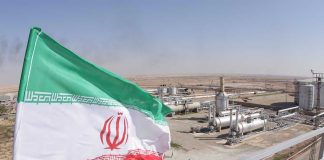
President Trump’s new Iran ultimatum puts America one missed deadline away from a four-hour strike plan that would reportedly black out an entire country and risk dragging the world into an energy and security crisis.
Quick Take
- President Trump set an 8 p.m. Eastern deadline (April 7, 2026) for Iran to reopen the Strait of Hormuz and accept a peace deal, warning of sweeping destruction if it refuses.
- The administration’s campaign, Operation Epic Fury, was described earlier as focused on military objectives, but Trump’s latest rhetoric explicitly names bridges, power plants, and desalination facilities.
- U.S. and Israeli strikes continued Tuesday, including attacks tied to transport links and Iran’s Kharg Island oil terminal; CBS reported at least 18 civilian deaths in one province based on Iranian officials.
- Iran’s government urged civilians to form “human chains” around power plants, while the IRGC threatened long-term regional oil and gas disruption if civilian targets are hit.
Trump’s 8 p.m. Deadline Raises the Stakes Beyond Traditional War Aims
President Donald Trump publicly tied an 8 p.m. Eastern deadline on April 7 to two core demands: Iran must reopen the Strait of Hormuz and accept a peace arrangement, or face a dramatic escalation. TIME reported Trump warning that “a whole civilization will die” if Iran misses the cutoff, and describing a rapid strike window that could unfold overnight. The immediate question is whether the deadline is leverage for talks or a trigger for wider warfare.
White House messaging around Operation Epic Fury has emphasized defined objectives and an endpoint, contrasting it with the “endless war” criticism many Americans—right and left—associate with past interventions. The administration has described the campaign as aimed at dismantling Iran’s missile and drone production capacity, degrading naval forces, severing support for terrorist proxy networks, and preventing a nuclear weapons capability. That framing matters because it is the difference between fighting armed capabilities and threatening the systems civilians rely on to live.
From Military Targeting to Civilian Infrastructure Threats
Trump’s latest remarks, as reported by TIME, explicitly referenced bridges, power plants, and water desalination plants—language that goes beyond strikes on launch sites, depots, and armed units. CBS also reported that U.S. and Israeli operations were continuing Tuesday, with Israel acknowledging attacks on Iranian railways and bridges and the U.S. launching fresh strikes on Kharg Island, Iran’s key oil terminal. The shift is significant because infrastructure is intertwined with civilian survival and regional economic stability.
For conservatives who prioritize national security and deterrence, the administration’s case is straightforward in one respect: keeping Iran from gaining nuclear leverage is a long-standing U.S. objective, and a closed Strait of Hormuz is an unacceptable threat to global commerce. At the same time, Trump’s reported dismissal of war-crimes concerns—described in TIME’s coverage—puts Washington on an argument Americans have heard before: that extraordinary measures are justified by extraordinary threats. The facts available do not independently verify operational claims, but they do document the escalation in rhetoric.
Hormuz and Kharg Island: Energy Pressure Points with Global Spillover
CBS described the Strait of Hormuz as a critical chokepoint for global oil commerce, which is why its status is central to this standoff. When energy flows are threatened, Americans often feel it directly through higher prices—especially working families who have little margin and are already skeptical of policy-driven cost increases at home. Reports that strikes hit Kharg Island underscore how quickly military moves can collide with energy markets, shipping insurance, and broader economic confidence.
Iran’s response, as reported by CBS and TIME, has mixed negotiation and defiance. CBS said Iran submitted a “significant” proposal that Trump rejected as “not good enough,” while Vice President J.D. Vance expressed confidence that a response would arrive before the deadline. Meanwhile, CBS reported the Iranian government called for civilians to form human chains around power plants, and TIME described IRGC threats to deprive the U.S. and allies of regional oil and gas for years if civilian infrastructure is targeted. Those steps signal both vulnerability and a willingness to escalate asymmetrically.
What Americans Should Watch Next: Clarity, Limits, and Accountability
The most immediate unknown is whether Iran meets the deadline and what Washington considers compliance. White House statements have emphasized “clear and unchanging objectives,” but Trump’s reported language expands perceived targets in a way that invites legal, humanitarian, and strategic questions. CBS reported at least 18 civilian deaths in one province, citing Iranian officials, and those numbers are not independently confirmed in the reporting provided. Still, civilian harm—verified or alleged—can rapidly change global opinion and harden resistance.
Americans who already believe the federal government too often operates without transparent limits will be watching how Congress, the courts, allies, and the Pentagon respond to the widening gap between “precision” military objectives and broad infrastructure threats. For citizens tired of elite-driven decisions that land costs on ordinary people, the key test is whether leaders explain the plan, the legal basis, and the exit ramp—especially when energy shock, retaliation risks, and a wider regional war could quickly move from headlines to household consequences.
Sources:
President Trump’s Clear and Unchanging Objectives Drive Decisive Success Against Iranian Regime
Trump Warns “Whole Civilization Will Die” If Iran Misses Deadline
Iran war live updates: Trump deadline, power plants, “human chains,” Israel train strikes