
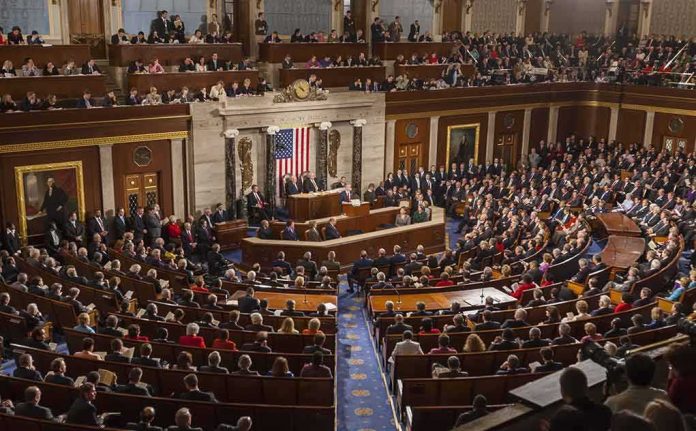
Vice President JD Vance says the Trump administration has identified $230 billion in fraud and stopped $56 billion from going out to scammers.
Story Highlights
- Vance reports $230 billion in fraud identified since March and $56 billion in payments stopped.
- The Fraud Task Force is a top domestic priority for President Trump’s team.
- Critics question how totals mix prevention and confirmed fraud, but do not refute Vance’s on-record figures.
- The administration urges Congress and states to tighten screening and share data across programs.
Vance’s Claim: Billions Protected From Fraud
Vice President JD Vance told reporters and viewers that federal agencies found $230 billion in fraud and prevented $56 billion in fraudulent payments since President Trump launched the Fraud Task Force in March. Vance made the claim at a Cabinet meeting and in follow-on briefings, calling the $230 billion figure conservative. He framed the effort as protecting taxpayers and seniors from scams in health care and aid programs, and as a core priority of the Trump administration.
Trump officials say the blocked funds span multiple programs where fraud rings look for weak spots. Vance pointed to tighter screening, better data checks, and faster holds on suspicious claims as key to the $56 billion blocked. Supporters see this as long overdue, after years of waste, soft oversight, and loose rules that helped fraudsters during the pandemic era. They argue that stronger guardrails mean more money stays with working families and retirees who earned it.
How The Task Force Is Fighting Fraud
White House allies say the team uses data matching, cross-agency alerts, and swift pauses to stop payments when risk looks high. Vance has urged states to speed up their own fraud cases and share data on bad actors across state lines. He also pushed for stronger identity checks for providers and vendors who bill federal programs. These steps aim to reduce easy targets, like shell companies and fake clinics, while backing real beneficiaries and honest providers.
Vance and administration staff highlight targeted actions, such as pausing questionable reimbursements and reviewing high-risk billing spikes. They say this approach prevents losses before cash leaves the Treasury. They also stress follow-through: referrals for collection, recovery actions, and, when warranted, criminal cases. Officials cast this as basic stewardship. Taxpayers deserve to know that money is paid only when claims are legitimate and lawful, not when loopholes invite abuse.
What Skeptics Are Asking About The Totals
Reporters and critics have asked how the $230 billion and $56 billion were counted. Some coverage notes that the administration sometimes describes “suspected” or “potentially fraudulent” payments alongside confirmed fraud. That can blur categories if not explained with a clear table. Skeptics want the public method and a reconciliation that shows what is recovered, what is paused, and what is fully adjudicated in court or by agency rulings.
Those questions do not refute Vance’s on-record statements about the totals. They ask for proof-of-method and regular updates that prevent double counting. The administration says the $230 billion is a conservative estimate, and it frames the $56 billion as blocked outflows. Until a full ledger is released, the core record stands: Vance made the claim, and agencies say they blocked large sums before fraudsters got paid. Readers should expect more details as cases move from flags to final outcomes.
Why This Matters To Your Wallet And The Constitution
Every dollar lost to fraud is a dollar not defending the border, keeping streets safe, or lowering your tax bill. Fraud also feeds bigger government. When programs bleed cash, bureaucrats ask for more. That means higher deficits and inflation. Stopping fraud respects the Constitution’s power of the purse by making sure Congress’s dollars go only to lawful claims. It protects seniors’ care, veterans’ benefits, and families who play by the rules and expect the same from Washington.
President Trump’s team says this is only the start. They want Congress to lock in stronger identity checks, faster data sharing, and tough penalties that put ringleaders behind bars. State partners are urged to tighten screening and close loopholes that scammers use across programs. For taxpayers who are tired of waste and soft oversight, the claim of $56 billion stopped is a sign that strong enforcement and common sense can save real money now, not years from now.
Sources:
ap7am.com, x.com, facebook.com, youtube.com