A Virginia high school saw nine fentanyl overdoses in weeks, yet the fight is now over why adults in charge still will not face drug tests or full transparency when kids’ lives are on the line.
Story Snapshot
- At least nine Park View High School students overdosed on fentanyl in fall 2023, with several needing Narcan and CPR.
- Parents were not told about the overdose cluster for almost three weeks, until October 31, sparking outrage and mistrust.
- Governor Glenn Youngkin responded with an order forcing all Virginia school districts to notify parents of any school-connected overdose within 24 hours.
- Even amid this crisis, legal limits, privacy rights, and lack of evidence have led some Virginia boards to reject random teacher drug testing.
A school overdose surge that parents learned about weeks late
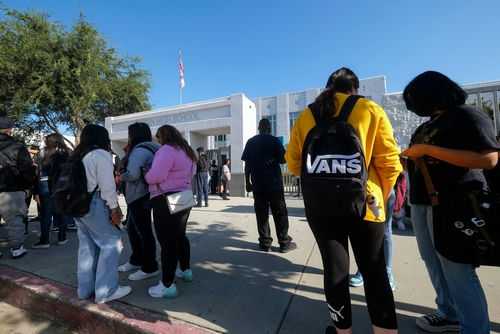
Park View High School in Loudoun County, Virginia, became a symbol of the fentanyl crisis after at least nine students overdosed in September and October 2023. Four overdoses happened on campus, and first responders used the overdose-reversal drug Narcan in three cases and performed cardiopulmonary resuscitation twice. The Loudoun County Sheriff’s Office described at least eight opioid-related overdoses, seven in just three weeks, and confirmed all involved fentanyl, often in counterfeit pills that looked like common pain medicine.
Loudoun County parents did not get a clear notice about the cluster until October 31, even though the first overdoses happened weeks earlier. One school board member, Tiffany Polifko, said she was officially told only on October 31 and argued that the delay robbed families of time to talk with their kids and spot warning signs. Local coverage reported that at least one student collapsed without a pulse before being revived, showing how close the school came to a death.
State backlash: 24-hour overdose notification rule
Virginia Governor Glenn Youngkin responded by issuing Executive Order 28, requiring every public school division to notify parents within 24 hours when a school-connected overdose occurs. His office said Loudoun County Public Schools waited more than 20 days before notifying parents about the Park View overdoses. Youngkin argued that failing to alert families “endangers the health and welfare of their children” and violates parents’ right to know what is happening in school.
The order directs the Virginia Department of Education to give districts guidance on how to meet the 24-hour standard and improve overdose prevention. Some local parents praised the Park View principal for sending general emails about “medical emergencies,” but those messages did not clearly say “overdose” or “fentanyl.” That gap between what schools say they are allowed to share and what parents feel they need to know has fueled anger on both the left and right, who see it as another example of a system protecting itself first.
Why drug-testing teachers is so contested
As overdoses rise, some parents and activists have pushed for drug testing not just of students but also of teachers and other school staff. They argue that if kids can access fentanyl this easily, every adult with access to children should prove they are clean. Yet there is currently no public evidence that any Park View teacher supplied fentanyl or used drugs at school, and sheriff statements focus on student dealers and off-campus sources, not staff.
Civil liberties groups and courts have also warned that random, suspicionless drug testing of teachers can violate constitutional rights. A federal court blocked a West Virginia district’s plan to subject all school employees to random tests, finding no proof of a staff drug problem and calling such testing an unreasonable search. The American Civil Liberties Union of Virginia has opposed broad school employee drug testing policies, saying they invade privacy without strong evidence they improve safety. These rulings and objections give school boards legal cover to say no, even when communities are on edge.
Virginia law and existing school drug policies
Virginia law allows, but does not force, school boards to require drug testing in line with state Board of Education guidelines, and only when the board chooses to use that discretion. State code frames drug testing as one tool inside a larger student conduct and safety policy, not an automatic step whenever a crisis hits. Many districts already test workers in “safety-sensitive” jobs, like bus drivers, and test any employee if there is reasonable suspicion of drug use.
Loudoun County’s public statements about Park View focus on standard steps, such as having Narcan in schools, offering fentanyl education, and working with law enforcement to trace where the pills come from. Sheriff Mike Chapman said investigators are trying to find which students are dealing drugs and who is supplying them, after several overdoses were linked to pills sold in school bathrooms or taken before class. For parents who want faster and harsher action, these moves can feel slow and technical. For boards and lawyers, they are the minimum needed to avoid lawsuits while still showing they are doing something.
The deeper problem: trust in schools and government
The Park View story hits a nerve far beyond one Virginia high school because it confirms a fear many Americans already hold: when a crisis breaks, the people in charge often protect the institution first and the public second. Parents across the spectrum see a pattern where school officials, police, and politicians argue over wording and legal risk while children end up in ambulances. The delay in warning families, followed by a top-down executive order, fits that pattern.
Virginia school board votes 4-3 AGAINST drug testing teachers—two years after a second-grade teacher overdosed on fentanyl in her classroom. Superintendent warned it would hurt teacher retention. Kids… #Education #Virginia #ParentalRights #SchoolSafetyhttps://t.co/0wuk5qt2kS
— @GlobalRightWatch (@AutonomusRepost) July 16, 2026
At the same time, the fight over drug-testing teachers shows how real problems get stuck between safety demands and rights protections. Conservatives see a system that will not take tough steps to keep kids safe. Liberals see another example of a state ready to surveil workers instead of addressing poverty, mental health, and the drug supply chain. Both sides watch nine teenagers overdose in one school and wonder who the system is really built to serve.
Sources:
redstate.com, 13wham.com, wjla.com, nbcwashington.com, washingtonpost.com, wtop.com, acluva.org, schoolboard.vbschools.com, supreme.justia.com, go.boarddocs.com, aclu.org