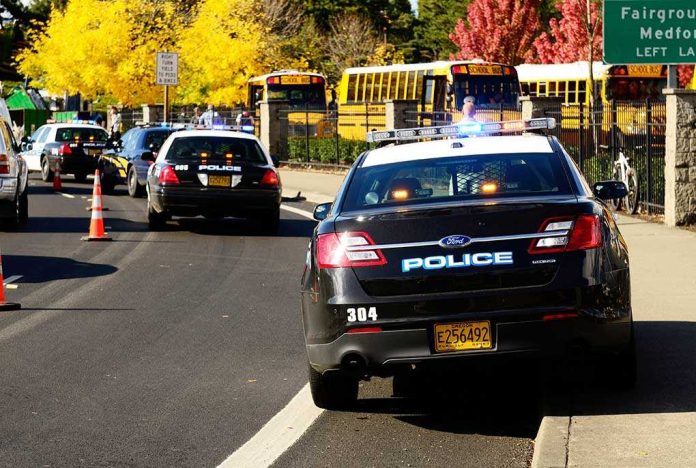
Three days before students returned, a man accused of threatening mass shootings at five Charlotte schools walked free on bond — and parents are furious while courts say the system worked.
Story Snapshot
- Drew Andres Owens was released after meeting bond terms; his case is still pending.
- Parents say the timing before the first day of school heightens fear for student safety.
- Court records show earlier bond increases, later reductions, and added release conditions.
- The debate spotlights a national clash over pretrial release versus community protection.
What Happened: Release Before School Starts
Charlotte-Mecklenburg records show Drew Andres Owens, 33, left the county jail on Saturday, Aug. 22, after satisfying court-ordered pretrial bond conditions. Yahoo News reported the release at 11:30 a.m., three days before students were due back in classrooms. Owens has pleaded not guilty, and the cases remain pending. Officials placed conditions on his release, including staying away from schools and electronic monitoring, according to local reports. These terms aim to limit risk while the case proceeds.
Local television outlets said parents were worried about sending children to class so soon after the release. One parent asked if he would “show up at one of the schools,” while others urged tighter communication from the district and law enforcement. Earlier this year, the district apologized for slow alerts after prior threats, which fed today’s distrust. Parents now link court decisions, school notices, and campus policing into one safety test the system must pass.
How We Got Here: Bond Rulings and Conditions
Court actions moved over months. A judge raised Owens’s bond from an initial $10,000 to $200,000 after an emergency motion by prosecutors, who argued for custody during the case. Later coverage documented reductions, with reports noting amounts as low as $75,000 in May and $60,000 by late August. Owens posted bond only recently, which is why release came near the first day of school. Electronic monitoring and stay-away orders were added to lower risk while honoring due process.
A former judge told reporters that bond is meant to ensure court appearances, not to punish before trial. That point reflects national pretrial standards, which aim to balance due process with protecting the community. Many states and courts now use risk-based rules, not accusation alone, to decide detention, bond size, and release conditions. This helps explain why a person accused of serious threats can still be released under tight limits before any verdict.
Why It Touches a Nerve: Safety, Trust, and a Strained System
Parents measure safety by what they see on campus next week. Prosecutors and judges measure it by rules that apply the same way to every case. That mismatch drives anger. Research groups say modern pretrial systems tie release to legal factors and risk, not headlines. Still, communities expect strong guardrails when schools are named. When alerts are late or rules seem loose, people across the political spectrum feel government is not protecting basic responsibilities.
This case shows the larger tension both right and left now share. Citizens want fast, clear warnings, firm no-go zones, and real-time tracking that actually works. Courts want fair, consistent decisions that do not punish before trial. The path forward is not slogans. It is visible safeguards: strict stay-away enforcement, active monitoring with audits, and immediate, plain-language notices to families. When those pieces are missing, faith in the system erodes — and fear fills the gap.
Sources:
facebook.com, yahoo.com, wsoctv.com, youtube.com